
Refrigerator
Making a Loud Noise
Buzzing, clicking, rattling or knocking — the kind of noise narrows it more than the volume does.
Mon–Sat, 8am–8pm
- 5 checks before you book
- 5 questions that narrow it
- 5 causes, cheapest first
Book a visit
Three short steps, about a minute.
or call (844) 681-4650
Loading appointment form…
The appointment form couldn’t load. Please try again.
What it
usually means.
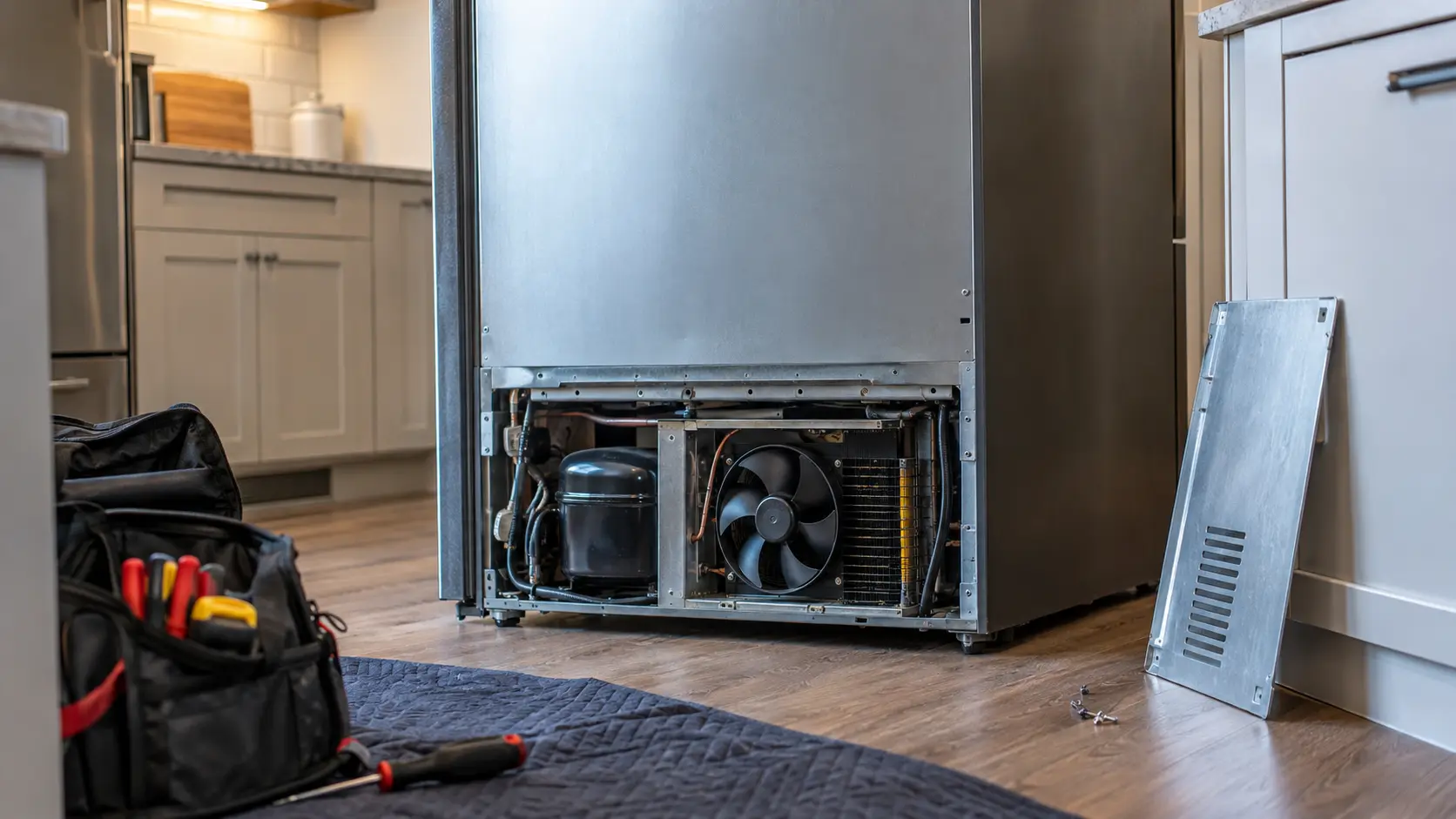
A refrigerator contains three things that can be heard: two or three fans, a compressor, and water moving. Almost every noise complaint resolves to one of them, and which one is usually clear from the character of the sound and from whether it changes when a door is opened. A fan noise stops when the door opens; a compressor noise does not.
 The 5 causes, cheapest first
Answer these first
What kind of noise: buzz, hum, click, rattle, knock or squeal?
Does it stop when you open the freezer door?
Is it constant, or does it come in bursts every few hours?
Is it coming from the back, the bottom, or from inside the compartment?
Has anything changed about where the appliance stands?
Check these
before you book.
Refrigerator making loud noise: 5 checks, and none of them costs anything.
Open the freezer door and note whether the noise stops.
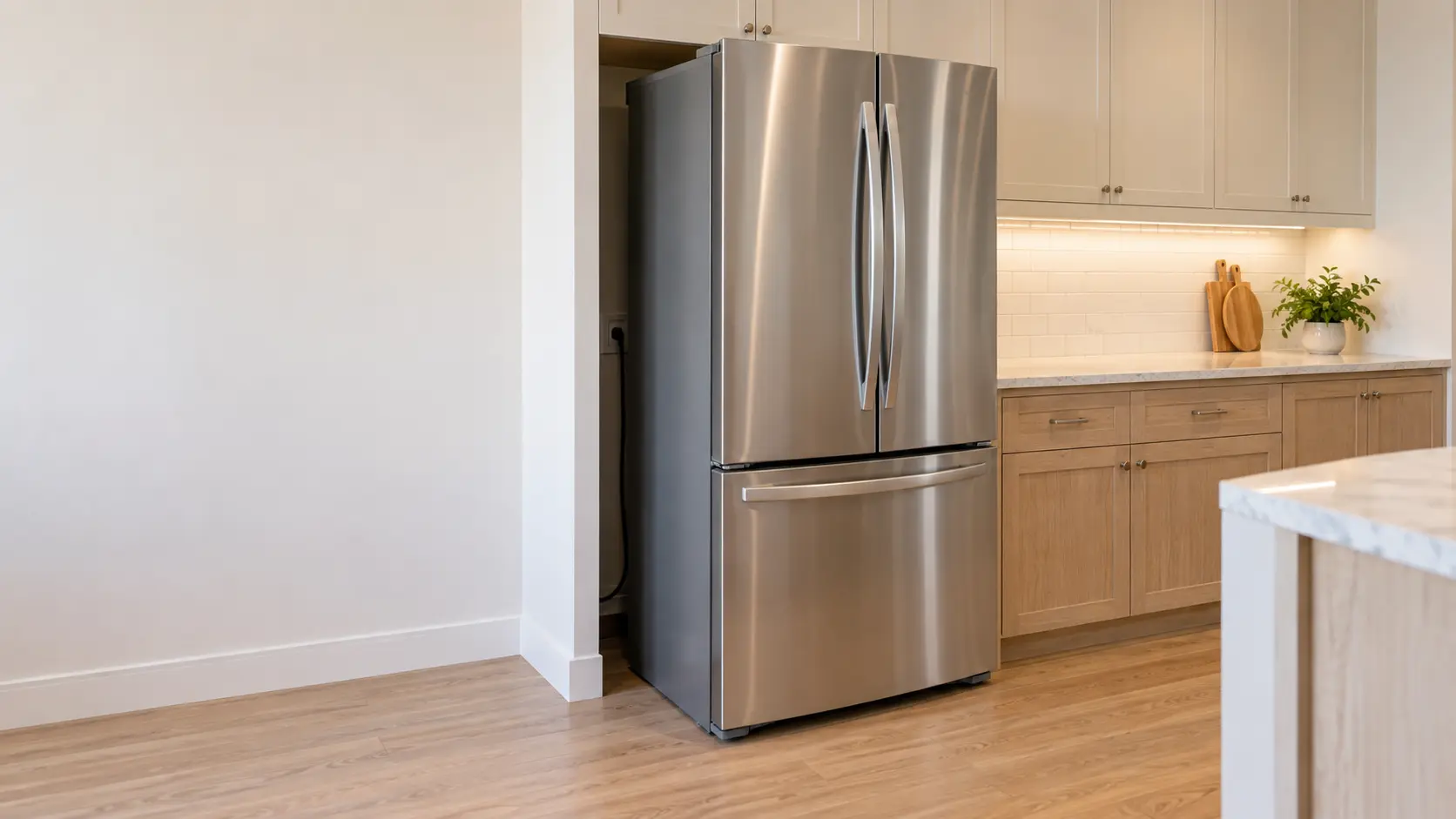
Check the appliance is level and not touching the cabinets or the wall.
Time the noise; anything on a several-hour cycle is probably the ice maker.
Also worth checking
- Listen at the back and at the bottom and say where it is loudest.
- Note whether it started suddenly or has grown over weeks.
How soon does it need a visit?
Most refrigerator noises are not urgent. A new knocking or deep humming from the compressor, especially with any loss of cooling, is the exception.
The causes,
cheapest first.
5 things refrigerator making a loud noise turns out to be, from not level, or touching a cabinet to compressor or its mounts.
The cost guide-
01 no repair
Not level, or touching a cabinet
A unit resting against a wall or a neighboring cabinet transmits normal vibration into the structure, which amplifies it.
-
02 no repair
Ice maker cycling
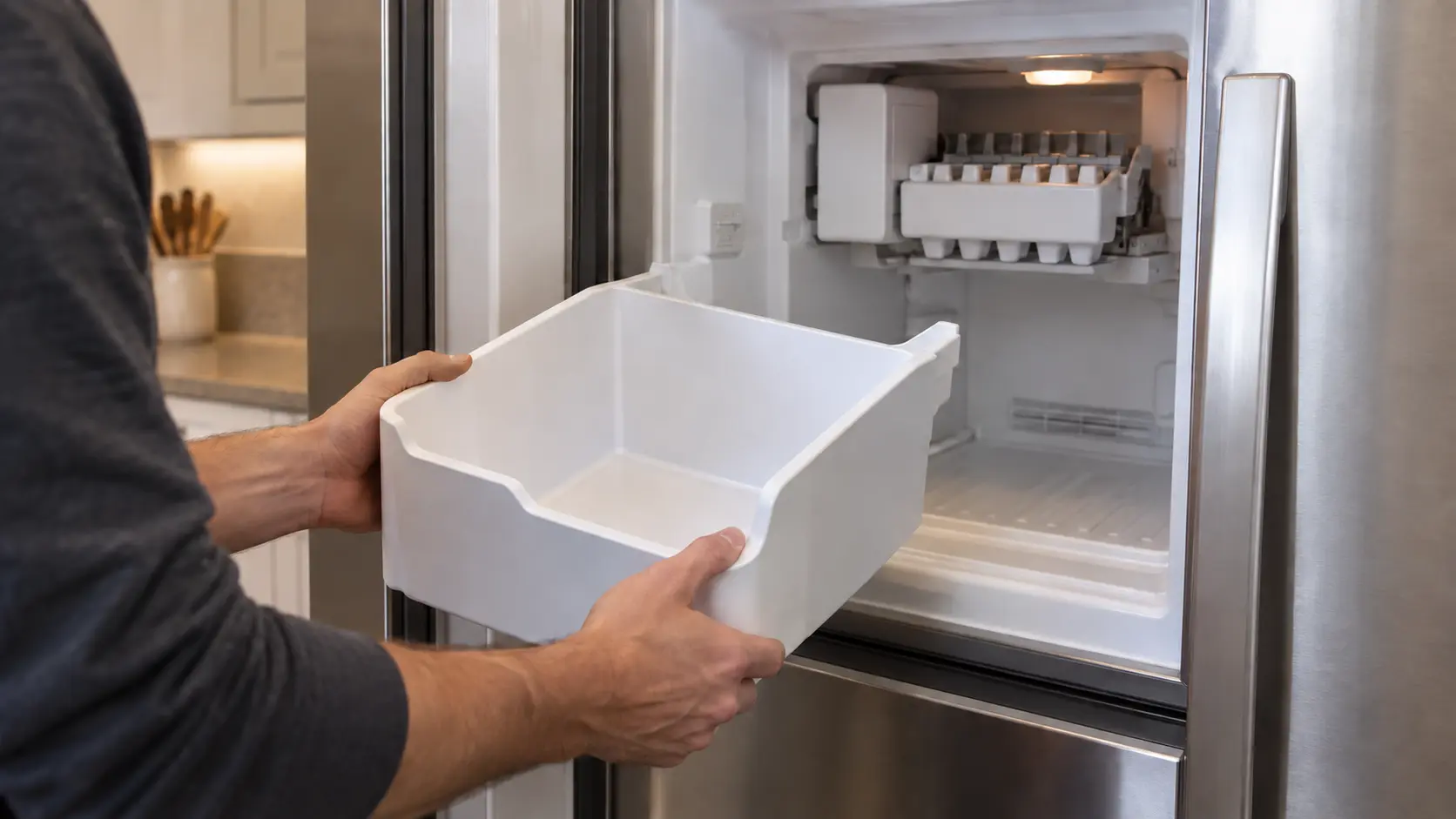
A short burst of clicking and rushing water every few hours is the ice maker filling and harvesting, and it is normal.
-
03 low
Evaporator fan hitting frost
A fan blade catching ice makes a distinctive intermittent scraping, and it stops the moment the freezer door opens.
-
04 low
Condenser fan obstructed
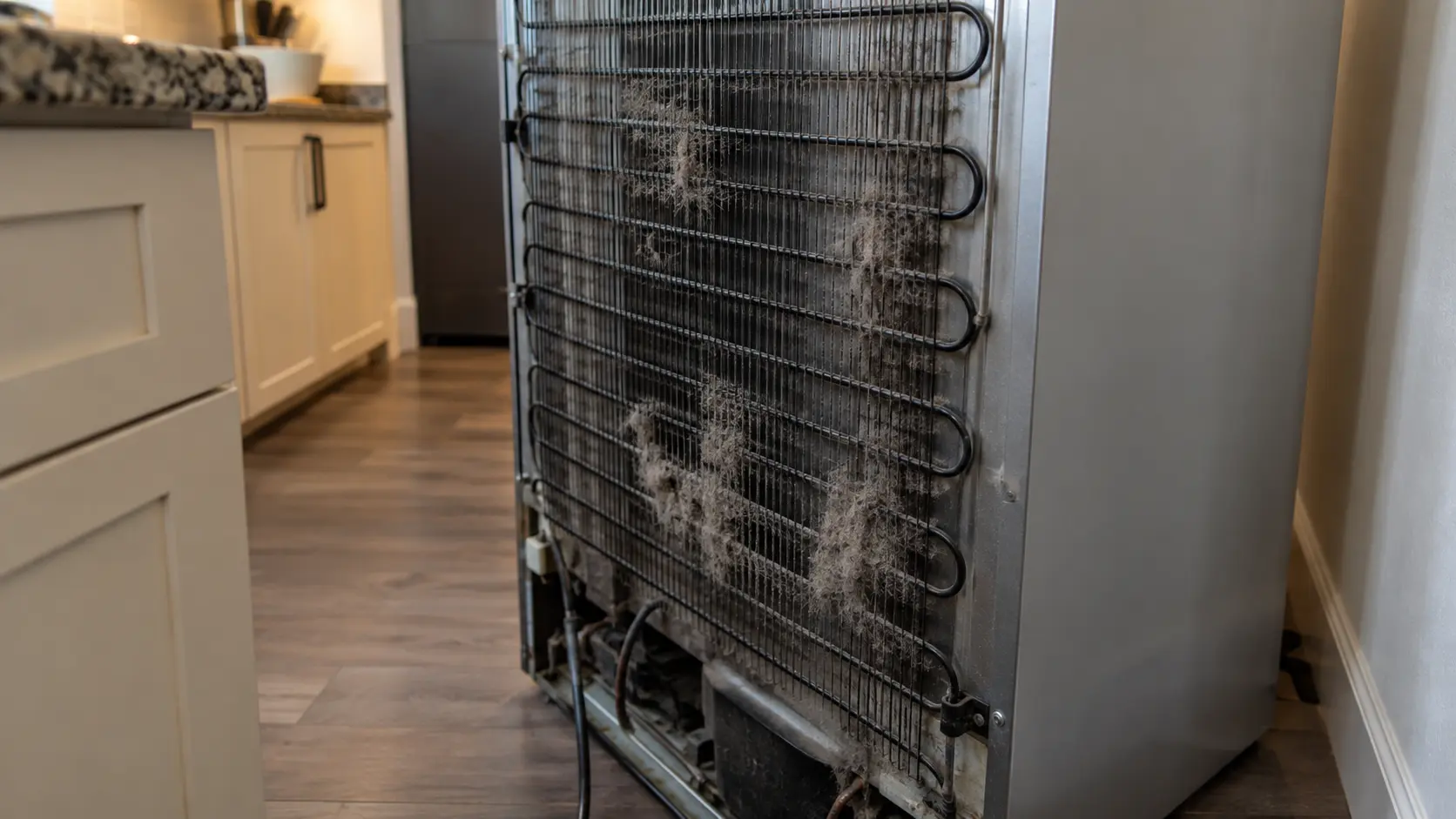
Debris in the fan at the bottom or back gives a rattle that does not change when doors are opened.
-
05 moderate to highest
Compressor or its mounts
A knock or a deep hum from the bottom rear that is new and getting worse is the one noise worth acting on quickly.
-
What it costs
Every repair on the site's cost scale, side by side
Open the cost guide
What else
it could be.
Most often confused with frost building up in the refrigerator, then refrigerator running constantly.
All problems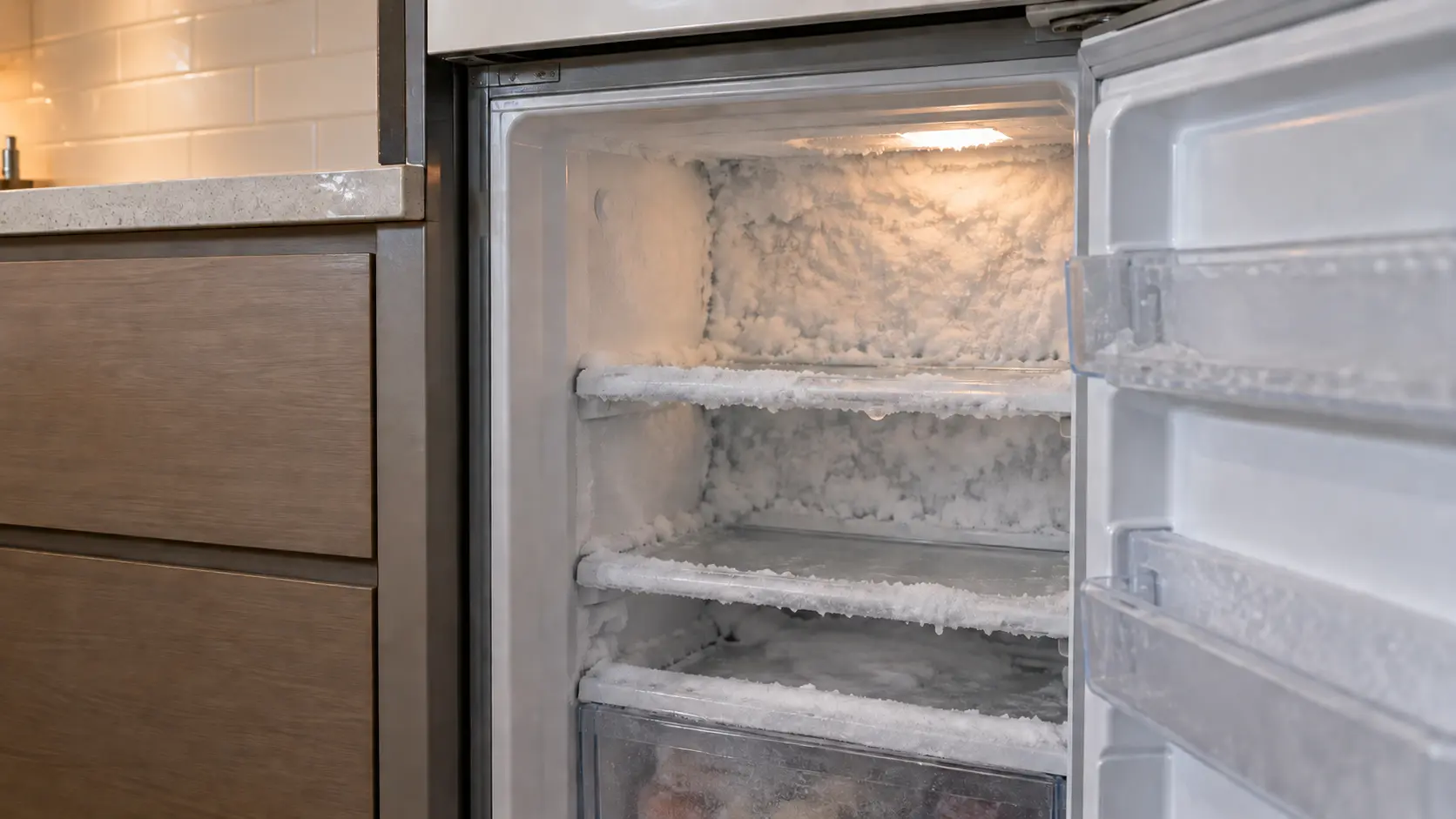
The makes
it happens on.
31 makes on this site; refrigerator making a loud noise can show up on any of them. Each mark opens that make's own page.
All 31 brandsRefrigerator Making a Loud Noise,
where we come out.
9 metros, each with its own page.
All service areasTampa BayFL · 31 areas
Miami / South FloridaFL · 47 areas
New York MetroNY · 75 areas
HoustonTX · 36 areas
ChicagoIL · 50 areas
Los AngelesCA · 95 areas
San DiegoCA · 31 areas

Questions about
refrigerator making a loud noise.
Is gurgling or hissing normal?
Why is my new refrigerator louder than the old one?
It got noisier after we moved it. Was it damaged?
How do I capture the noise for the technician?
Back to your everyday
Still seeing refrigerator making a loud noise?
Book with what you checked above — 5 answers save the technician the first part of the visit.