First decide whether it is actually a problem
Clear cycles versus variable-speed compressors
Older refrigerators ran in clear cycles: on for a stretch, off for a similar stretch, with an audible click at each end. Many current models, especially premium built-ins and French door units, use variable-speed or inverter compressors that slow down instead of stopping. Those can run for most of the day at a low hum, and that is how they save energy.
What to look for alongside the running
So the sound alone proves little, and a refrigerator never stops running on some designs without anything being wrong. What matters is whether the running is accompanied by something else:
- A compartment warmer than it should be
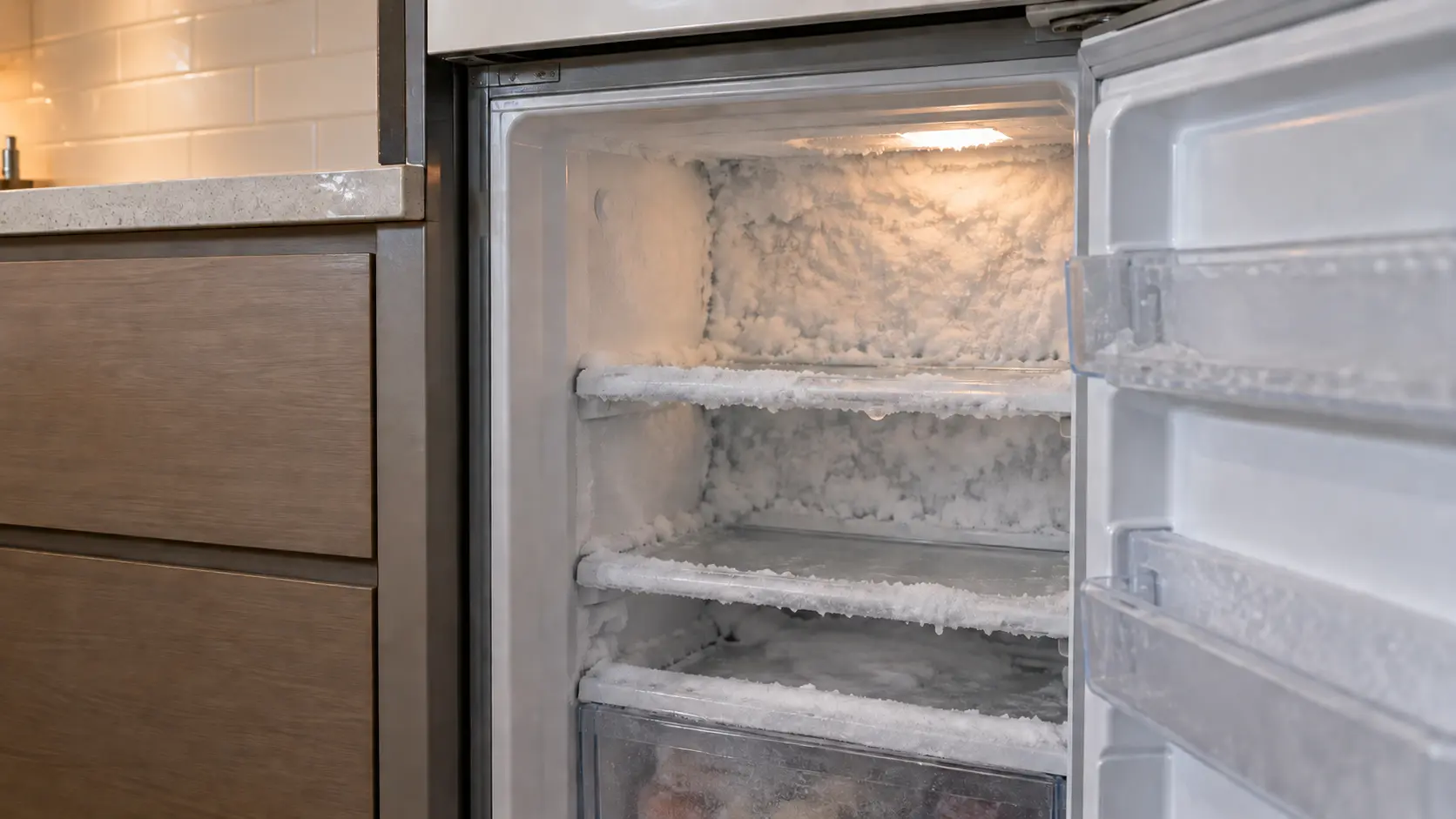
- Frost where there was none
- A hot cabinet side
- A noise that has changed character
Source: GE Appliances — side-by-side refrigerator owner's manual 49-60198 — High-efficiency compressors run longer; 1-inch top and back clearance
The kitchen around it
Before blaming a part, consider the room and the way the unit was installed.
Heat the room adds
These give a refrigerator more heat to fight, and it will run longer:
- Standing beside a range
- Standing in full afternoon sun
- A kitchen that reaches 85°F in summer
- A load of warm food after a big grocery trip, which can keep the compressor going for several hours without anything being wrong
Gaps around the cabinet
Installation plays a part as well. A freestanding French door or side-by-side unit pushed flush against the wall, or boxed in by cabinets with no gap at the top, recirculates its own warm exhaust. An undercounter unit whose grille has been partly covered by a new toe-kick has the same problem in a much tighter space.
Freestanding models generally list a minimum gap at the top, sides and back in the installation instructions, often an inch or so. Built-ins and columns are engineered to sit tight in their openings because they breathe from the front, which is exactly why their front grille matters so much.
Source: GE Appliances — side-by-side refrigerator owner's manual 49-60198 — High-efficiency compressors run longer; 1-inch top and back clearance; ENERGY STAR — Refrigerators (placement and coil cleaning) — Place it away from ovens and sun; keep the coils clean

When the condenser cannot keep up
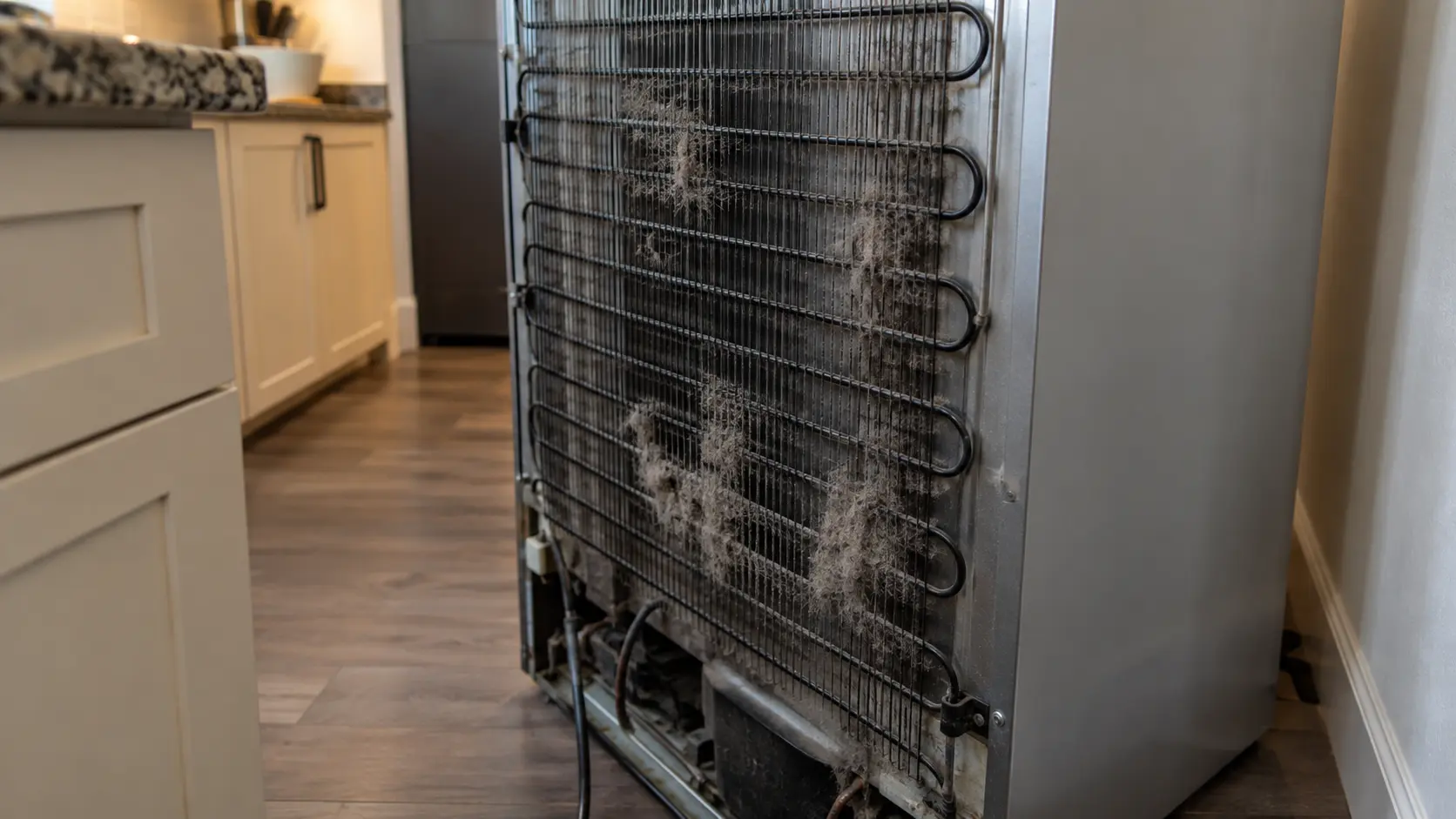
The condenser is where heat leaves, and anything that slows that exchange lengthens every run. Where it sits depends on the type.
| Type | Condenser location |
|---|---|
| Built-in | Behind the grille above the doors |
| Column | Each tower has its own |
| Most freestanding models | Under the cabinet behind the kick plate, with a fan at the back pulling air across it |
The hand test at the air outlet
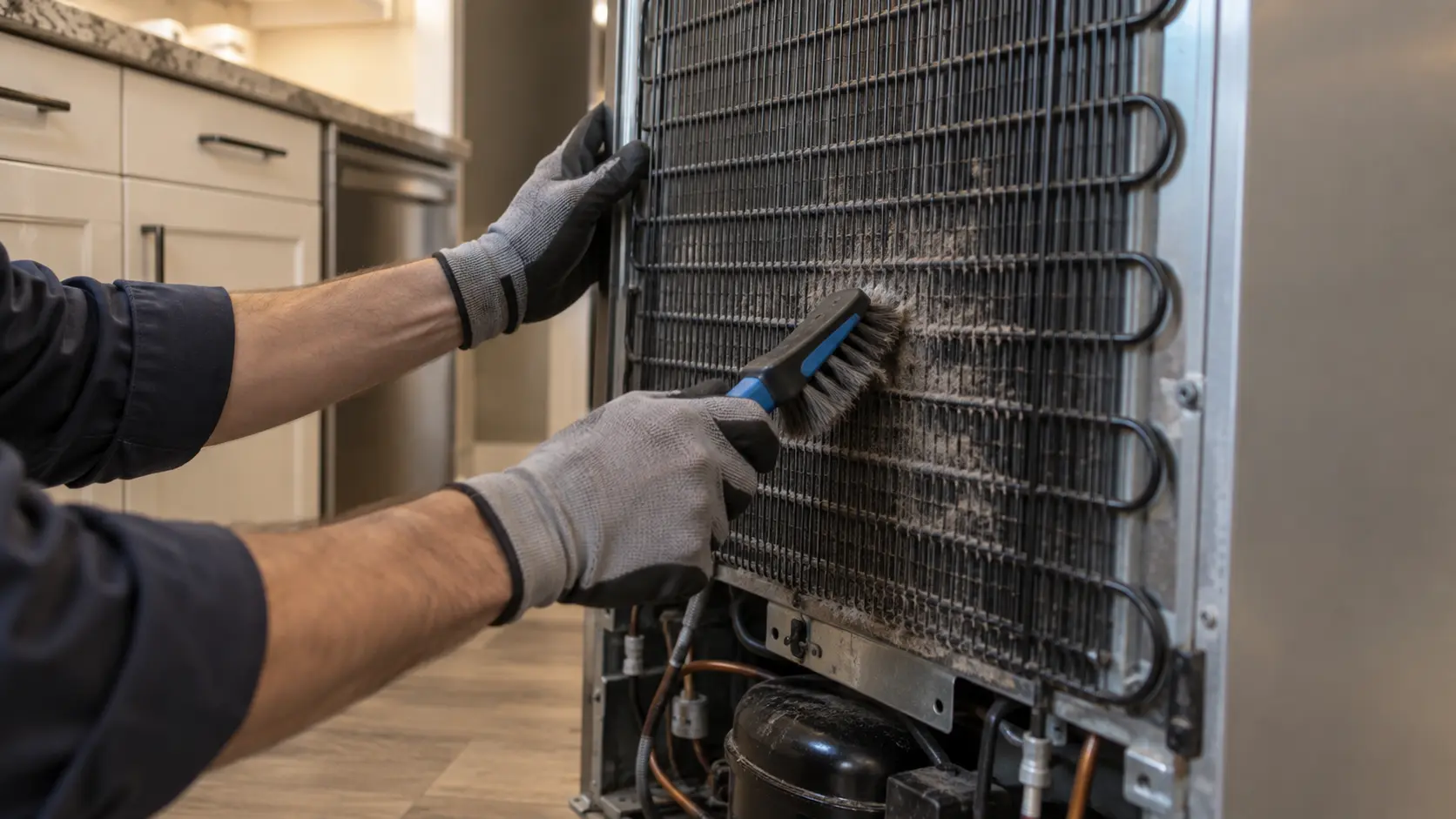
Put a hand near the air outlet while the compressor runs. There should be a steady flow of warm air. A trickle, or dead air with a hot compressor, suggests either a coil matted with dust or a condenser fan that has stopped or slowed.
Coil cleaning and fan replacement
Cleaning the coil with a soft brush and a vacuum, with the unit unplugged, is ordinary owner maintenance; replacing the fan motor is not much more, but it means working near the compressor wiring.
Source: ENERGY STAR — Refrigerators (placement and coil cleaning) — Place it away from ovens and sun; keep the coils clean
When warm air keeps getting in
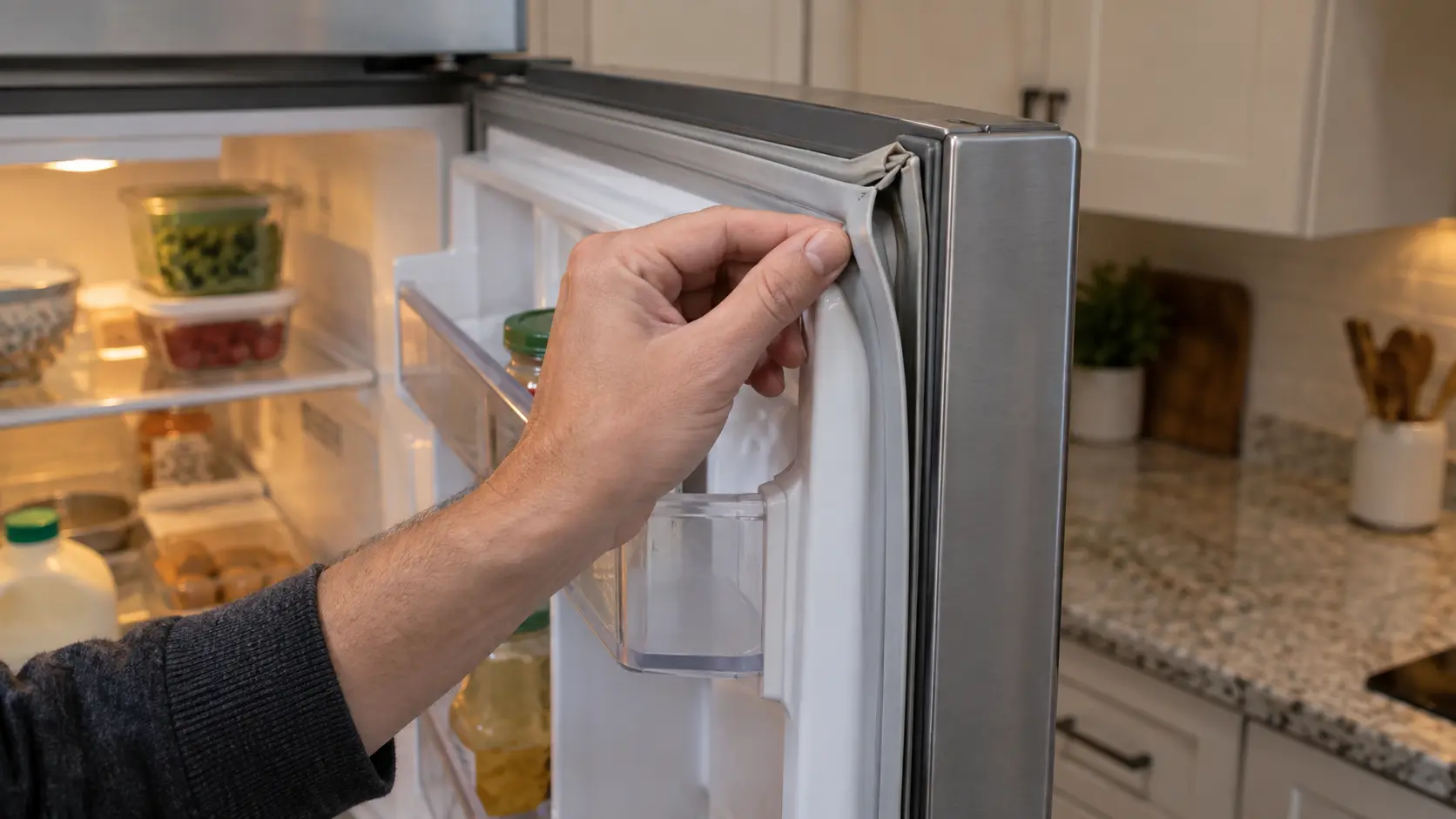
A gasket that no longer seals
A gasket that no longer seals lets a thin stream of humid kitchen air in around the clock, and the compressor keeps running to remove it. The clues are:
- Condensation on the inside of the door liner
- Frost forming near the door edge in the freezer
- A gasket that looks flattened or torn at the hinge corners
Doors out of line
Door alignment is the other half, and each type drifts in its own way:
- Heavy panel-ready doors on built-ins and columns drift out of line over the years.
- A French door mullion flap that stays upright leaves a gap in the middle.
- A side-by-side freezer door loaded with ice and bottles sags at the top.
- A unit that tilts forward slightly will not let its doors swing shut on their own, so even a leveling adjustment can shorten the run time.
Humidity makes it worse
Humidity makes all of this worse. In a humid summer a small gasket leak brings in far more moisture, the evaporator frosts faster, and the run time climbs noticeably even though the gap in the door has not changed at all.
When the controls are wrong about the temperature
If the room is normal, the condenser is clear and the doors seal, the next suspect is what the control thinks.
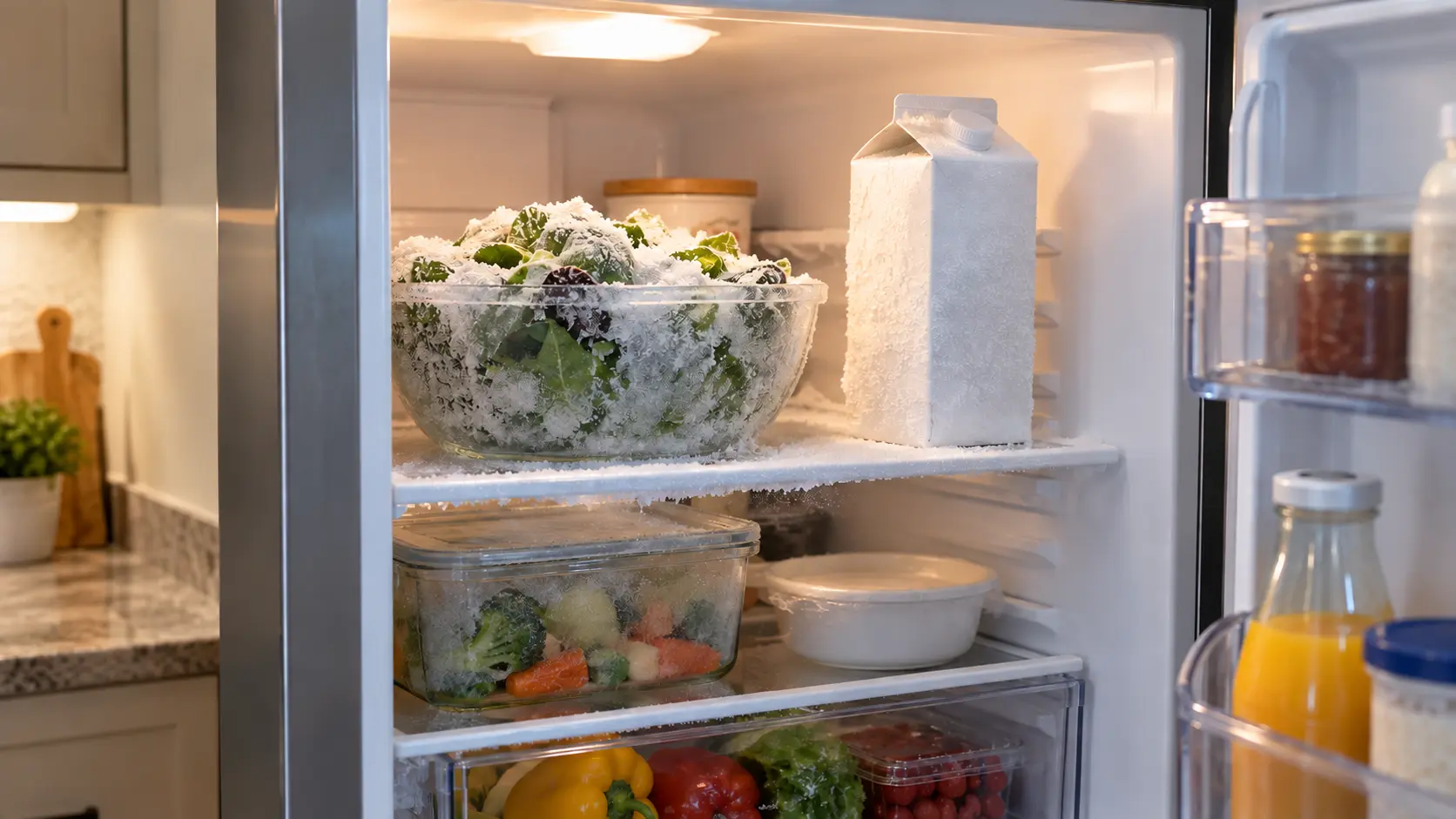
A sensor reading warmer than reality
A thermistor that reads warmer than reality keeps calling for cold that is not needed, and the usual result is an overcold compartment alongside the constant running: frozen lettuce, slushy milk, ice in the butter bin.
A coil that never defrosts
Defrost belongs here too. A coil that never defrosts gradually insulates itself with frost, the cabinet takes longer and longer to reach temperature, and the compressor stops resting at all. Constant running that has slowly worsened over a few weeks, together with frost on the freezer's back panel, points in that direction.
Why it is worth dealing with while the food is still cold
A compressor that never rests runs hotter and wears faster, and the start components around it take the strain first. Energy use rises steadily, which often shows up on the electric bill before it shows up in the food. Catching the cause while the cabinet is still holding temperature usually means the repair is small: a clean coil, a fan, a gasket or a sensor.
Waiting tends to turn the same problem into a warm-cabinet call, sometimes on a weekend with a full freezer. On a built-in or column, where the compressor is part of an appliance designed to be repaired for many years, that wear is worth avoiding.