Why this one pattern narrows things so quickly
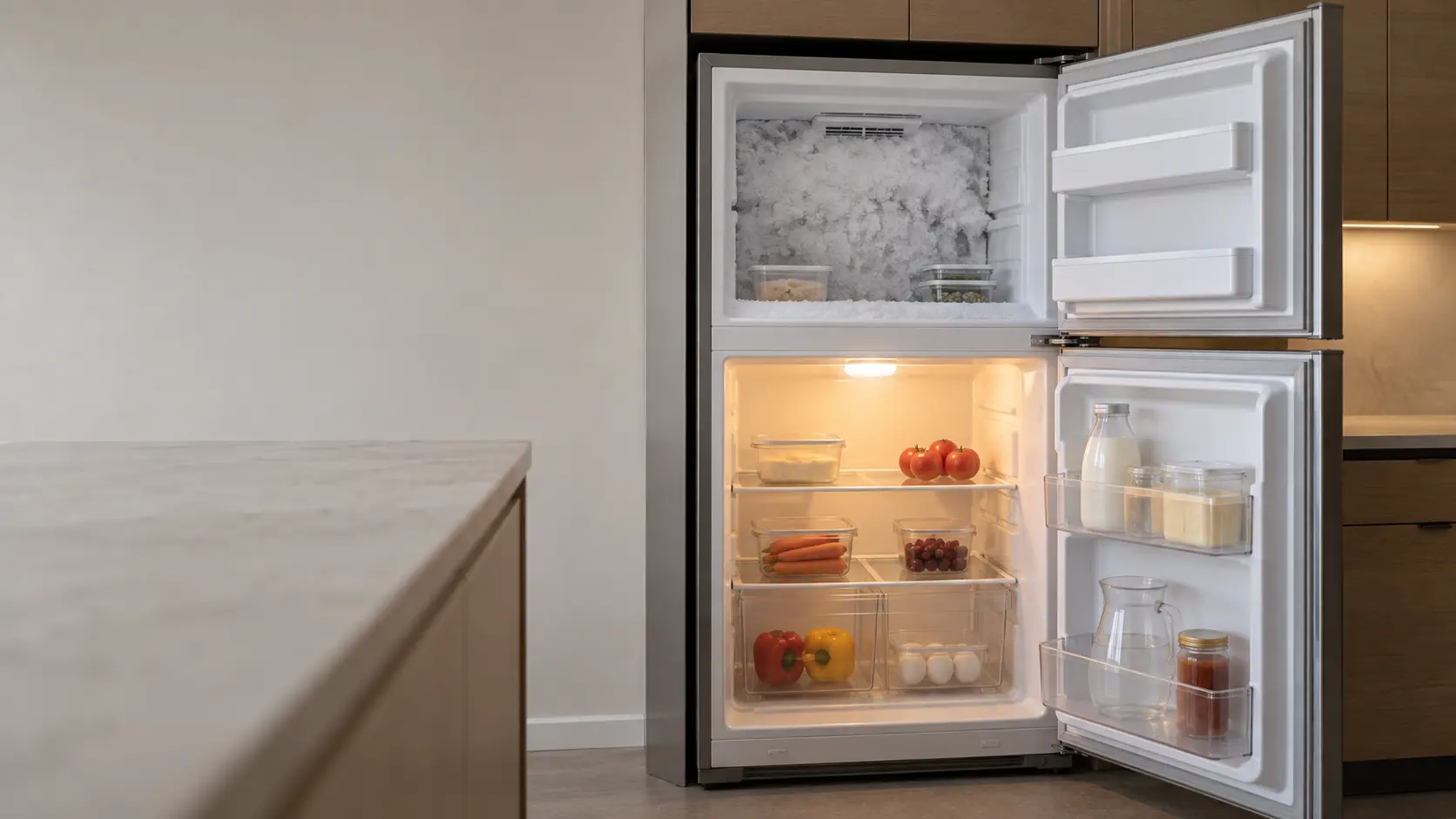
On most refrigerators sold in the US there is one evaporator, and it lives in the freezer. Everything cold in the fresh-food compartment arrived there as air blown up or across from that coil. So in the fridge warm, freezer cold situation, the question stops being whether the appliance can make cold and becomes where the air stopped traveling.
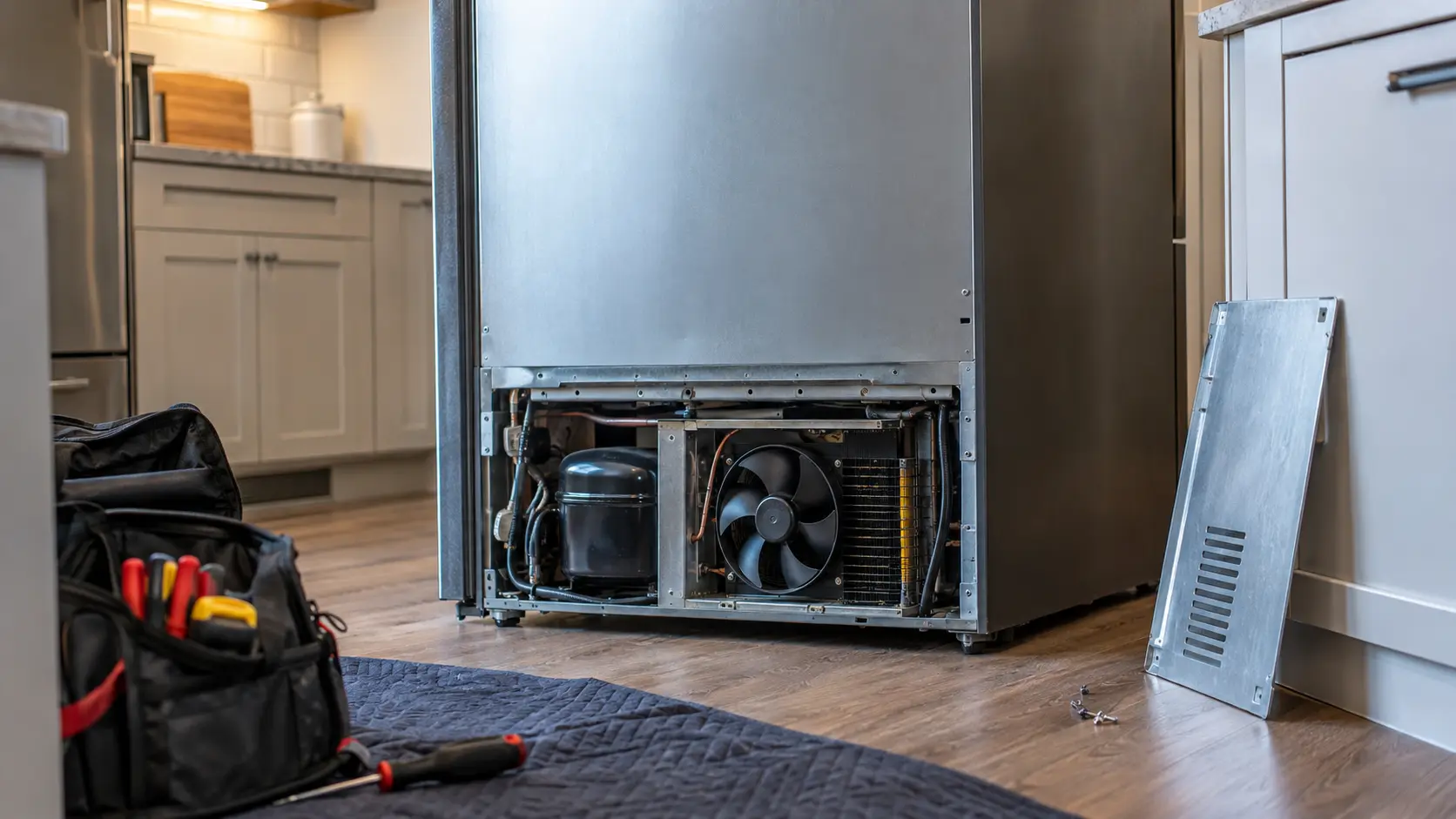
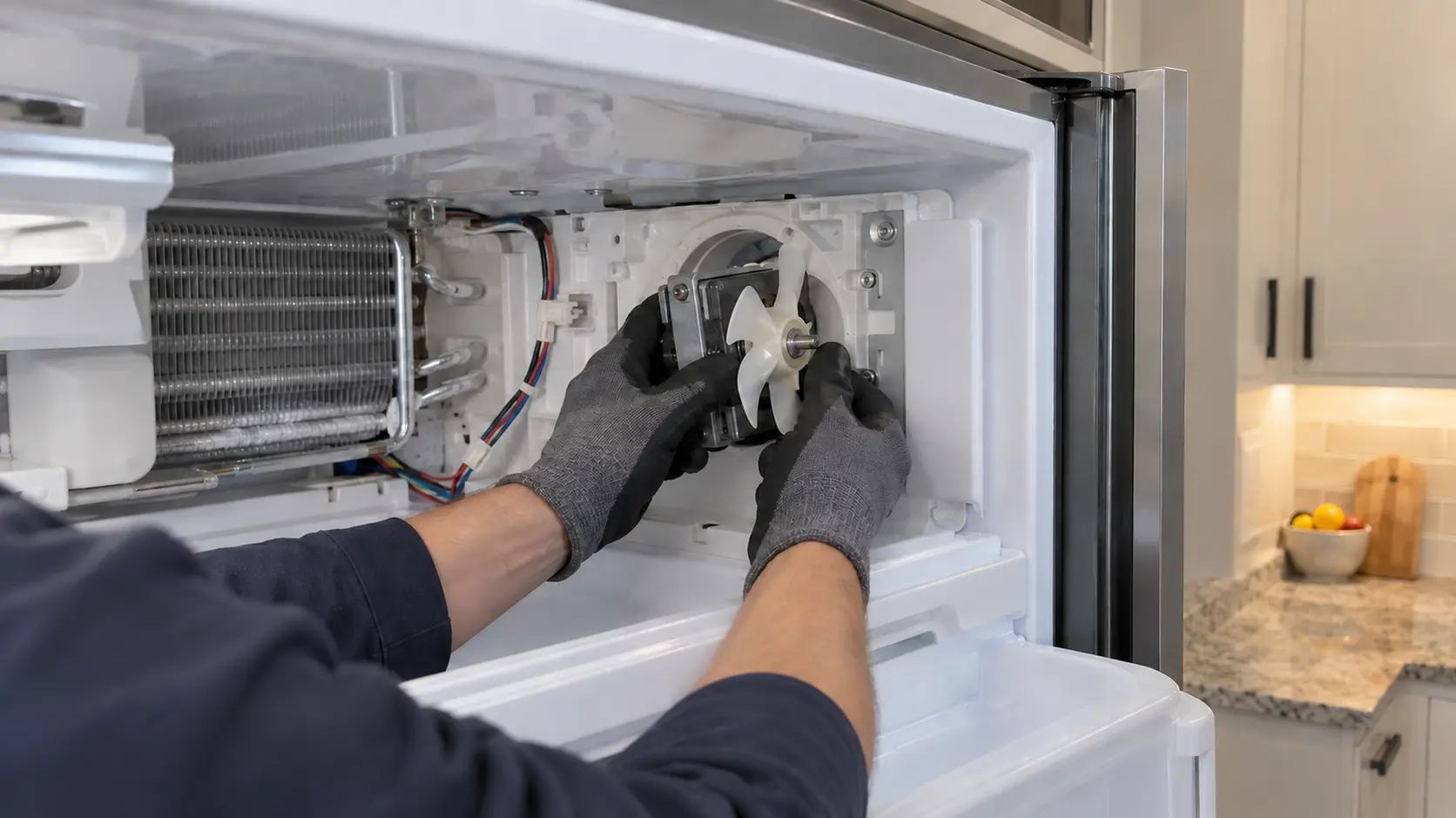
That shift matters because it removes the costliest repair from the likely list. The parts that do fail along the air path are serviced from inside the cabinet and rarely call for anything beyond an ordinary repair visit:
- Fans.
- Heaters.
- Sensors.
- Small motorized flaps.
Reading the back wall of the freezer
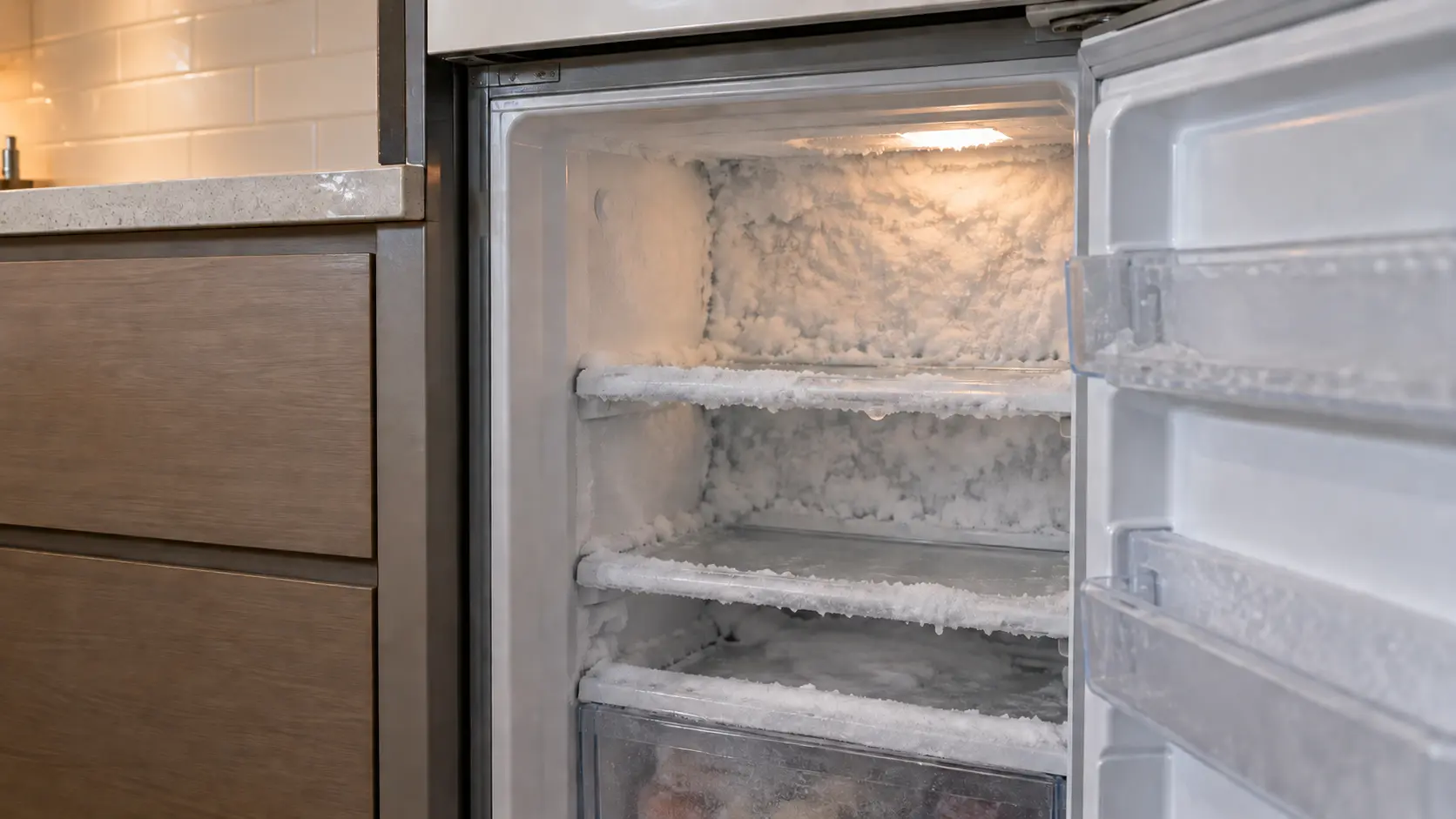
The panel at the back of the freezer covers the evaporator, and it gives away more than any other surface in the appliance.
Look, then listen twice
- Take everything off the rear of the top shelf.
- Look at the panel closely.
- Listen with the door closed for thirty seconds.
- Listen again with the door open.
The three pictures you will find
What you find generally falls into one of three pictures, and each one points somewhere different.
- Snow-white frost across the panel or packed around the fan grille: defrost has stopped and the coil is choking itself.
- A clean panel and no fan sound with the door shut: the evaporator fan has stopped.
- A clean panel and a running fan, but no air at the fresh-food vent: a damper or duct is closed or iced.

How the layout changes the answer
The pattern means something different on each layout, because not every refrigerator feeds the fresh-food side from the freezer. Some built-ins and all true columns work differently from the side-by-side and French door models most kitchens have.
| Layout | How the fresh-food side gets cold | What the pattern points to |
|---|---|---|
| Side-by-side | Air crosses from the freezer through a short duct, often metered by a motorized damper at the top of the divider wall | A damper that freezes shut or loses its motor leaves the freezer untouched and the right-hand side warming steadily |
| French door | Air travels upward from the freezer drawer through a channel in the back wall | Ice forming in that channel produces the same result |
| Built-in with dual evaporators | A coil and fan for each compartment | A cold freezer says almost nothing about the warm side except that household power is fine |
| Column pair | The refrigerator column is a separate appliance from the freezer column beside it | The same: the freezer column only proves the power is fine |
| Undercounter | Usually a single compartment | The pattern cannot occur unless it is a combination model with a small freezer section |
Source: GE Appliances — side-by-side refrigerator owner's manual 49-60198 — Side-by-side electronic dampers click open and closed to meter cold air; Dacor — 24-inch column refrigeration user manual — Columns installed as a pair are separate refrigerators, set individually
The slow version: frost that took weeks to build
The most common way this pattern arrives is gradual. Defrost fails, a little frost stays on the coil after each cycle, and over days or weeks it grows until air can barely pass. Because the freezer sits right next to the coil it stays cold the longest, while the fresh-food side, at the far end of the duct, warms first.
Two small signs beforehand
Owners often notice two small things before the fresh-food side is plainly warm:
- The freezer seems slightly louder, because a fan blade is catching ice.
- The fresh-food side has needed its setting turned colder more than once.
What a manual defrost proves
A manual defrost, doors open and the unit unplugged for a day with towels down, will usually bring cooling back for a while, which confirms the diagnosis but does not repair the heater, thermostat or control that caused it.
What you can rule out yourself
Three checks cost nothing and are worth doing in this order before anyone opens a panel.
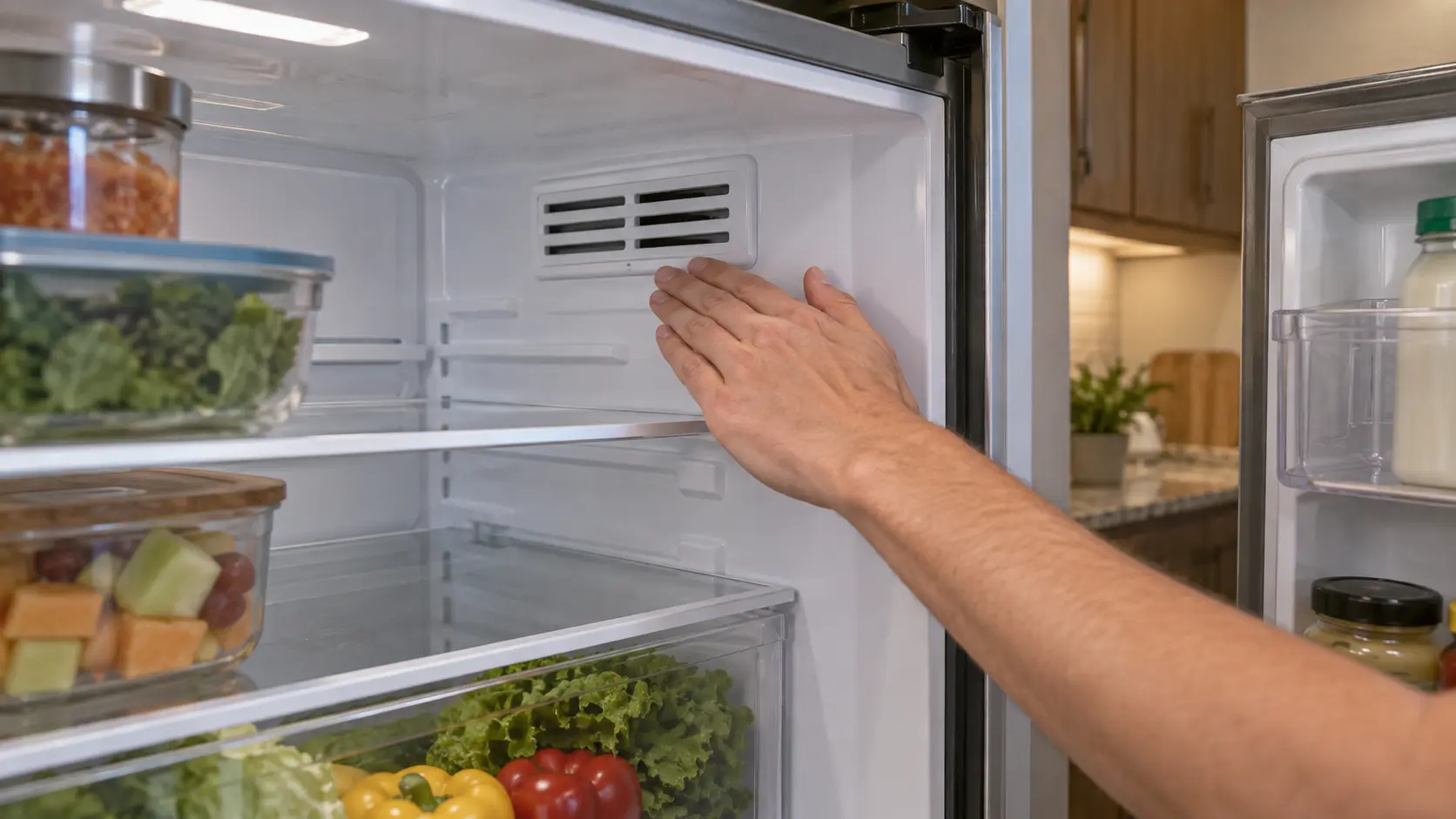
Clear the fresh-food vents
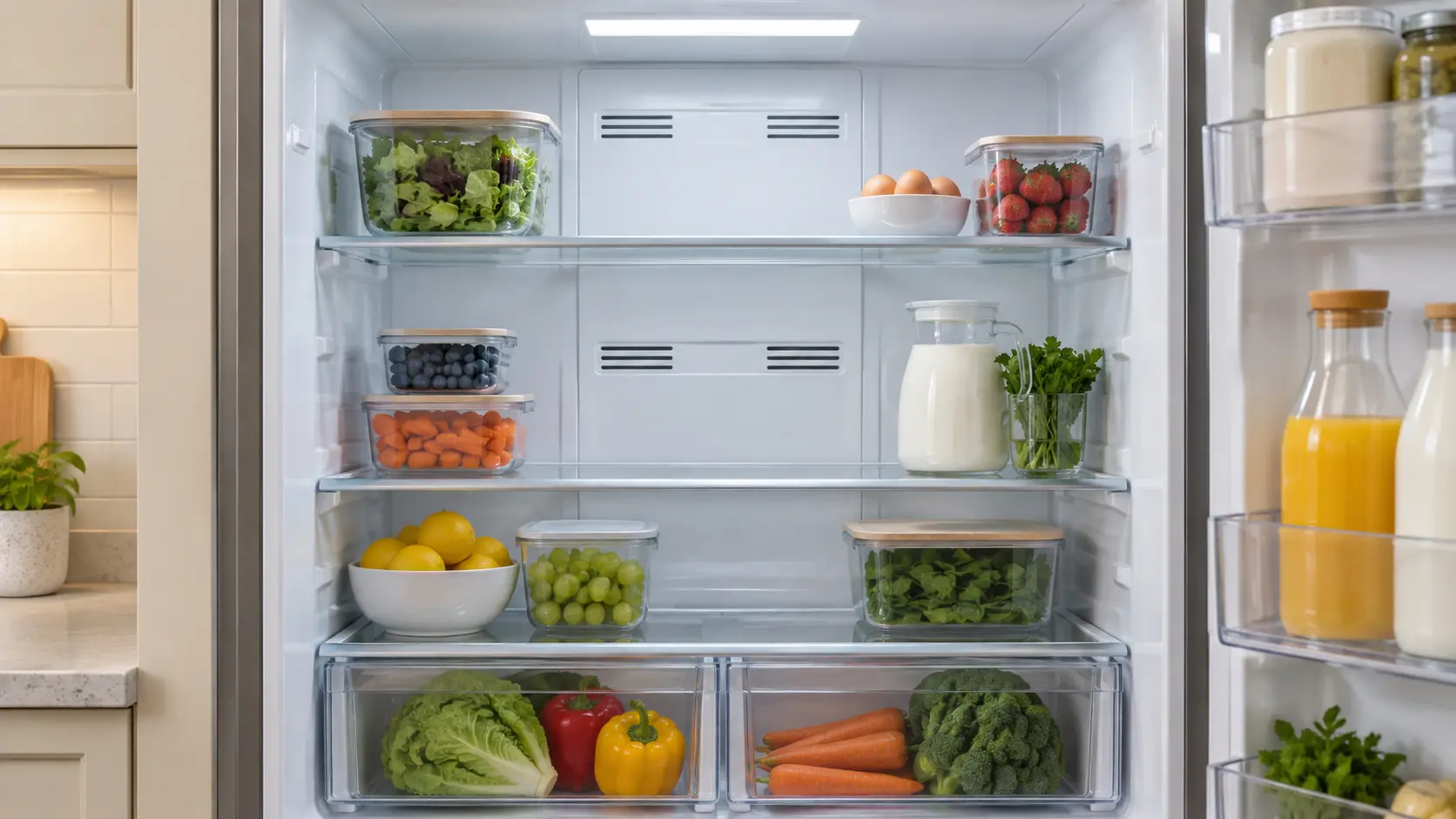
Start with the vents inside the fresh-food compartment. They are usually slots high on the back wall, and a gallon of milk or a stack of containers pushed against them will starve the compartment of air as surely as a failed fan. Move everything 2 inches forward and see whether the temperature starts to recover over the next several hours.
Check the fresh-food setting
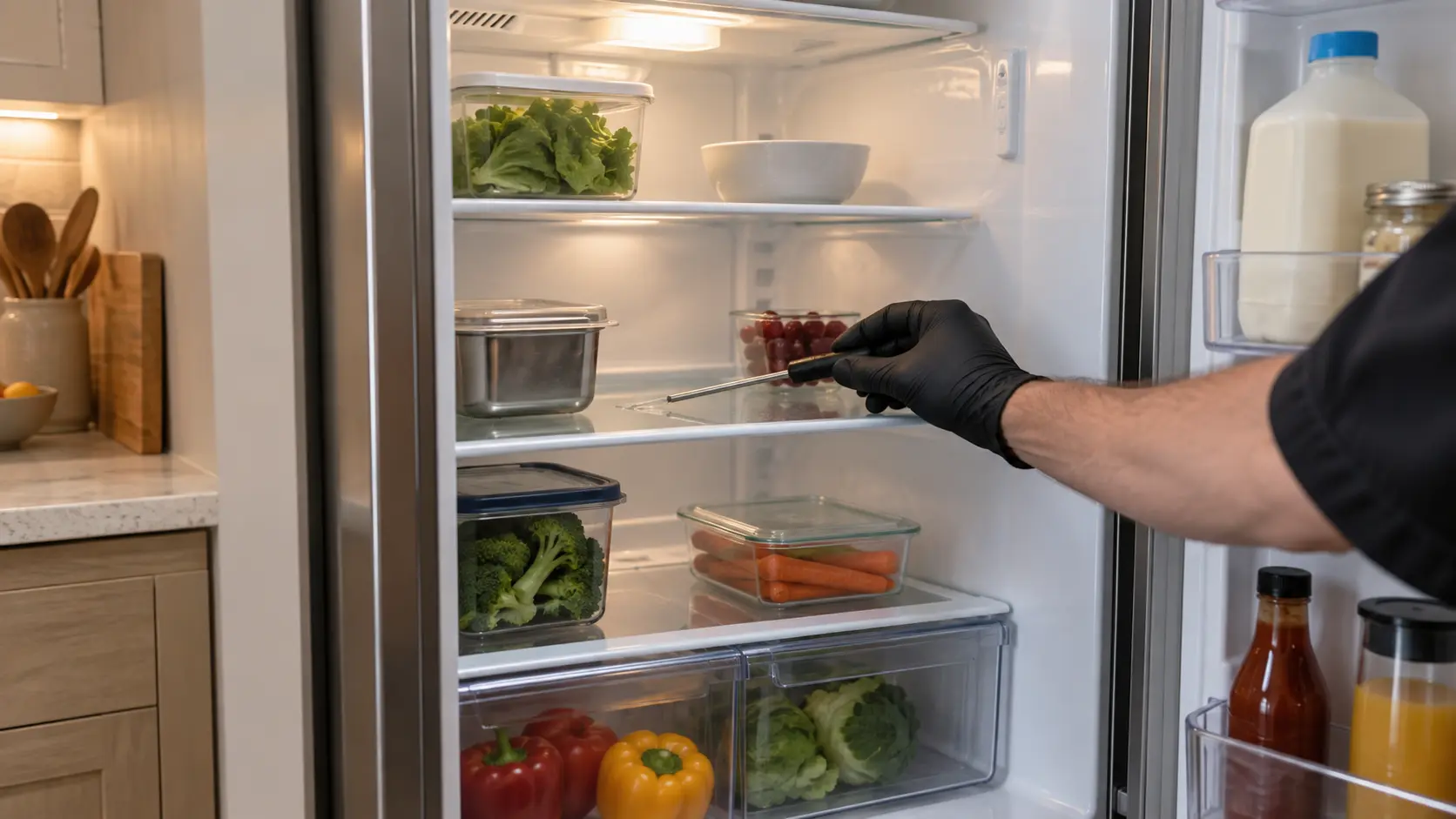
Then check the setting. On some models the fresh-food temperature and the freezer temperature are set independently, and a fresh-food control that was bumped to its warmest point will look exactly like this pattern. A thermometer in a glass of water on the middle shelf gives a steadier reading than one sitting loose in the air.
Check the return air path on an overloaded cabinet
A cold, clean freezer with an overflowing fresh-food side is also worth a second look. A French door model loaded so full that the crisper drawers push against the back wall can block the return air path at the bottom, and the compartment warms from the lower shelves up while the freezer drawer below it stays perfectly frozen.
Source: FDA — Are You Storing Food Safely? — Do not crowd the refrigerator so tightly that air cannot circulate
What to write down before anyone visits
A technician arriving at this pattern will ask the same handful of questions, and having the answers ready shortens the visit. Note these:
- The temperature in each compartment from a separate thermometer, not the display, against the FDA line of 40°F for fresh food.
- Roughly when the fresh-food side started to feel warm, and whether the change was gradual over days or noticeable overnight.
- What you saw on the freezer's back panel and what you heard with the door closed.
- If you tried a manual defrost, how long cooling lasted afterward, because the number of days before it failed again helps separate a heater from a defrost thermostat or a control.
- On a side-by-side or French door unit, any recent change in the ice maker's output, since a freezer running unusually cold can change it.
Source: FDA — Food and Water Safety During Power Outages and Floods — Keep the refrigerator compartment at or below 40°F