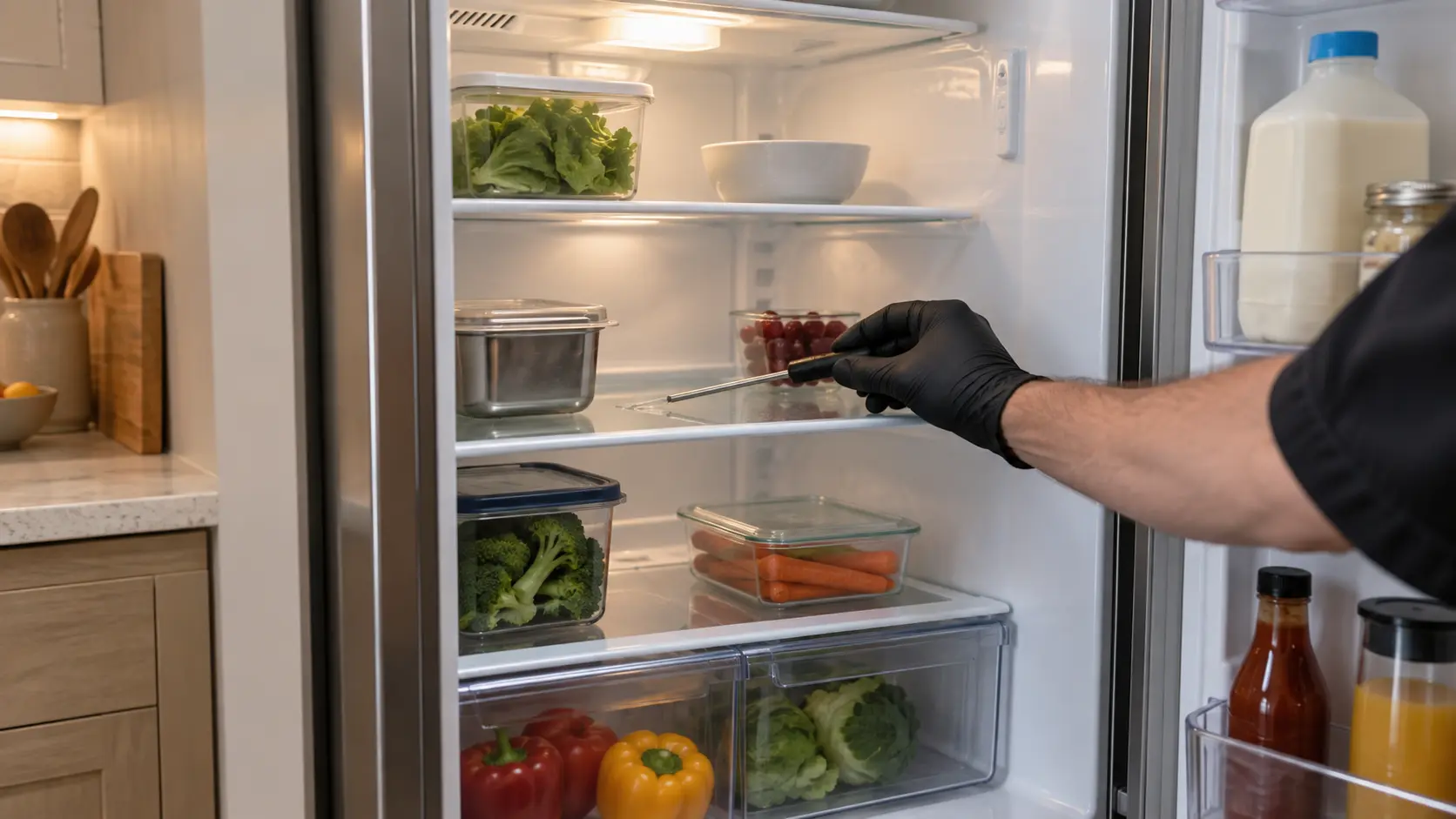
Why the order matters more than the list
Any list of reasons a refrigerator stops cooling will name the same dozen parts. What such lists rarely say is how often each one is actually the answer, and that ranking is what decides where to look first. Checking the cheap, common causes before the rare, costly ones saves a visit more often than not.
The order below reflects what tends to turn up across every layout and every manufacturer. A built-in and a small undercounter unit fail in the same sequence, even though the parts sit in very different places:
- Moving air
- Frost and defrost
- Doors and settings
- Sensors and controls
- The sealed system
First: the heat has nowhere to go
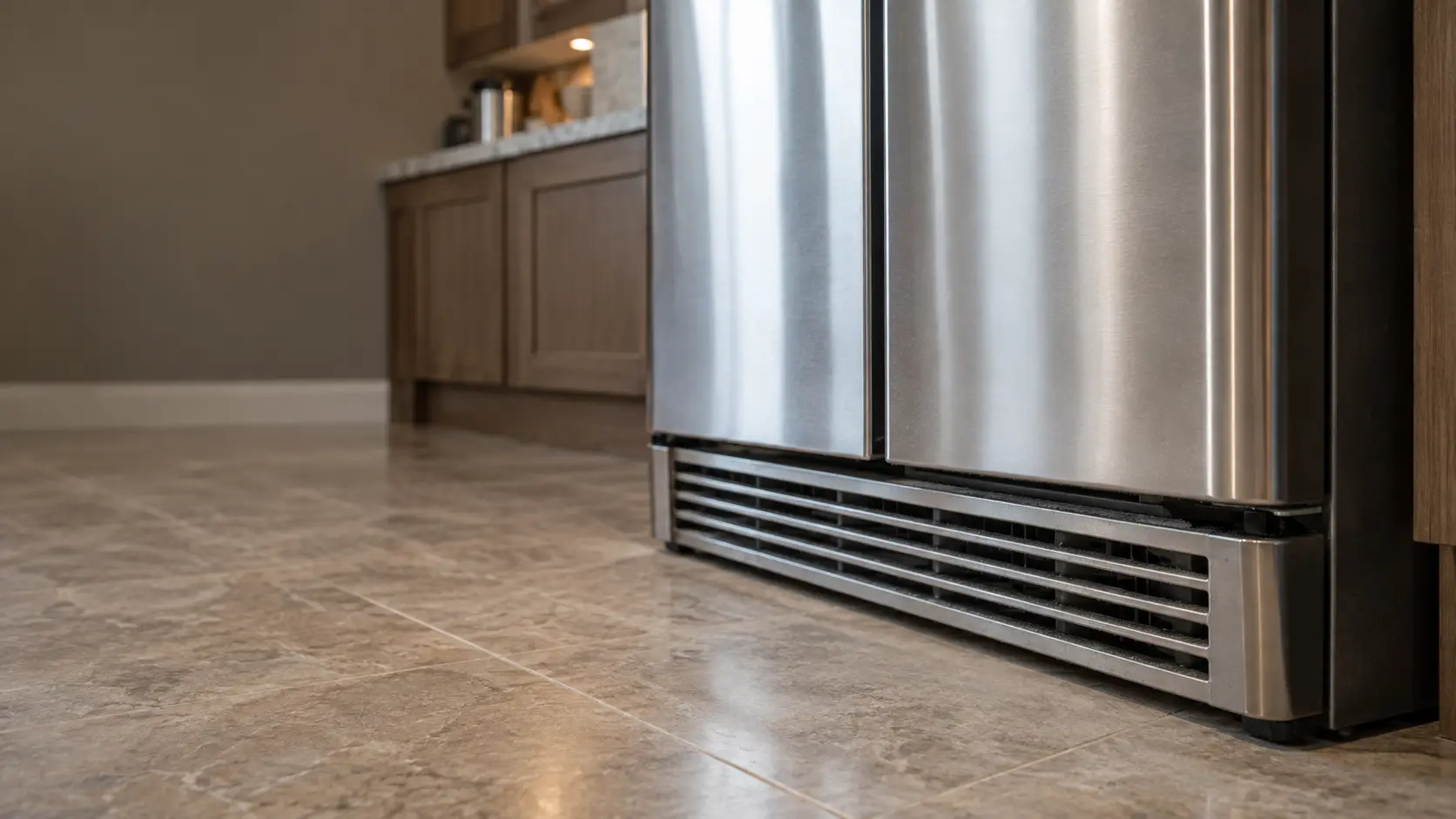
A refrigerator does not create cold so much as move heat out of the cabinet and dump it into the kitchen through the condenser. If the condenser cannot shed that heat, the whole cycle loses efficiency, the compressor runs longer, and the fresh-food side is usually the first place the loss shows up.
Where the condenser lives depends on the type.
| Type | Condenser location | Air supply |
|---|---|---|
| Built-in | Behind the grille above the doors | That grille is its only source of air |
| Column | One condenser for each tower | Usually a grille at the top or a kick plate at the floor |
| French door and side-by-side | Mostly underneath, behind the kick plate | A small fan at the back |
| Undercounter | Behind the grille at its toe | Breathes entirely through that grille |
Signs the condenser is starved of air
- Gray felt of lint and pet hair across the coil fins
- A rug, trash can or toe-kick trim pressed against a front grille
- A condenser fan at the back that is silent while the compressor hums
- A freestanding unit pushed tight to the wall with no gap behind it
Source: ENERGY STAR — Refrigerators (air behind the unit, clean coils) — A few inches behind the fridge, and clean condenser coils
Second: cold is made but not moved
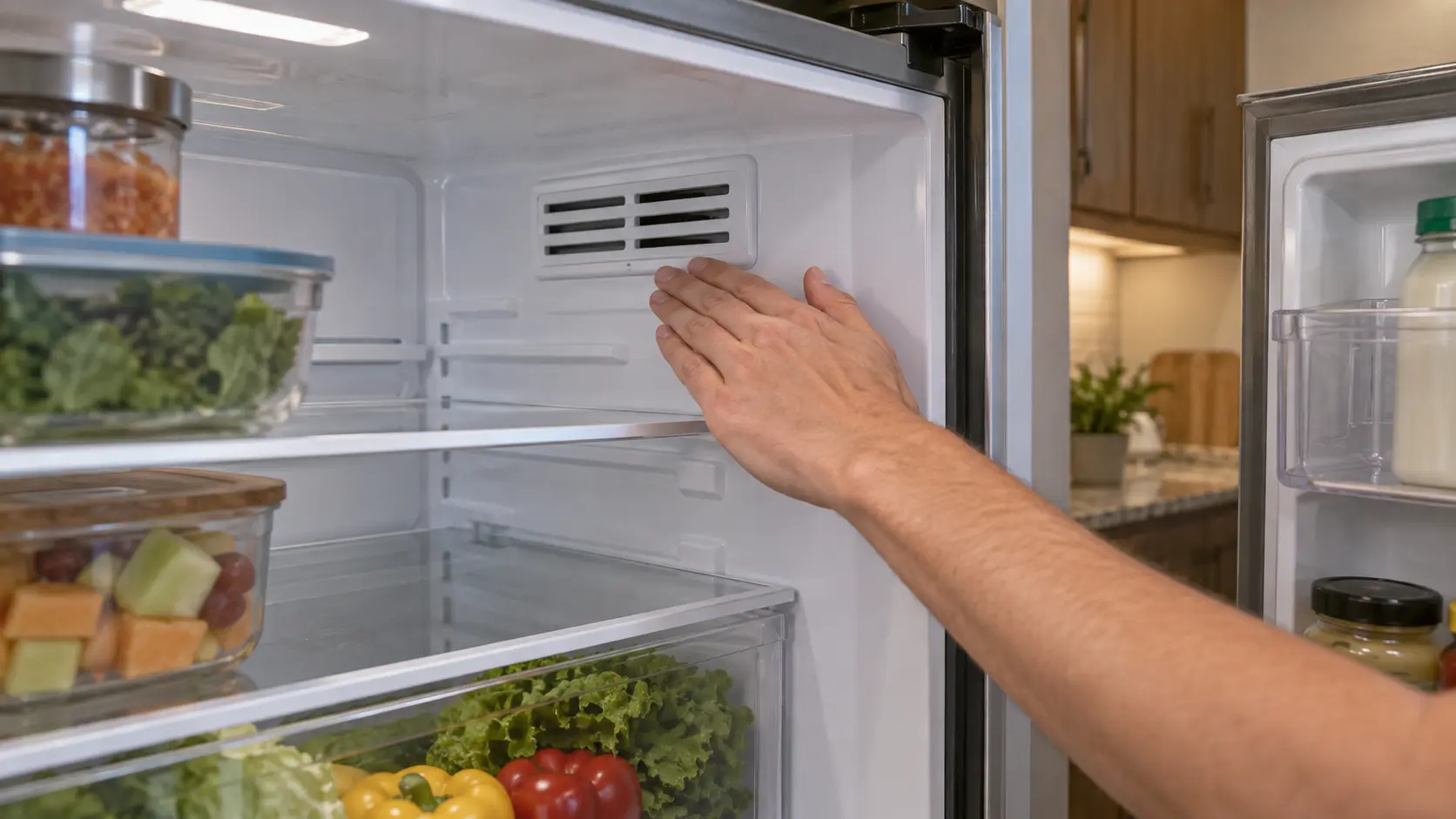
Inside, a single evaporator coil usually sits behind a panel at the back of the freezer, and a small fan pushes its cold air through ducts into both compartments. If that fan stops, or if the coil disappears under a block of frost, the freezer may stay reasonably cold while the fresh-food side climbs past the 40°F line FDA sets.
Frost on the coil and the defrost parts behind it
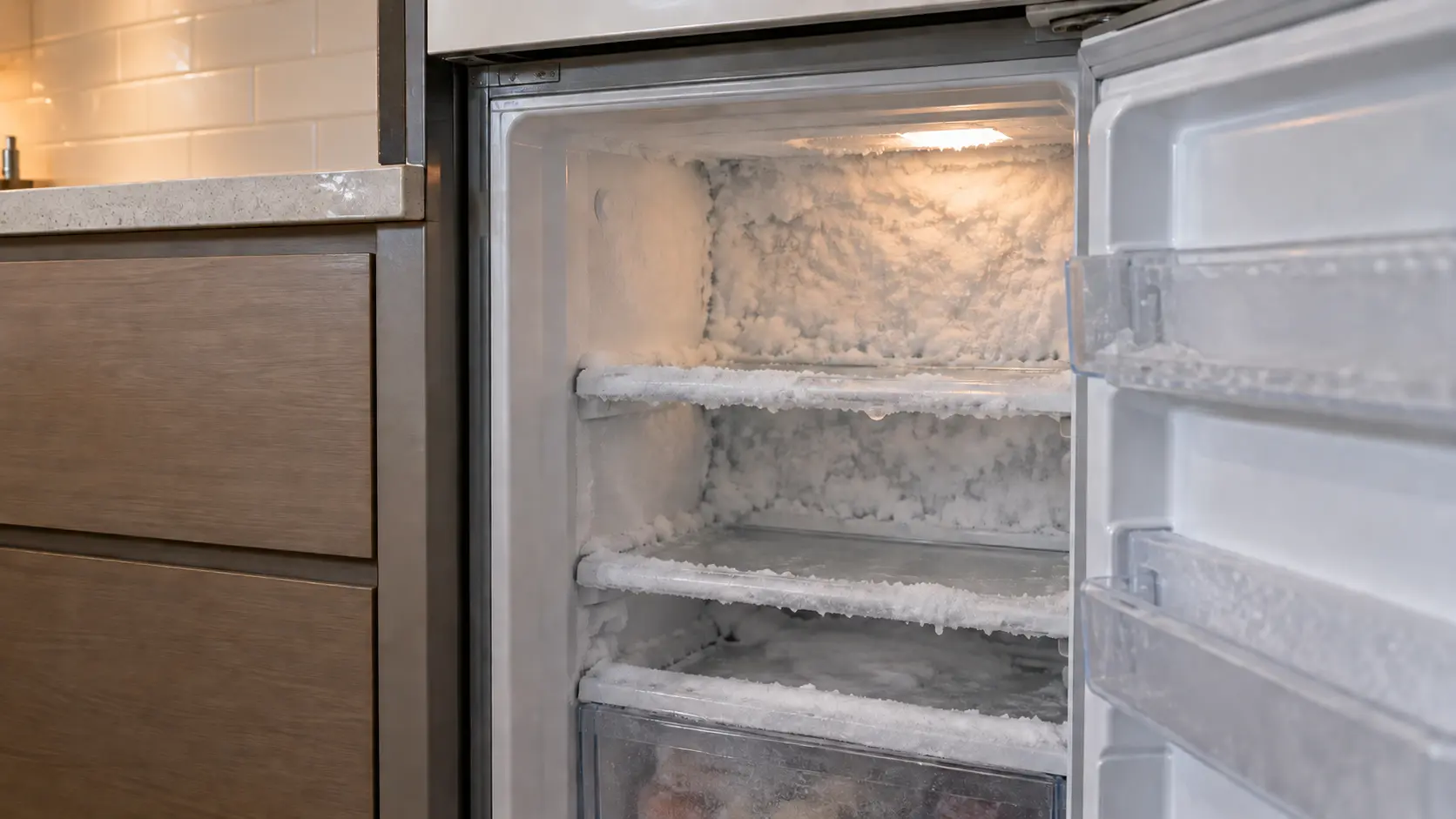
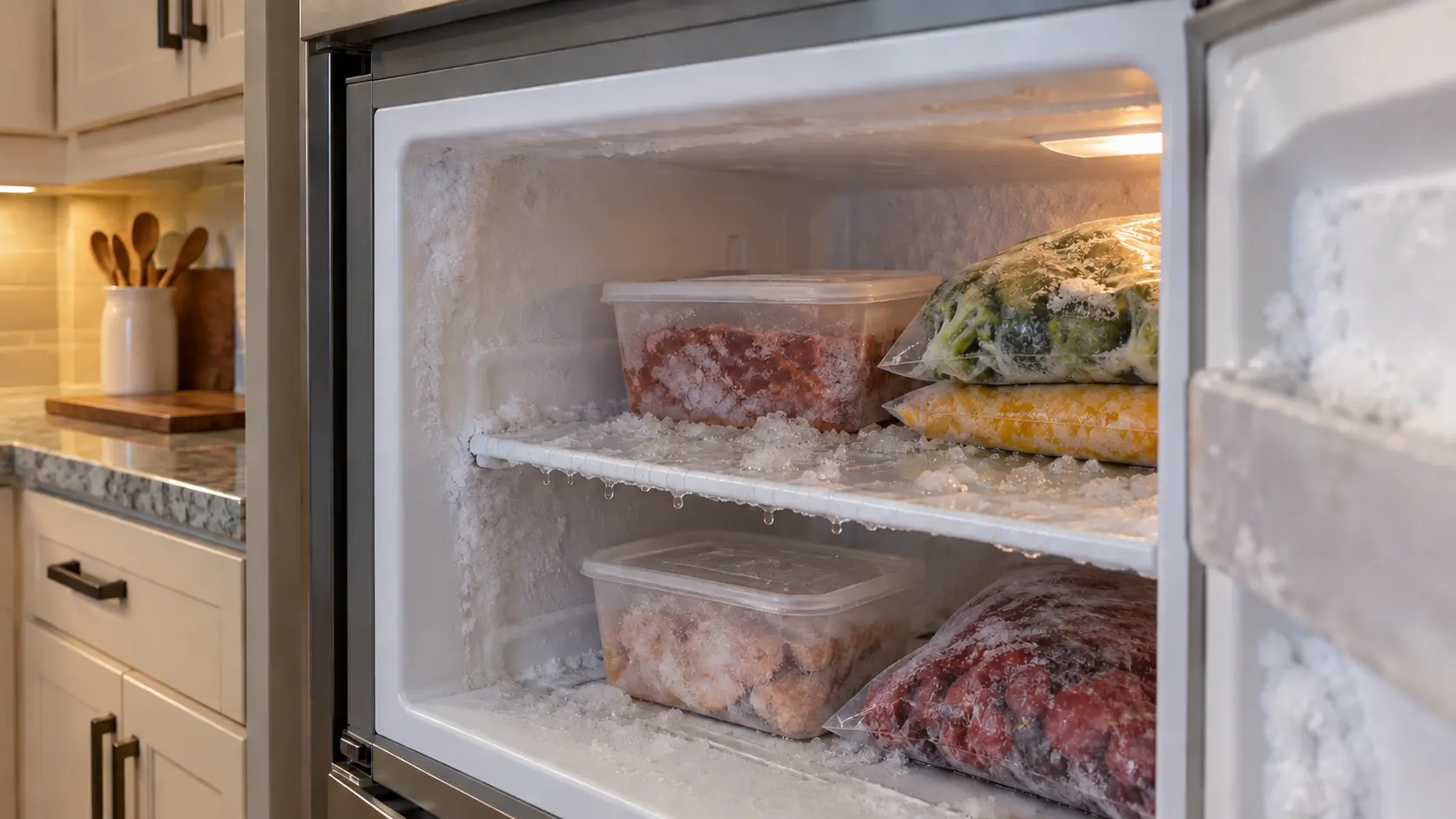
Frost on the coil almost always means the automatic defrost has stopped working. A thick white layer on the freezer's back panel, or ice around the fan opening, is the visible sign. The part that has stopped is one of these:
- The defrost heater
- The thermostat on the coil
- The timer or board that schedules defrost
Columns and built-ins with separate evaporators
Columns and many built-ins have a separate evaporator for each compartment, so on those a warm side points at that side's own fan or defrost rather than at a shared duct.
Source: FDA — Power Outages: Key Tips for Consumers About Food Safety — Refrigerators should be kept at 40°F or below; FDA — Food and Water Safety During Power Outages and Floods — Refrigerator at or below 40°F, freezer at or below 0°F
Third: doors, loads and settings
Doors that do not quite close
A door that does not quite close lets humid room air in all day. Each type has its own way of getting there:
- French door: the hinged flap on the left door has to fold behind the right door, and when it sticks upright both doors rest slightly ajar.
- Side-by-side: a heavy dispenser door can sag until its top corner no longer meets the gasket.
- Panel-ready built-in: each hinge carries a cabinet front, and that weight slowly pulls the doors out of line.
Settings and overloading
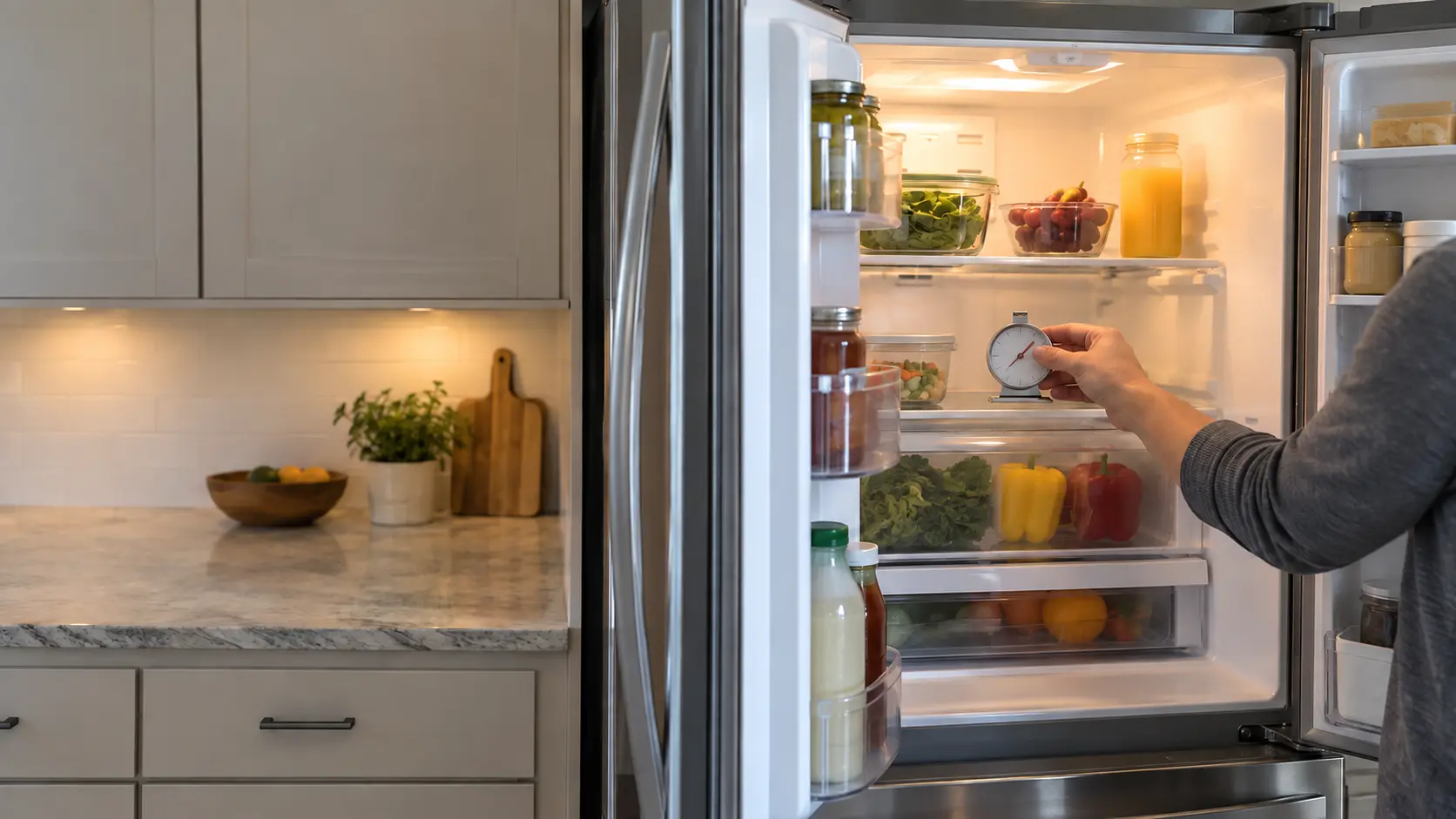
Settings deserve a look too, because they change more often than people think. A control nudged during cleaning, a vacation or energy-saving mode, or a showroom mode left on after delivery can all leave the lights working and the cabinet warm.
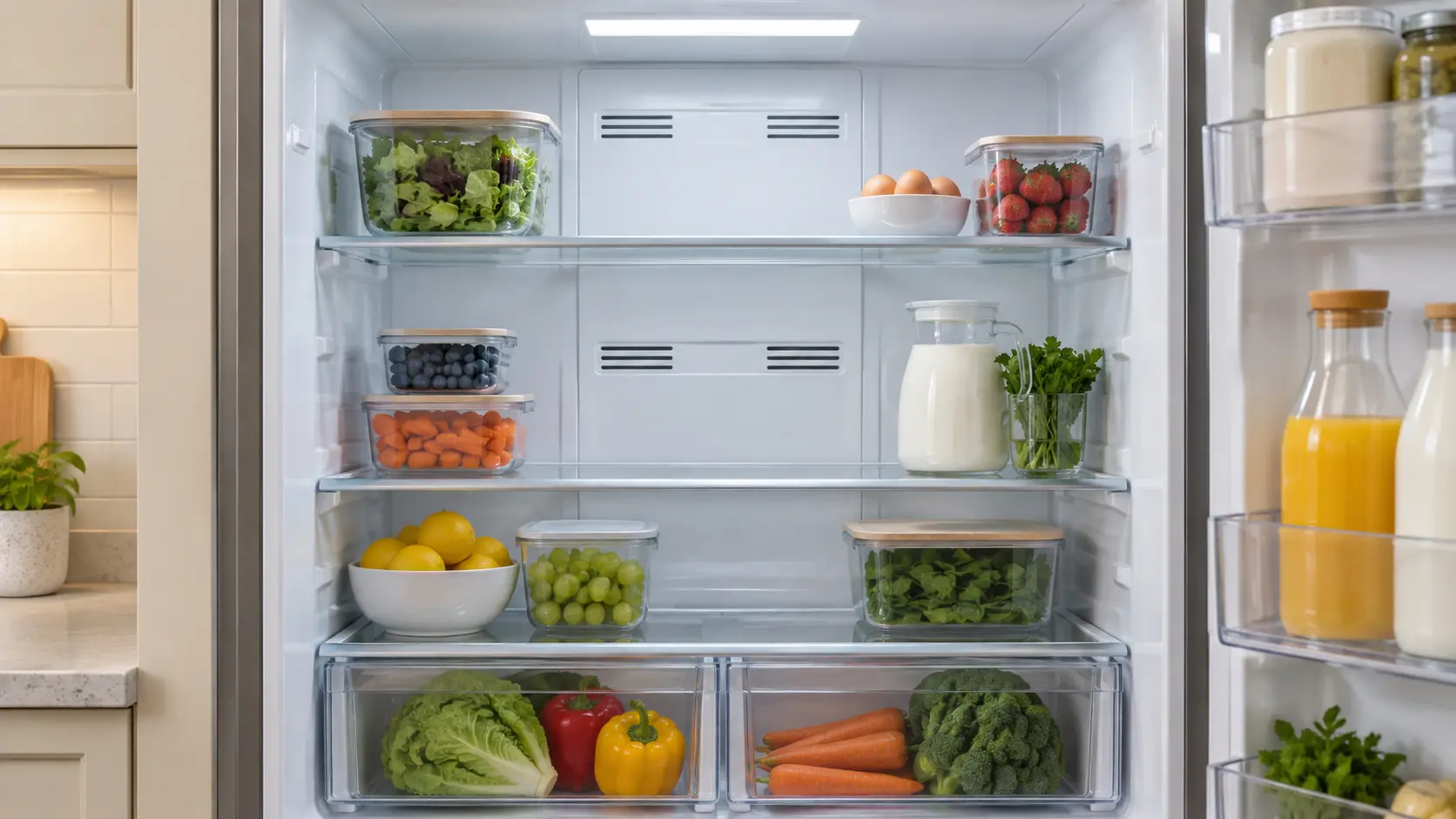
Overloading counts as well: a shelf packed tight against the rear vents blocks the air that the fan is trying to deliver.
Source: Viking — FBI7360W built-in refrigeration manual (showroom mode, alarm codes) — Showroom mode stops temperature control; alarm codes shown on display
Fourth: the controls are being misled
Thermistors that read too cold
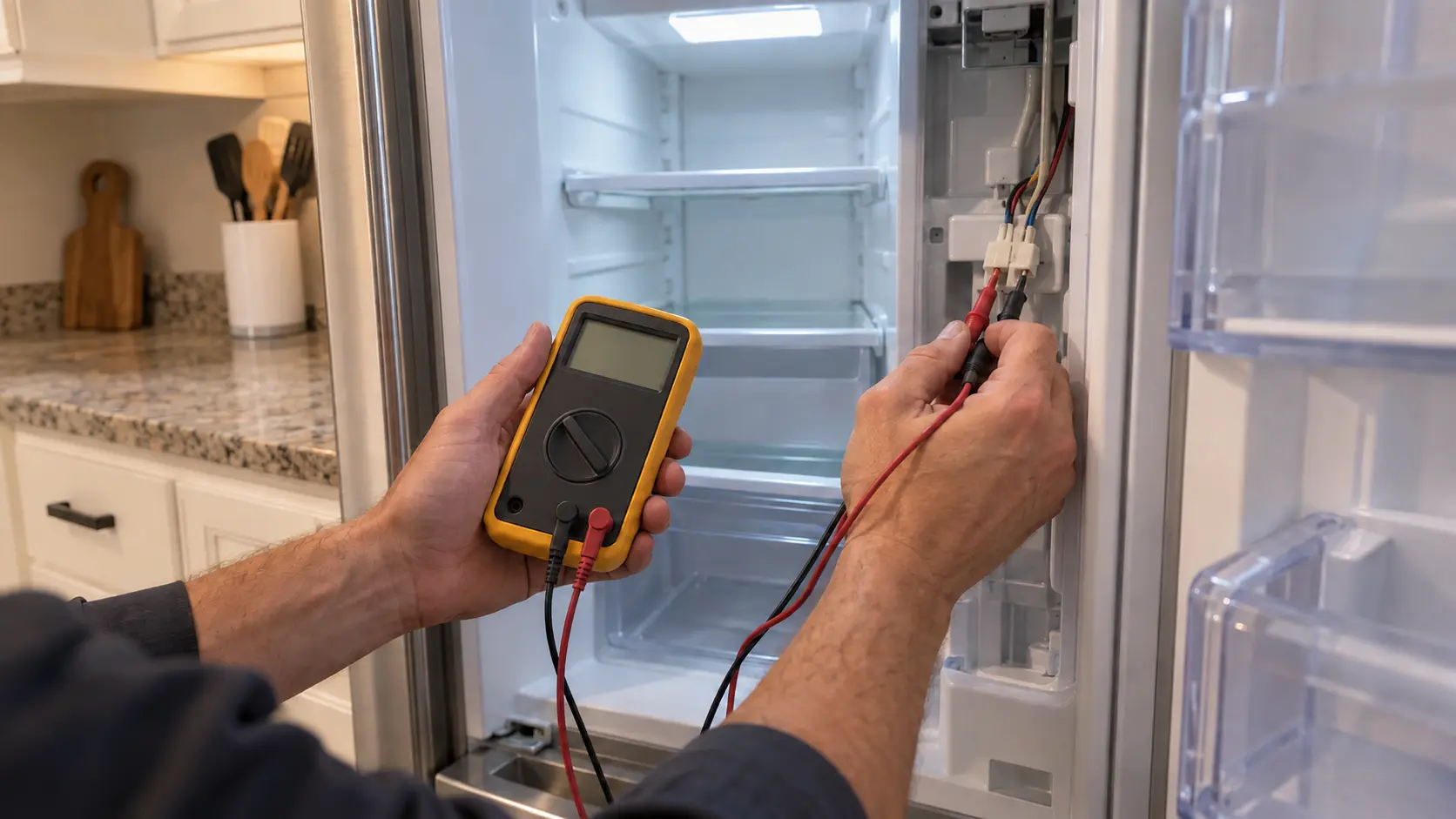
Modern refrigerators decide when to run from thermistors, small sensors clipped inside each compartment and on the evaporator. A sensor that reads colder than reality tells the control board that no cooling is needed, and the cabinet warms while everything sounds normal. Many electronic controls also show numbered codes that the manual explains, which is why a technician reads the board before replacing parts.
The compressor's start components
The start components on the compressor belong in this group as well. A compressor that clicks on, runs for a few seconds and clicks off again is often being let down by its start relay or overload rather than failing itself, and that is a far smaller repair than the sound suggests.
Source: Viking — FBI7360W built-in refrigeration manual (showroom mode, alarm codes) — Showroom mode stops temperature control; alarm codes shown on display; GE Appliances — side-by-side refrigerator owner's manual 49-60198 — Compressor may click while trying to restart
Last: the sealed system
The compressor, condenser, evaporator and the tubing between them form a closed loop of refrigerant. When that loop leaks or the compressor fails, the symptoms tend to be distinctive:
- The whole appliance warms slowly.
- Frost forms on only part of the evaporator or not at all.
- The compressor either runs without end or will not run at all even though it has power.
What the repair means on each type
Sealed-system work is the most expensive repair category on any refrigerator, and it needs brazing equipment and refrigerant handling that only a technician should carry out. On a column pair it involves one tower only, which is part of why owners of that layout tend to repair rather than replace. On an older freestanding unit it is often the point at which replacement becomes the sensible conversation.