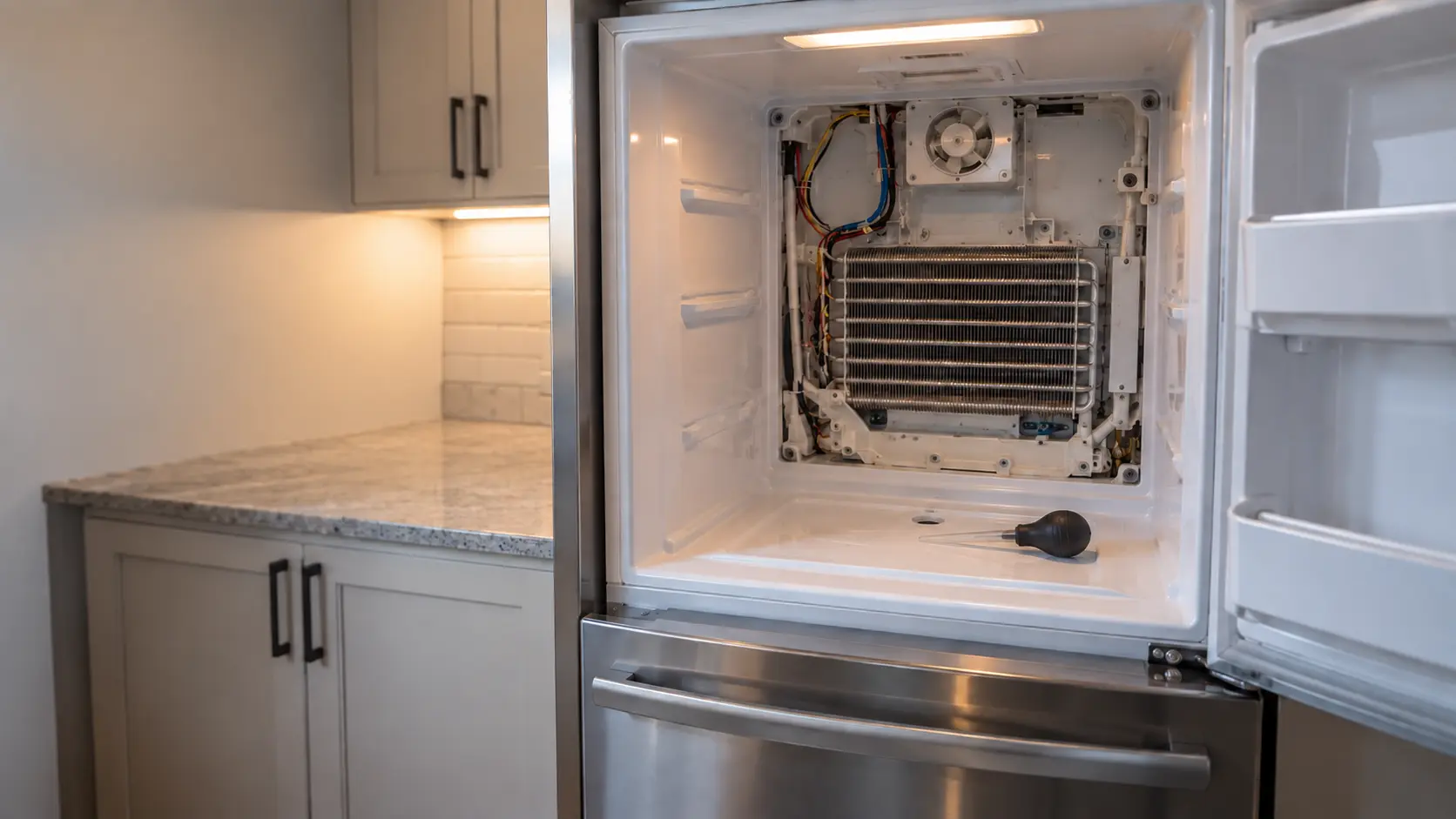
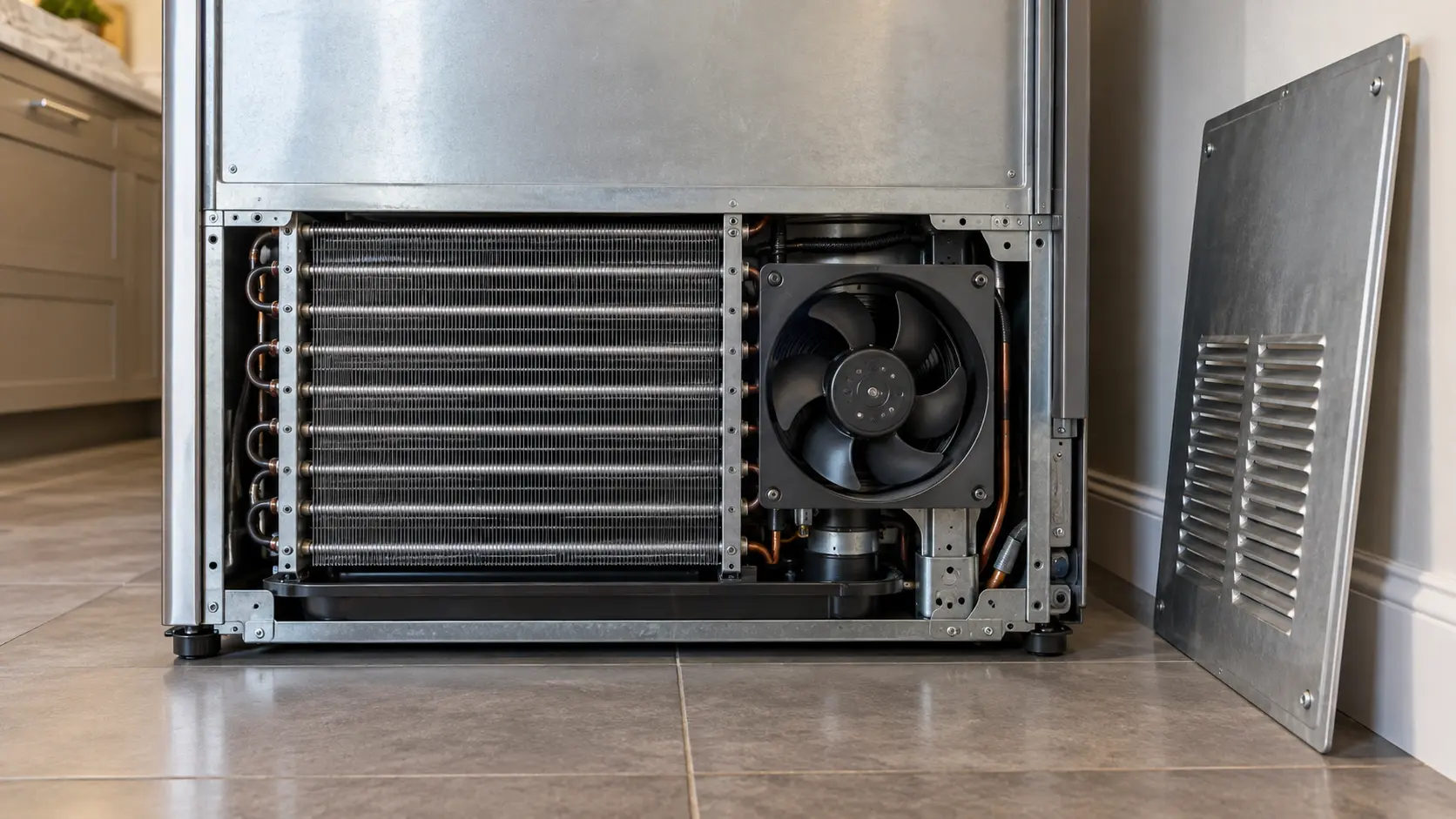
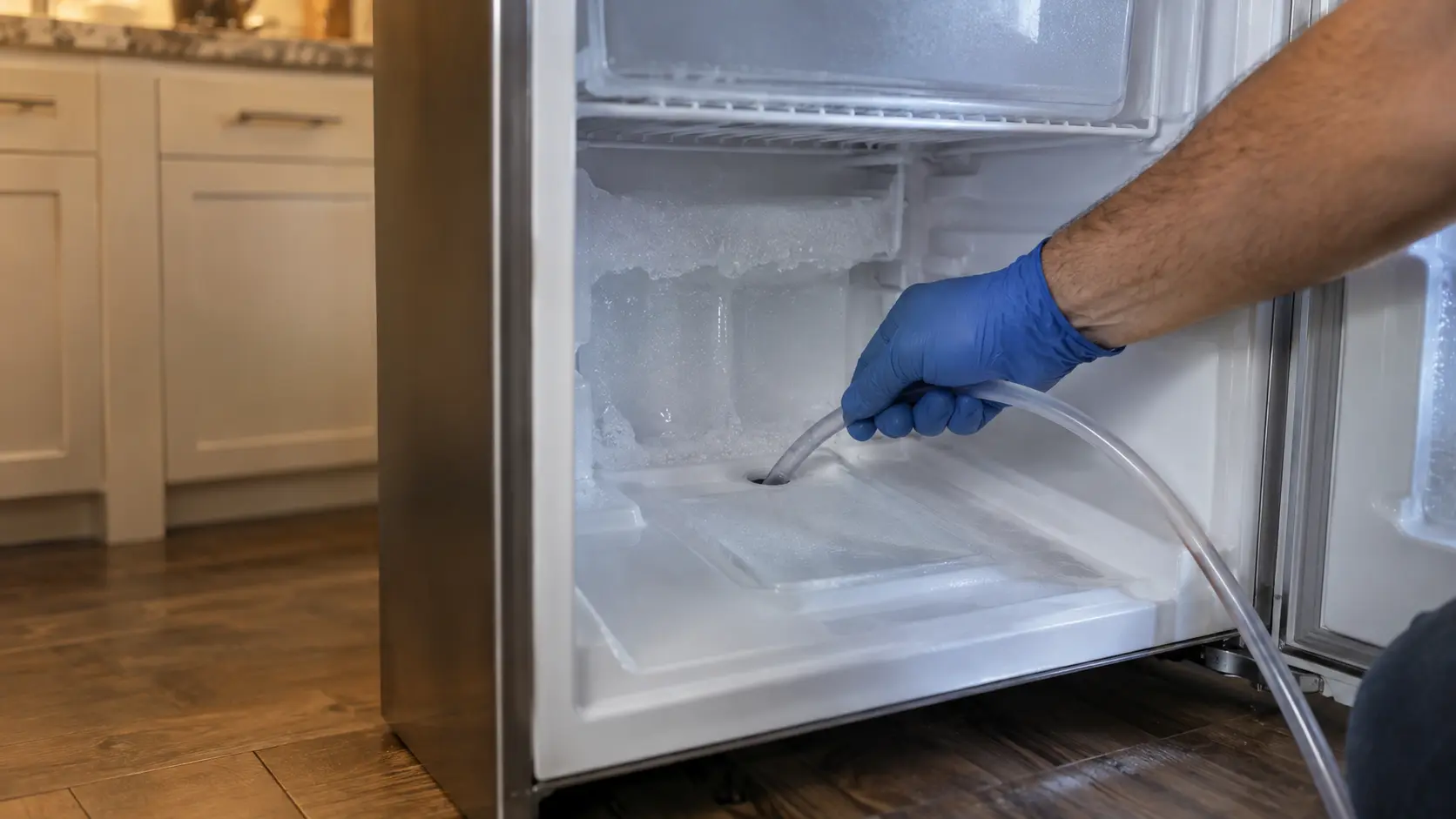
How the drain works
A frost-free refrigerator has a heater that warms the evaporator coil on a schedule. From there the water follows one path:
- The frost on the coil melts and drips into a trough below it.
- It runs through a hole in the trough into a tube.
- The tube leads down through the cabinet insulation to a shallow pan near the compressor.
- Warm air from the condenser fan evaporates the water from the pan.
Why a plug forms at the top of the tube
The trough and the top of the tube sit in the coldest part of the appliance. A plug forms there for one of three reasons:
- the heater is weak;
- the tube is kinked;
- bits of food ride down with the water.
How the ice builds up
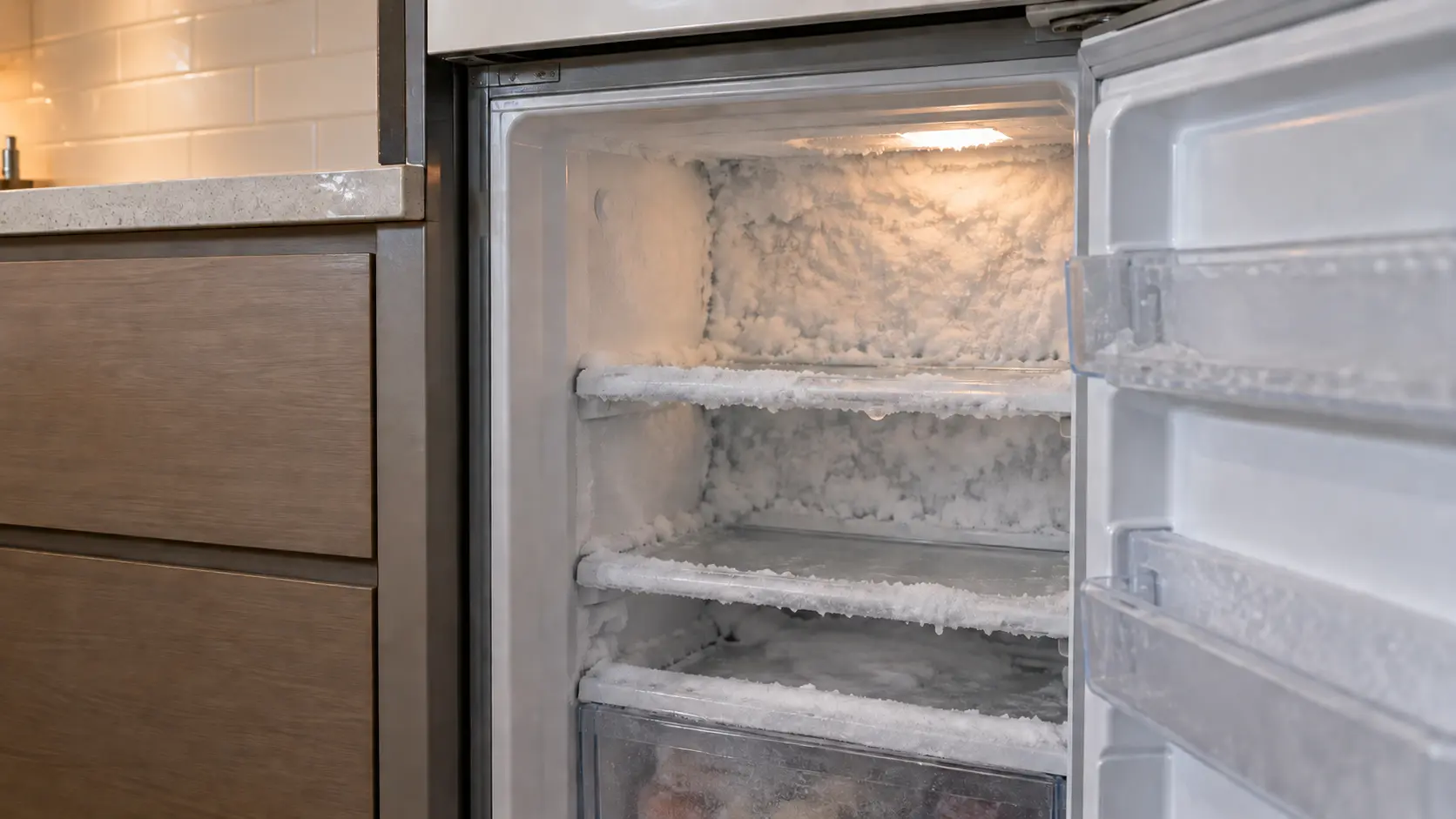
Once the tube is plugged, the next defrost has nowhere to go, and a layer of ice builds up over successive cycles.
Source: GE Appliances — side-by-side refrigerator owner's manual 49-60198 — Flush the drain with a baster and baking soda solution; Liebherr — Use and Care Manual CS 1640 (defrost water drain) — Defrost water drains away to evaporate; a plugged drain overflows
Signs the drain is blocking
Any of these means meltwater is not leaving:
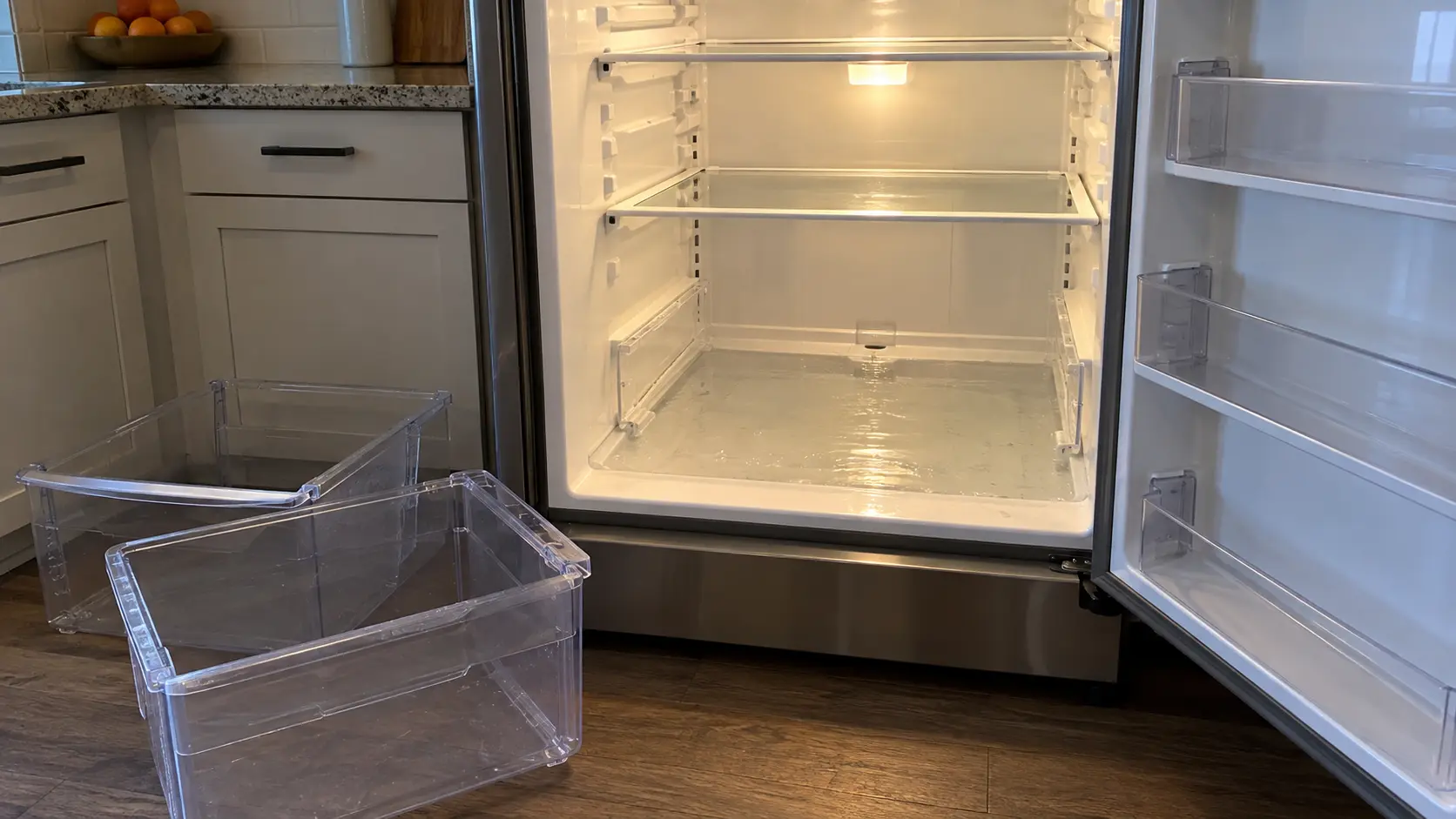
- Water pooling on the floor of the fresh-food compartment under the crispers.
- A clear sheet of ice across the freezer floor.
- Icicles hanging from the evaporator cover.
- On a French door or bottom-freezer unit, ice under the lower drawer, so the drawer starts to catch or refuse to close.
When the water reaches the kitchen floor
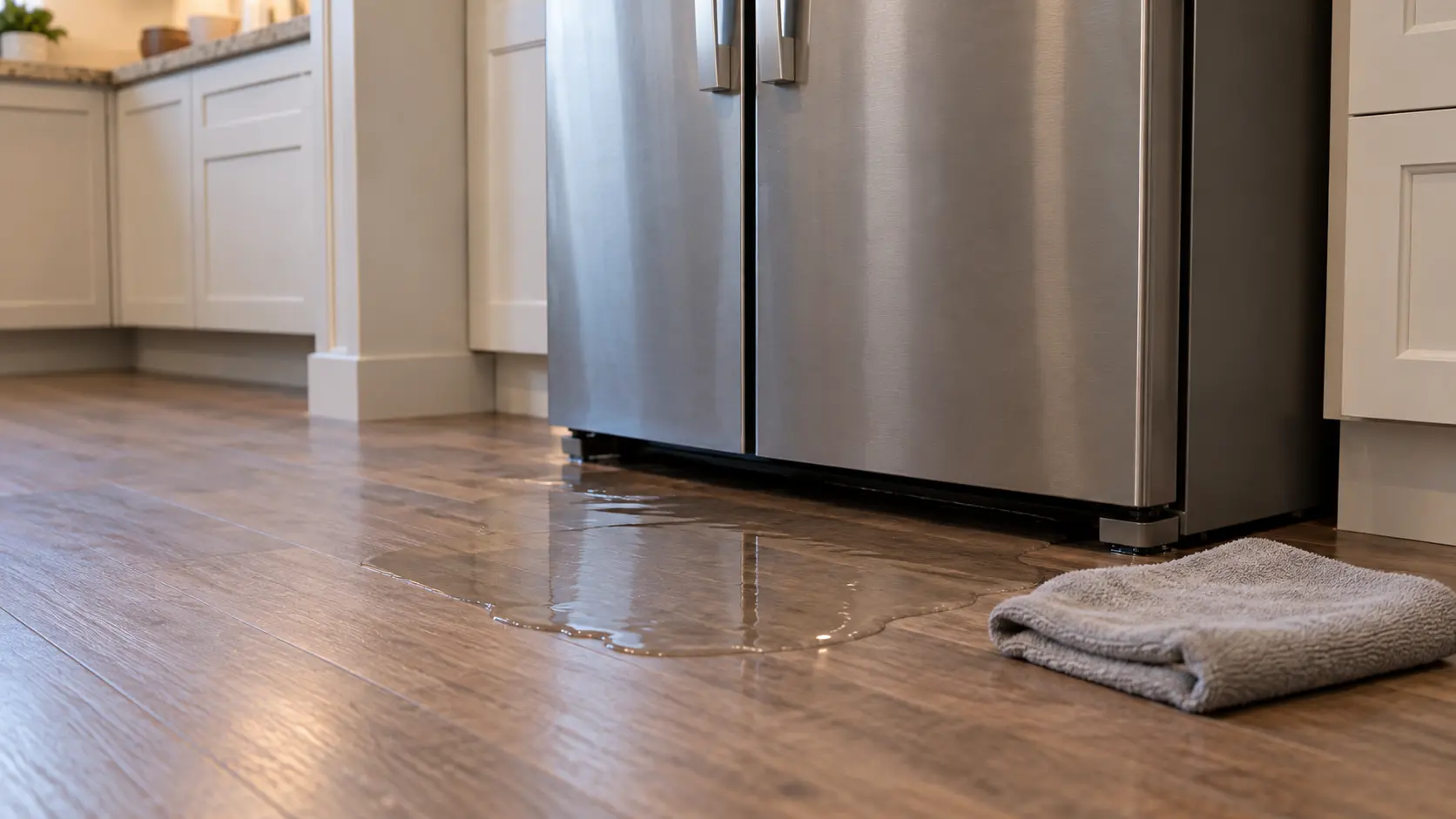
Eventually the ice thickens enough that water finds another way out, usually over the front lip of the compartment and onto the kitchen floor. At that point it looks like a leak from the water line, which is why noting the ice first saves a misdirected diagnosis.

Where the drain opening is on each type
You only need to find the opening that you can see from inside the compartment. The rest of the tube is behind panels, and that is where owner work stops.
| Type | Where the opening is | What to know |
|---|---|---|
| French door and bottom-freezer | At the back of the freezer compartment | Reached by removing the drawer and baskets; some also have a small drain hole low on the back wall of the fresh-food section. |
| Side-by-side | At the bottom of the back wall on the freezer side | Below the evaporator cover. |
| Built-in | At the rear of the freezer floor on most models | Sometimes behind a removable trough cover; a unit with a separate fresh-food evaporator has a second drain in that compartment. |
| Column | In each column | Each column has its own drain, so a problem on the freezer column says nothing about the refrigerator column beside it. |
| Undercounter | Often a small channel at the back of the floor | It drains to a pan behind the lower grille and fills with debris because it is so short. |
Keeping it clear between problems
Knowing how to clear a refrigerator defrost drain matters less than not needing to. A few habits keep the tube open for years, and none of them takes more than a minute or two.
- Wipe spills on the compartment floor promptly, especially sugary ones, which feed the slime that narrows the tube.
- Keep food off the back wall so crumbs are not drawn toward the trough.
- Once a year, pour a little warm water into the visible drain opening with the baster and listen for it running away freely.
Washing the drain pan
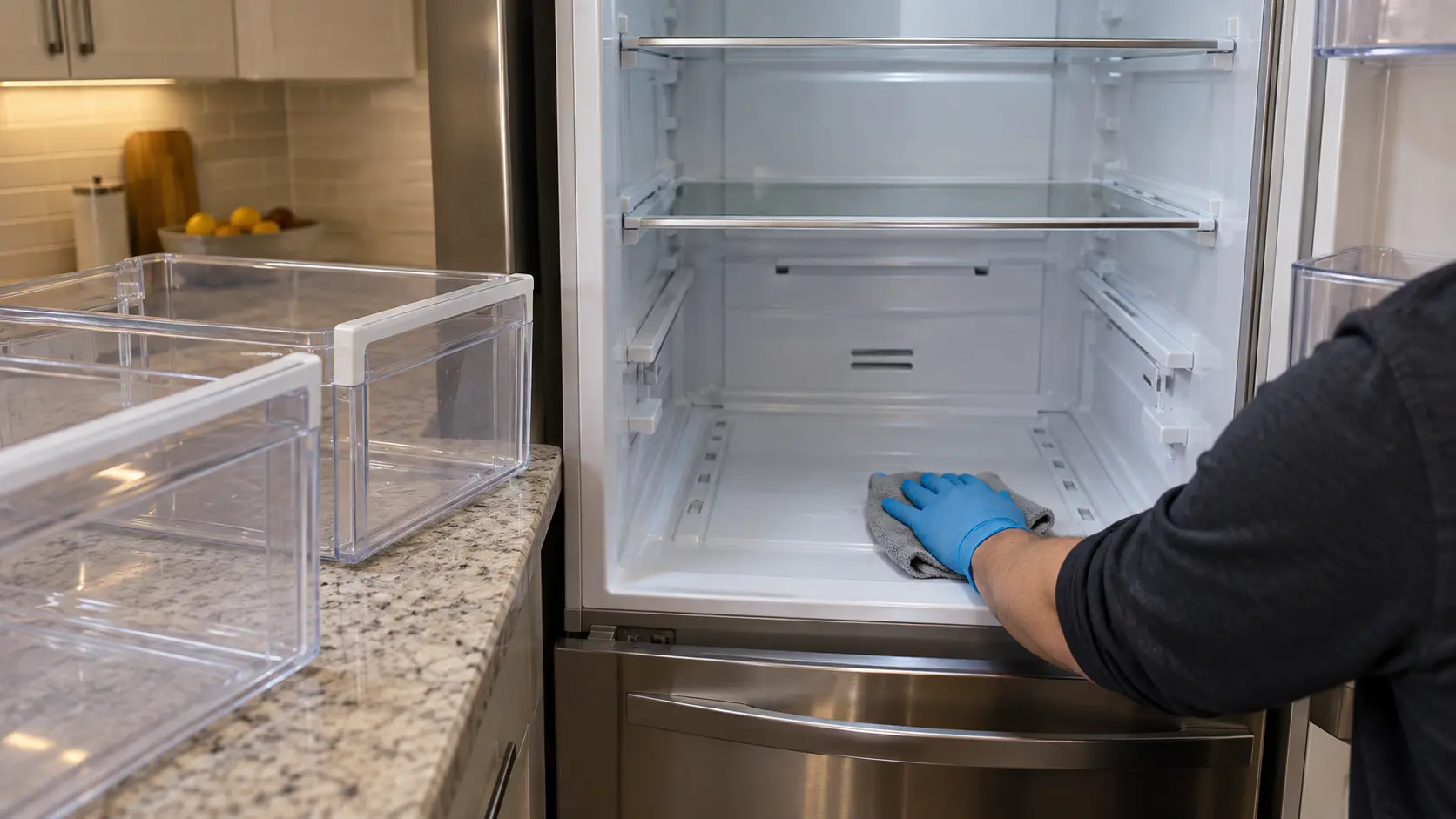
If the unit has a reachable drain pan behind a front toe kick, slide it out at the same time and wash it with warm soapy water. A pan full of sludge smells, and the smell travels into the kitchen through the grille.
Source: GE Appliances — side-by-side refrigerator owner's manual 49-60198 — Flush the drain with a baster and baking soda solution; Liebherr — Use and Care Manual CS 1640 (defrost water drain) — Defrost water drains away to evaporate; a plugged drain overflows
Ice that is not the drain
Not every sheet of ice on a compartment floor belongs to the drain. A water line fitting to the ice maker can drip and freeze in the freezer, and a door that does not seal lets in moist air that freezes as white frost around the opening. The difference is in the ice itself:
- Drain ice is clear, flat and sits at the back or under the evaporator.
- Frost from a leaking door is white and feathery near the front.
Ice under the ice maker or along the supply tube
If the ice is under the ice maker, or follows the path of the supply tube, the drain is not the cause, and flushing it will not help. Turn off the supply valve to the ice maker if you can reach it, and mention where the ice formed when you book.