What a gasket is, and how it wears
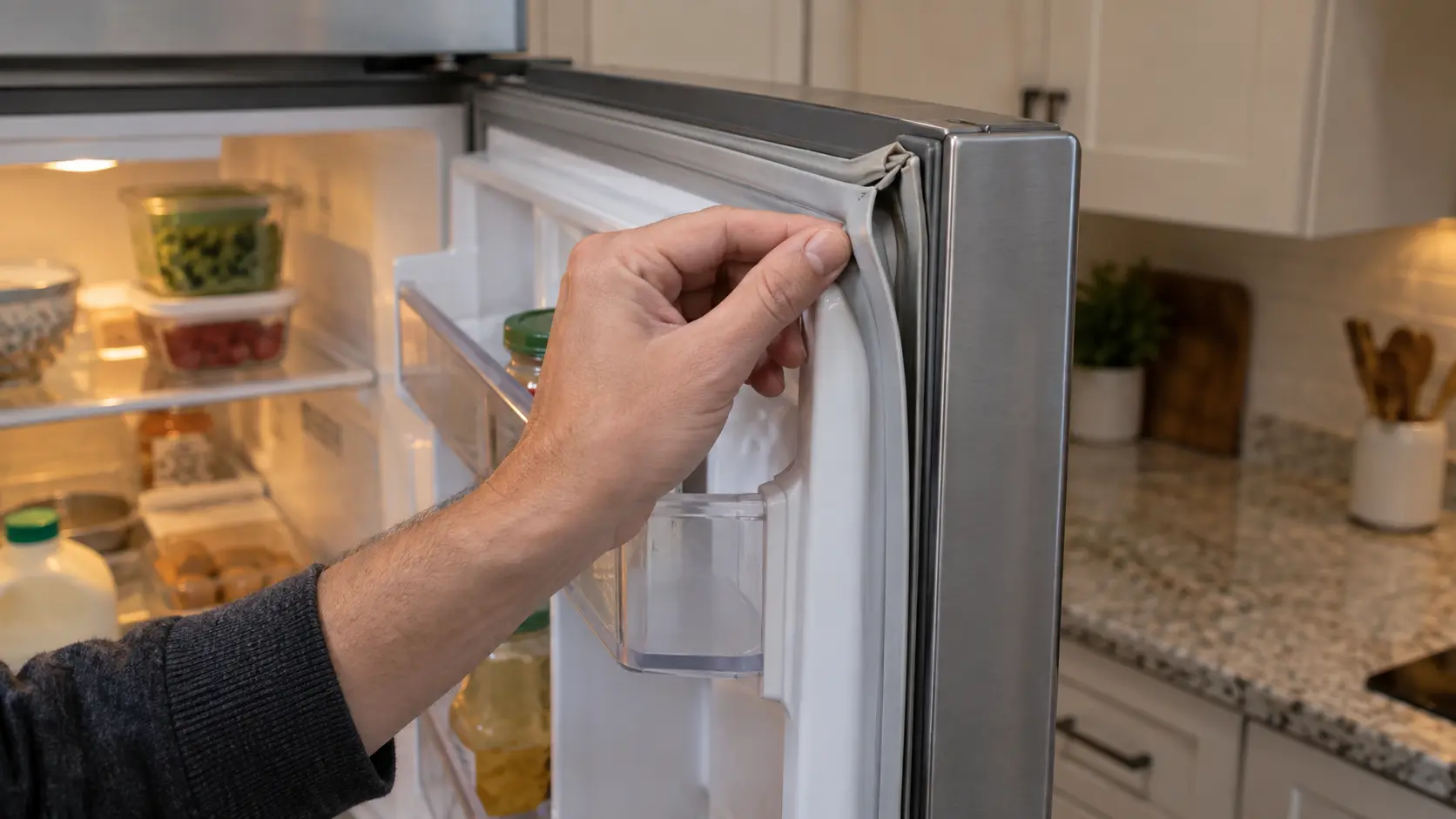
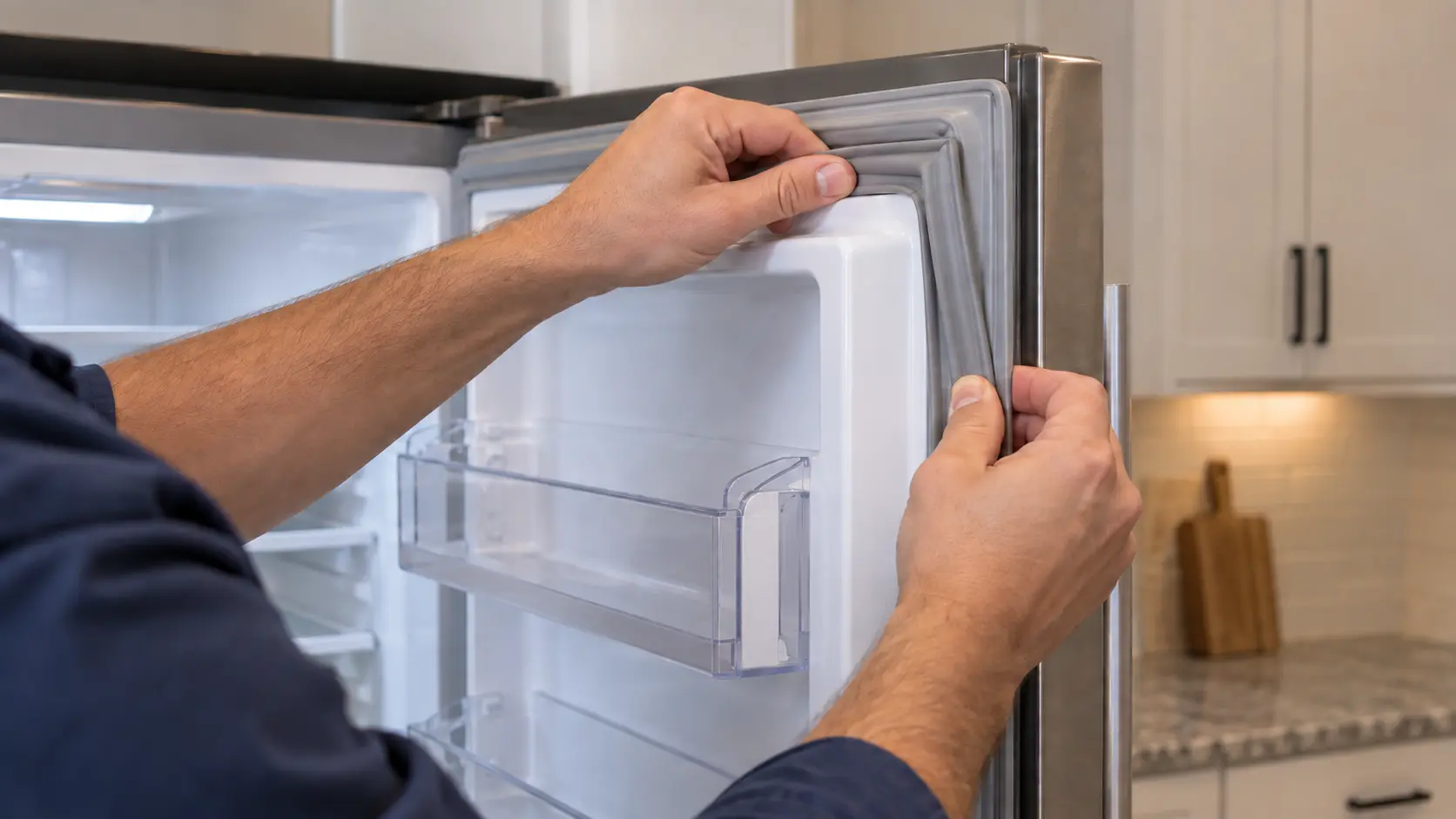
The seal around each door is a hollow vinyl or rubber profile with a magnetic strip running inside it. The magnet holds it to the cabinet, and the soft folds of the profile fill small gaps in the frame. Over years the vinyl hardens, the folds lose their spring, and the corners, which flex the most, split or flatten.
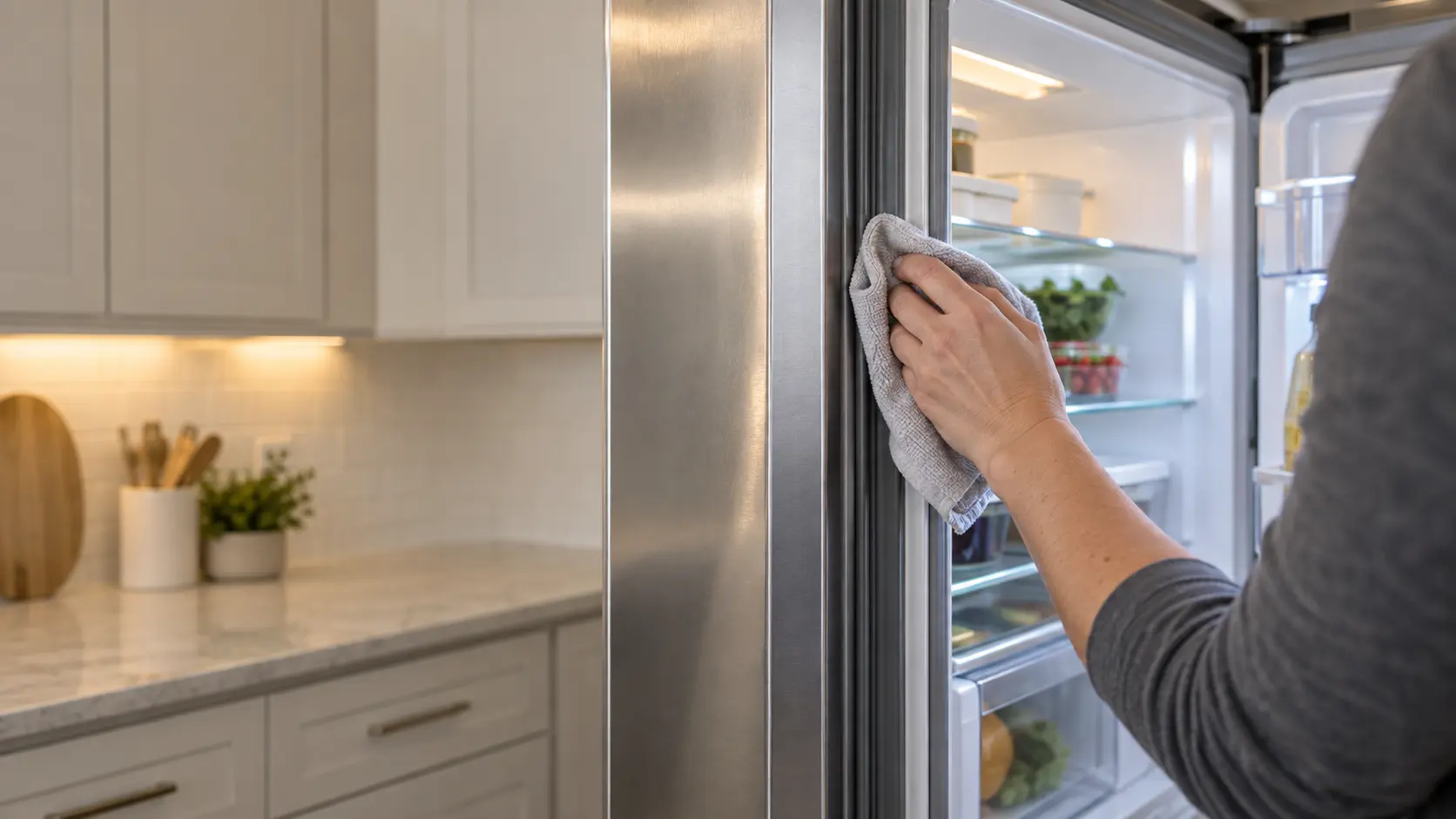
Dirt speeds this up. Sticky residue at the bottom of a door makes the gasket cling to the frame and tear slightly each time the door is opened, and crumbs in the folds hold it away from the cabinet. Keeping it clean is most of what refrigerator door seal maintenance involves.
Symptoms that show up far from the door
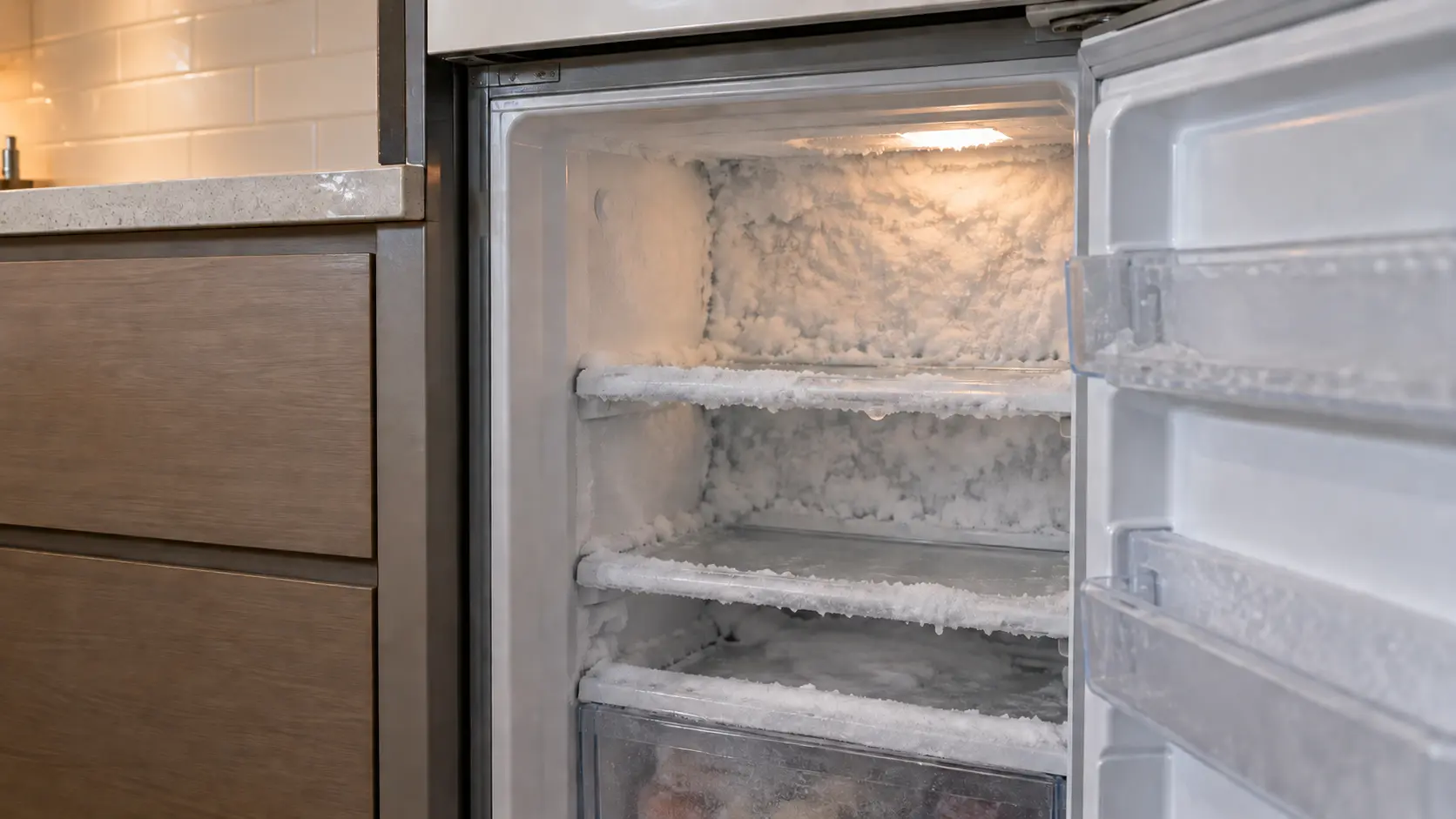
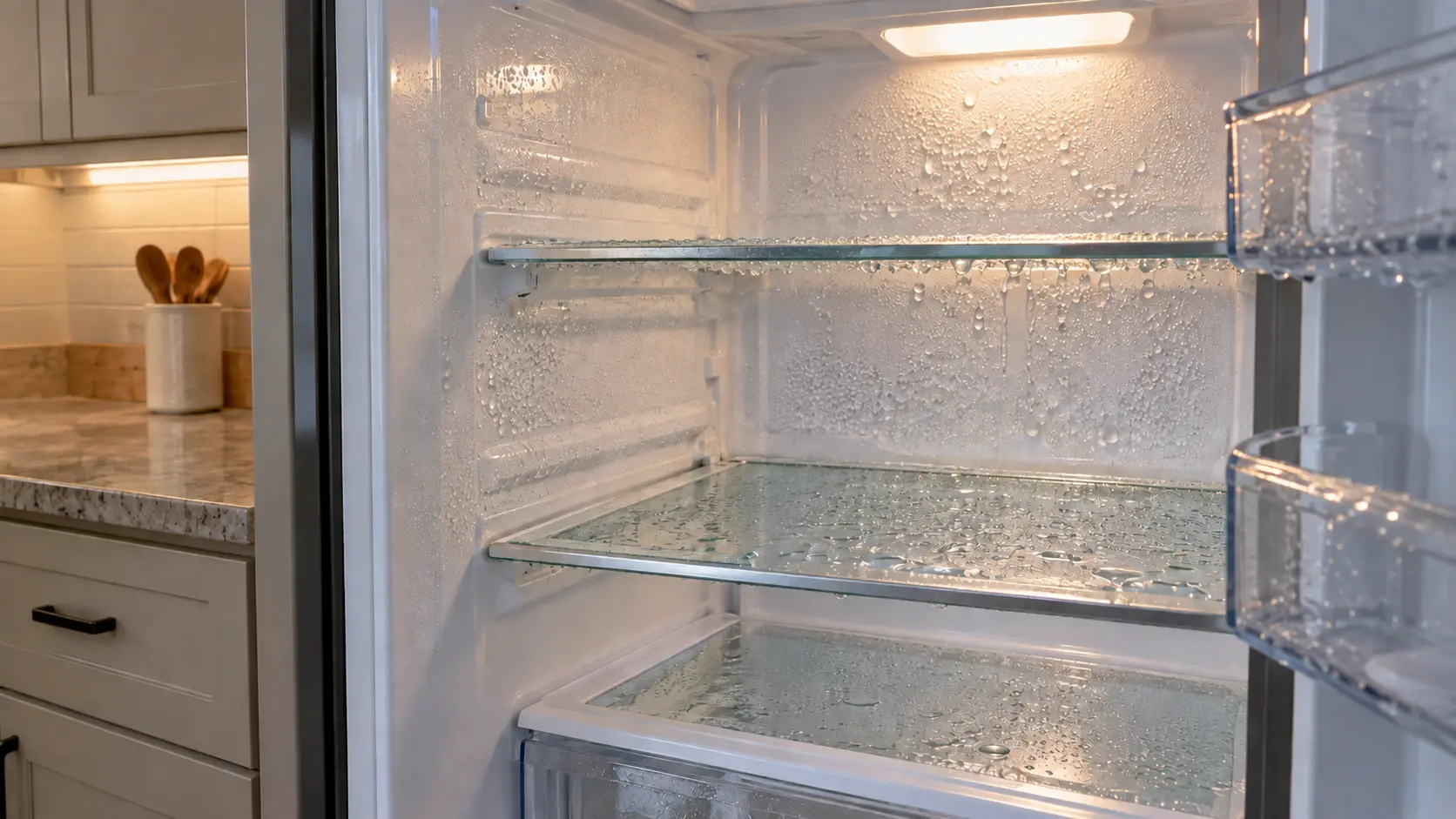
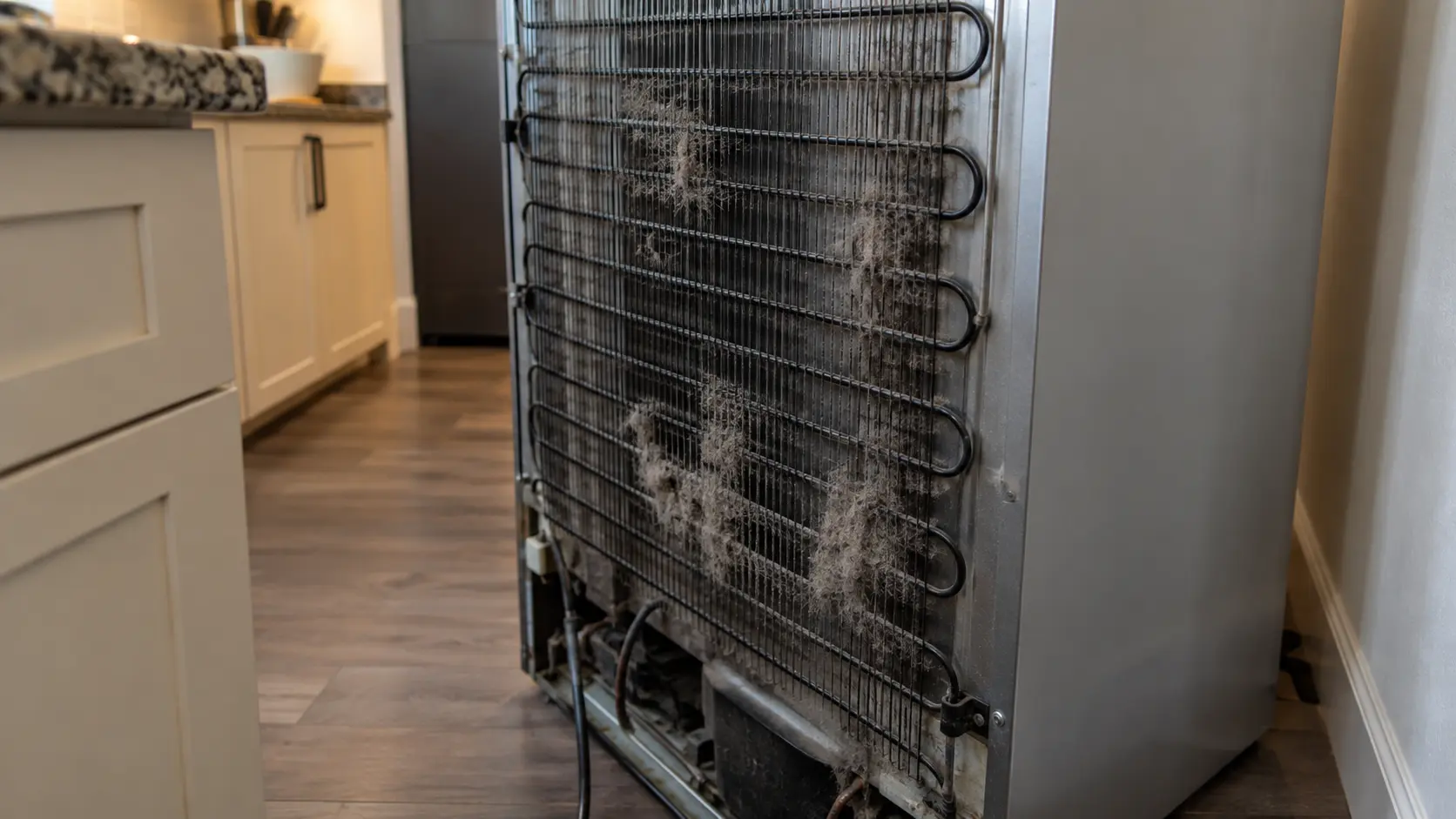
The signs of a tired seal rarely appear at the seal itself. Each of these is a common result of a gap you would never notice while standing in front of the unit:
- Frost building up on the evaporator.
- Beads of water on the inside walls in summer.
- A compressor that rarely rests.
Source: Bertazzoni — RFD36FZN refrigerator user manual (cleaning the door seals) — Sticky spills make seals cling and tear; wash with mild detergent
Cleaning it without damaging it
Twice a year is enough for most kitchens. The work has two parts: getting the folds clean, then keeping the vinyl supple.
Washing the folds
- Fold back each ridge of the profile and wipe inside with a soft cloth and warm soapy water.
- Use an old soft toothbrush to reach the inner fold at the hinge side, which is where mold tends to start on a door that is opened often.
- Rinse with a damp cloth.
- Dry the whole profile before closing the door.
Keeping the vinyl supple
If you want the seal to stay supple, a very thin film of petroleum jelly on the hinge-side face, wiped almost dry, reduces the drag that pulls a sticky gasket away from its channel. Do not coat the face that meets the cabinet heavily; it collects dust.
- Avoid bleach.
- Avoid degreasers.
- Avoid abrasive pads.
Source: Bertazzoni — RFD36FZN refrigerator user manual (cleaning the door seals) — Sticky spills make seals cling and tear; wash with mild detergent; GE Appliances — side-by-side refrigerator owner's manual 49-60198 — Thin petroleum jelly on the hinge side stops gaskets sticking; Viking — FBI7360W built-in refrigeration manual (door gaskets) — A light film of petroleum jelly keeps gaskets pliable

What to look for while you are there
Run your fingers around the whole profile and look for four things:
- Splits, especially at the corners.
- Flattened sections that no longer spring back.
- Places where the gasket has pulled out of its retaining channel.
- Folds or creases that hold part of the seal away from the frame. A crease from shipping or storage can often be relaxed by warming it gently with a hair dryer on low and pressing it into shape.
Confirm the fit at the doubtful corners
Then confirm the fit with the paper test from our checks guide at the corners you are unsure of, pulling slowly so you feel where the drag weakens. A seal that looks fine can still miss the frame because the door itself has dropped, and that is the next thing to check.
Where each type gives trouble
The weak point moves with the design, so the twice-yearly check should spend its time where yours is most likely to leak.
| Type | Weak point | What goes wrong |
|---|---|---|
| French door | The hinged center flap on the left door | It has to fold and meet both gaskets; a stiff flap spring leaves a vertical gap down the middle. |
| Side-by-side | The lower outer corner of the freezer door | The dispenser makes the freezer door heavy, and that corner is usually the first part of the gasket to lose contact. |
| Bottom-freezer drawer | The top edge of the drawer | If a basket rides off its rail, the drawer stops a fraction short and the top edge never seals. |
| Built-in and panel-ready | The bottom of the door on the handle side | The custom panel adds weight on the hinge, so a gasket that is fine at the top can be clear of the frame at the bottom. |
| Column and undercounter | The door closer or cam | Many use one to pull the door the last inch; if the door stays ajar when released near the frame, the closer is the problem, not the rubber. |
Replace the gasket or adjust the door
The condition of the gasket decides which of the two jobs you are looking at.
When the gasket itself is done
A gasket that is split, missing its magnetic pull, or permanently flattened needs replacing, and the new part is specific to the model.
When the door is the problem
A gasket that is in good condition but still misses the frame points to the door. The usual causes are these:
- A sagging hinge.
- A worn closer.
- A unit that is no longer level.
Reading the gap around the door
Look at the gap between the top of the door and the cabinet, or between paired doors. If it is wider on one side than the other, the door has dropped, and a new gasket fitted to a crooked door will fail the same way within months.
Source: ENERGY STAR — Refrigerators (airtight door seals) — Door seals should be airtight; replace them if not