Temperature and time, not smell
The bacteria that make people sick do not announce themselves. A carton of milk can smell fine and still be unsafe, and a container of leftovers can look exactly as it did yesterday. That is why the FDA is blunt about it: after an outage or a failure you cannot rely on appearance or odor to decide.
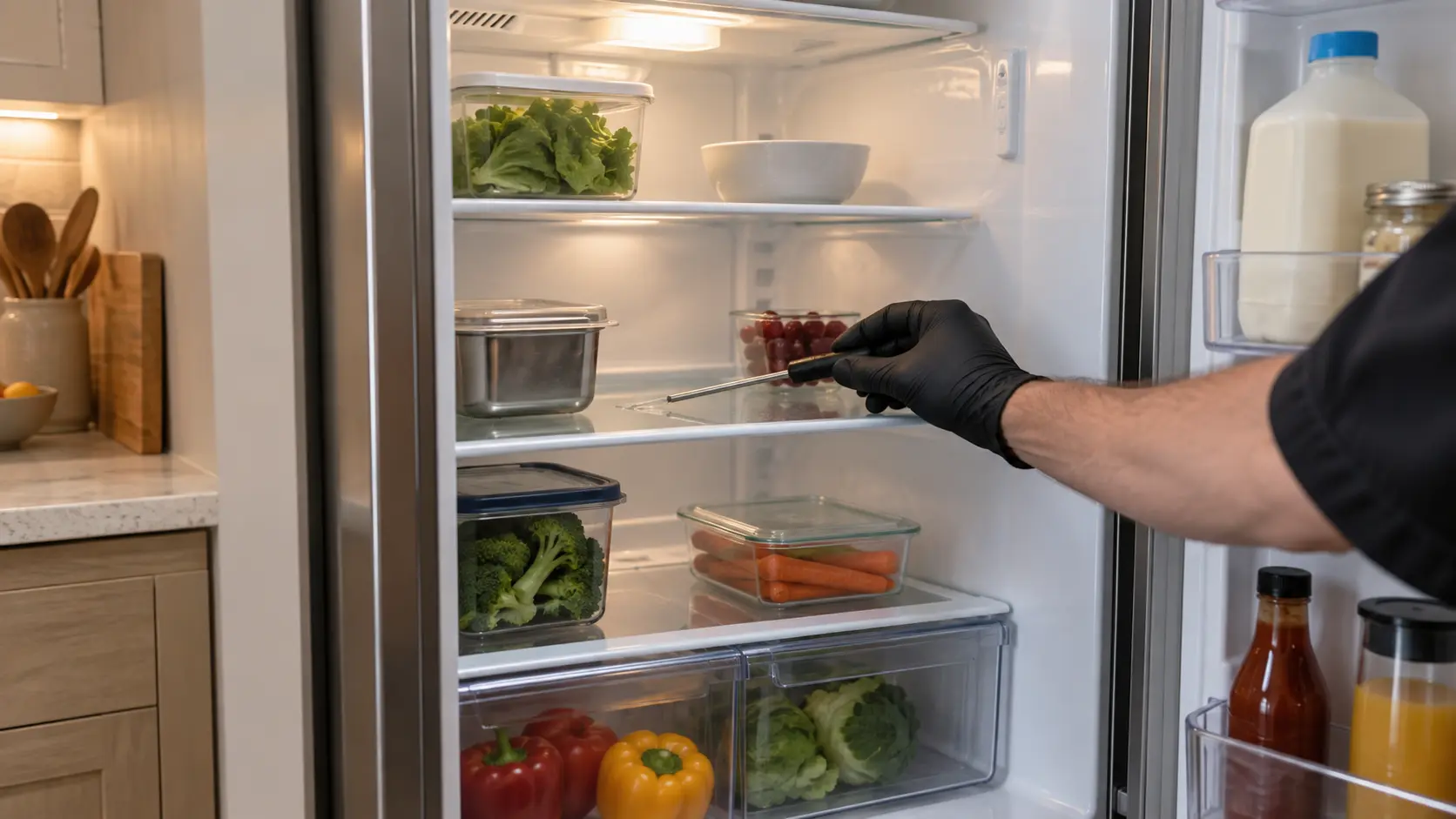
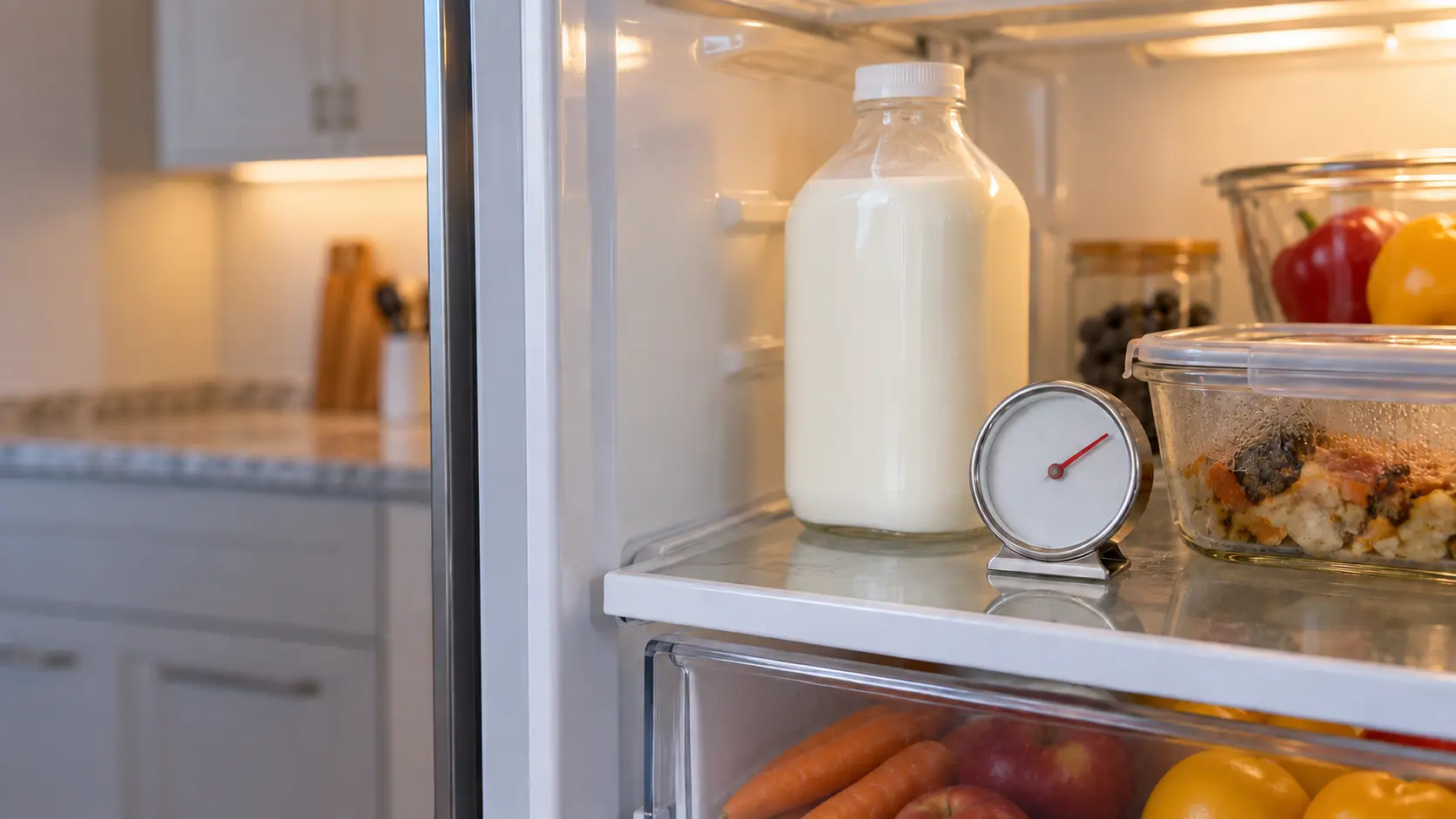
What you can rely on is a reading. An appliance thermometer on the middle shelf of the fresh-food compartment and another in the freezer turn a guess into a number, and they cost less than one bag of groceries. Good refrigerator food safety starts with those two readings and a rough idea of how long the problem has lasted; after that, the federal figures make the decision for you.
Source: FDA — Power Outages: Key Tips for Consumers About Food Safety — Discard perishables after 2 hours above 40°F; odor is no guide
The official figures, in plain terms
The FDA figures fit in one table. The holding times apply only while the doors stay shut.
| Situation | Figure | What it means |
|---|---|---|
| Fresh-food compartment | 40°F or below | The recommended setting for the refrigerator. |
| Freezer | 0°F or below | The recommended setting for the freezer. |
| Closed refrigerator, cooling stopped | About 4 hours | How long it holds food cold if nobody opens it; perishables that have been above 40°F for 2 hours or more are discarded. |
| Full freezer, door shut | About 48 hours | How long it holds its temperature. |
| Half-full freezer, door shut | About 24 hours | How long it holds its temperature. |
| Perishables at room temperature | 2 hours, or 1 hour above 90°F | Discard anything held out for that long or longer. |
Food left on the counter during a repair
Food that has been sitting out at room temperature has a shorter limit than food in a closed refrigerator: discard perishables held at room temperature for 2 hours or more, or 1 hour if it is above 90°F. That second rule matters when food has been moved to the counter during a repair and forgotten.
Source: FDA — Power Outages: Key Tips for Consumers About Food Safety — Discard perishables after 2 hours above 40°F; odor is no guide; FDA — Food and Water Safety During Power Outages and Floods — 48 and 24-hour freezer figures; 1 hour above 90°F; dry ice
Sorting the fresh-food compartment
Start with the highest-risk items, because they decide most of the trip to the trash. If the compartment has been above 40°F for 2 hours or more, these go:
- Raw and cooked meat, poultry and seafood.
- Milk and soft dairy.
- Eggs.
- Cooked leftovers.
- Cut fruit.
- Anything with a sauce or a cream base.
Where the compartment warms first
The shelves nearest the door and the door bins run warmest, which is worth knowing when deciding what to check with a food thermometer. On a column pair, the working freezer column next door is a good temporary home for anything that can be frozen while the refrigerator column is repaired.
The sturdiest items
These are generally the sturdiest things in the compartment. They are not the items that make people ill after an outage, and they rarely need to be the focus of the decision; the protein, dairy and cooked food are.
- Condiments.
- Butter.
- Whole, uncut vegetables.
- Whole uncut fruit.
Source: FDA — Power Outages: Key Tips for Consumers About Food Safety — Discard perishables after 2 hours above 40°F; odor is no guide; FDA — Are You Storing Food Safely? — The door runs warmer; frozen food stays safe but loses quality; FoodSafety.gov — Food Safety During Power Outage (keep or discard chart) — Butter, hard cheeses, condiments, uncut fruit and vegetables can be kept
The freezer, and when food can be refrozen
Whether frozen food can go back into the freezer depends on what you can measure when cooling returns.
With a thermometer in the freezer
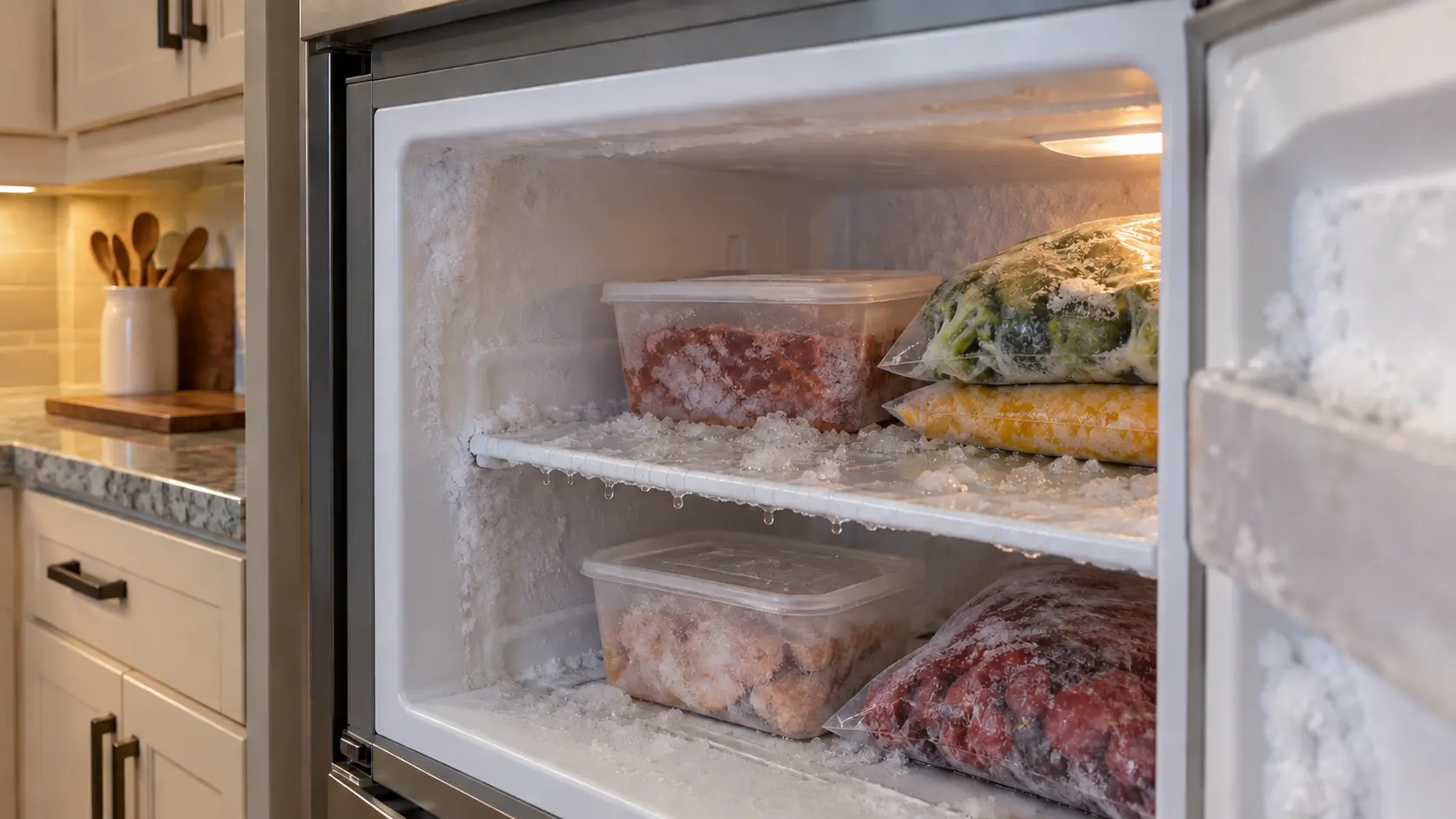
If a thermometer was left in the freezer and it reads 40°F or below when cooling returns, the FDA says the food is safe and may be refrozen.
Without a thermometer
Check each package. Food that still has ice crystals, or is at 40°F or below, is safe to refreeze or to cook.
Texture is a quality question
Refreezing costs some texture, especially in fruit, vegetables and fish, but it is a quality question rather than a safety one. The freezer drawer of a French door model and the narrow freezer of a side-by-side both lose cold faster when half empty, which is why the FDA figure for a half-full freezer is so much shorter than for a full one.
Source: FDA — Food and Water Safety During Power Outages and Floods — 48 and 24-hour freezer figures; 1 hour above 90°F; dry ice; FDA — Are You Storing Food Safely? — The door runs warmer; frozen food stays safe but loses quality
When the appliance failed but the power did not
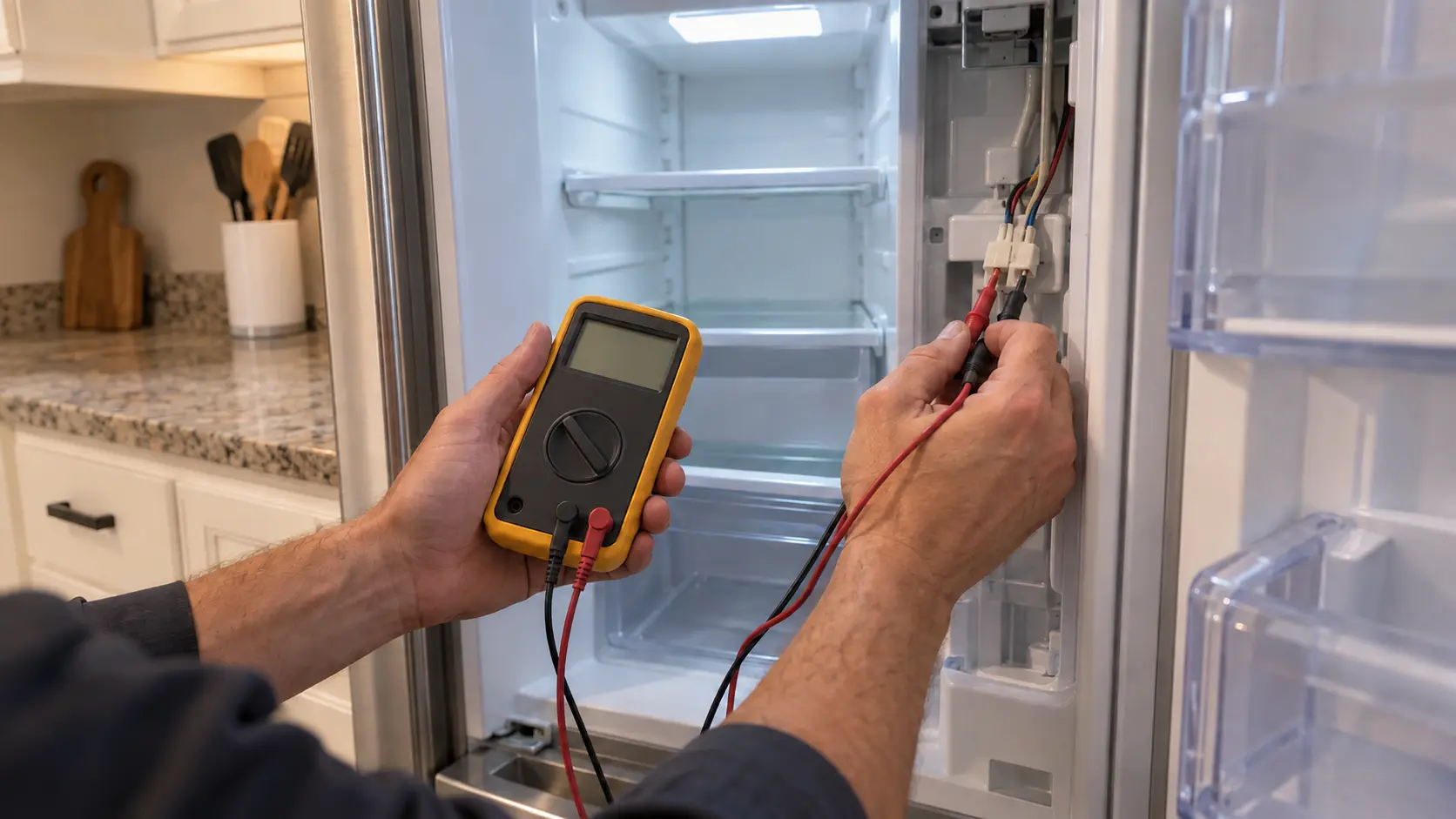
The outage figures assume a cabinet that started cold and then lost power all at once. A refrigerator that is failing slowly behaves differently: the fresh-food side may sit at 44°F or 46°F for days while the owner assumes the milk is just going off early. In that case the clock started when the compartment first crossed 40°F, not when you noticed, and the honest answer for the perishables is usually to let them go.
An undercounter unit or a beverage-center style refrigerator holding drinks and condiments carries far less risk than a main refrigerator full of meat and leftovers, but the rule for any perishable inside it is the same.
Buying time while the appliance is being repaired
Keep the doors closed. Every opening dumps the cold air that was holding the food, and the 4-hour and 48-hour figures assume the doors stayed shut.
- Decide in advance what you need.
- Open once.
- Close quickly.
Coolers and ice packs
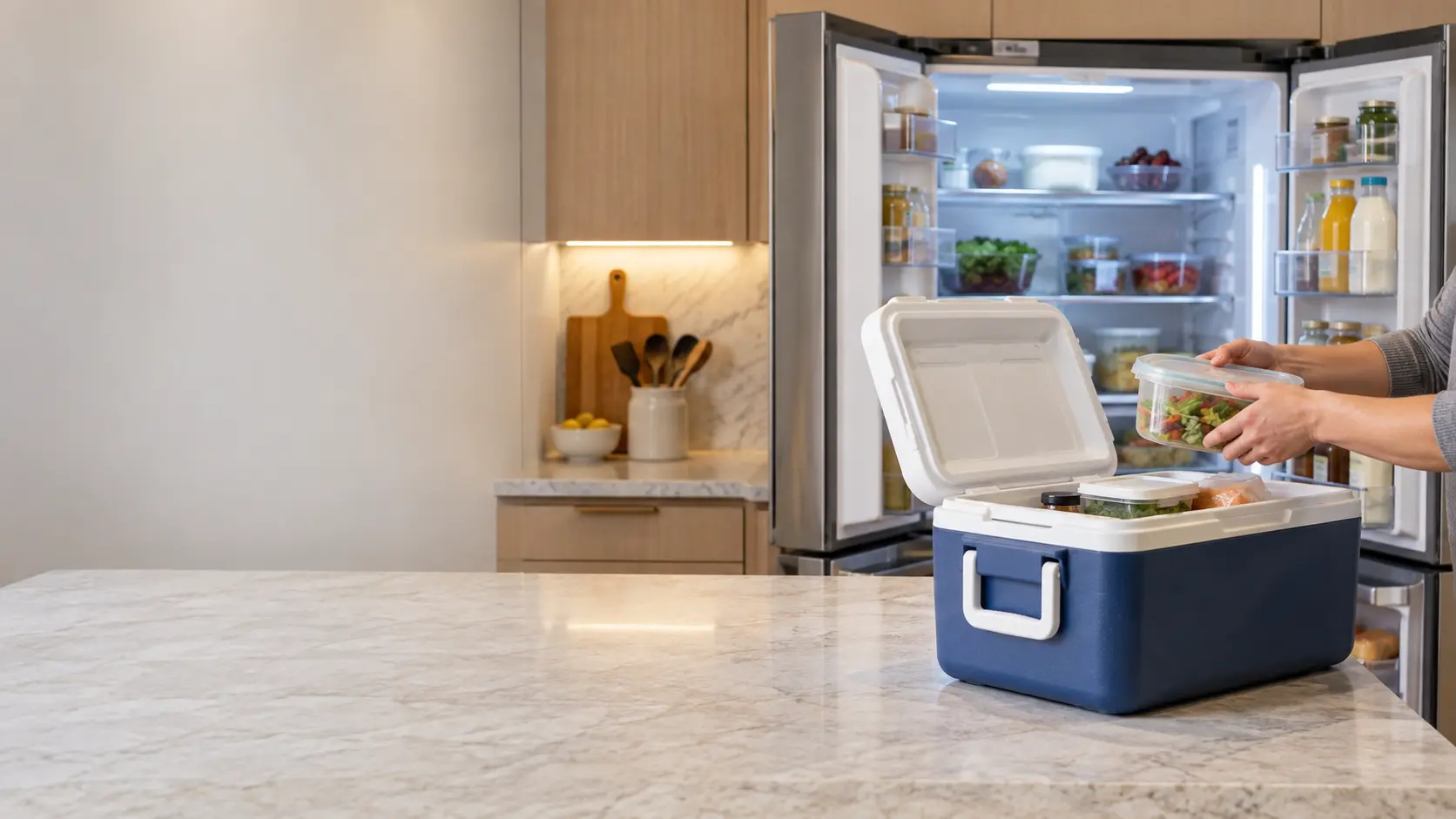
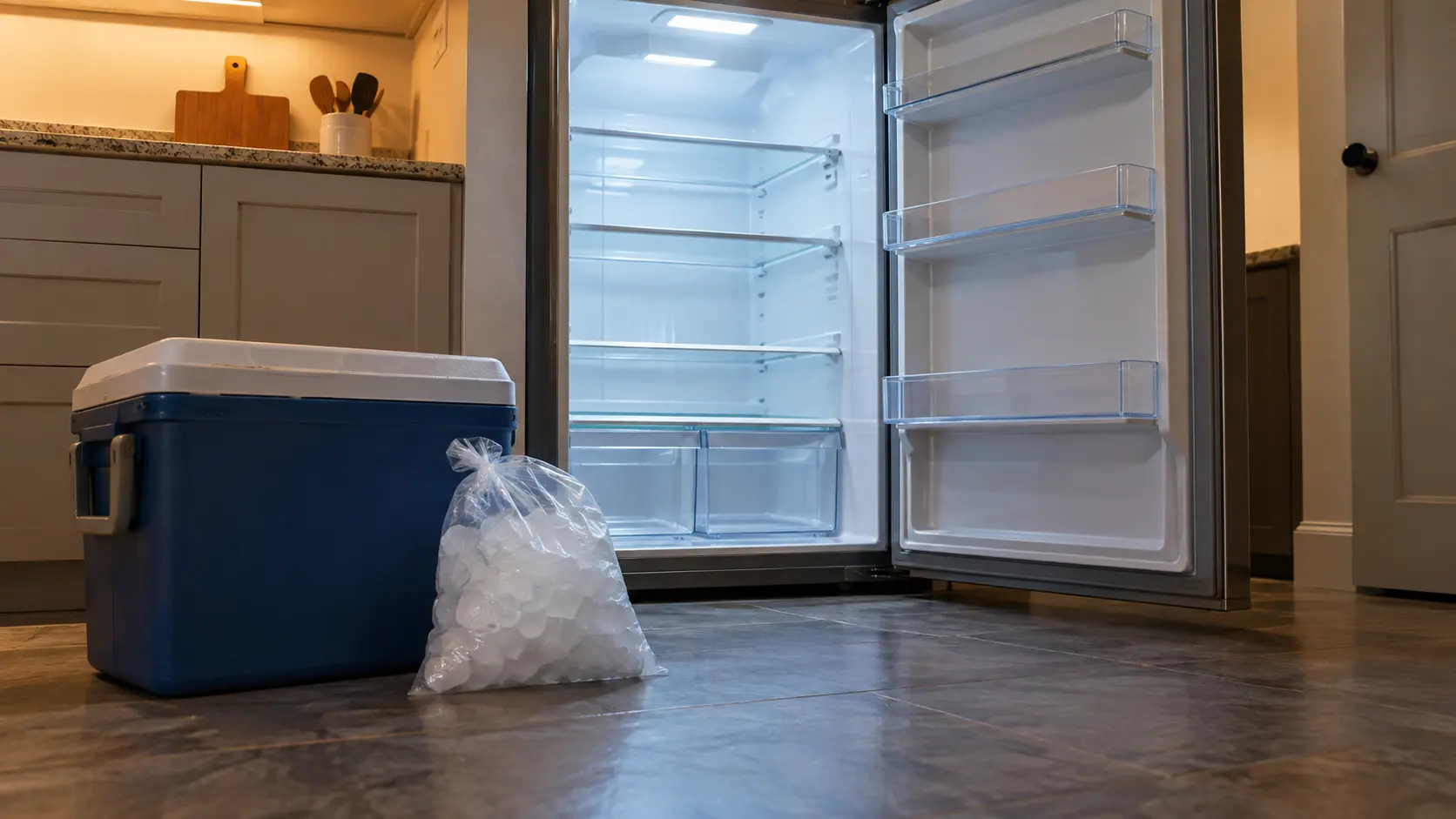
Coolers packed with ice or frozen gel packs will carry the fresh-food essentials for a day or more.
Dry ice for the freezer
The FDA notes that 50 pounds of dry ice should keep an 18 cubic foot, fully stocked freezer cold for two days. Handle dry ice with gloves and keep the room ventilated, since it turns into carbon dioxide gas as it warms.
Source: FDA — Food and Water Safety During Power Outages and Floods — 48 and 24-hour freezer figures; 1 hour above 90°F; dry ice