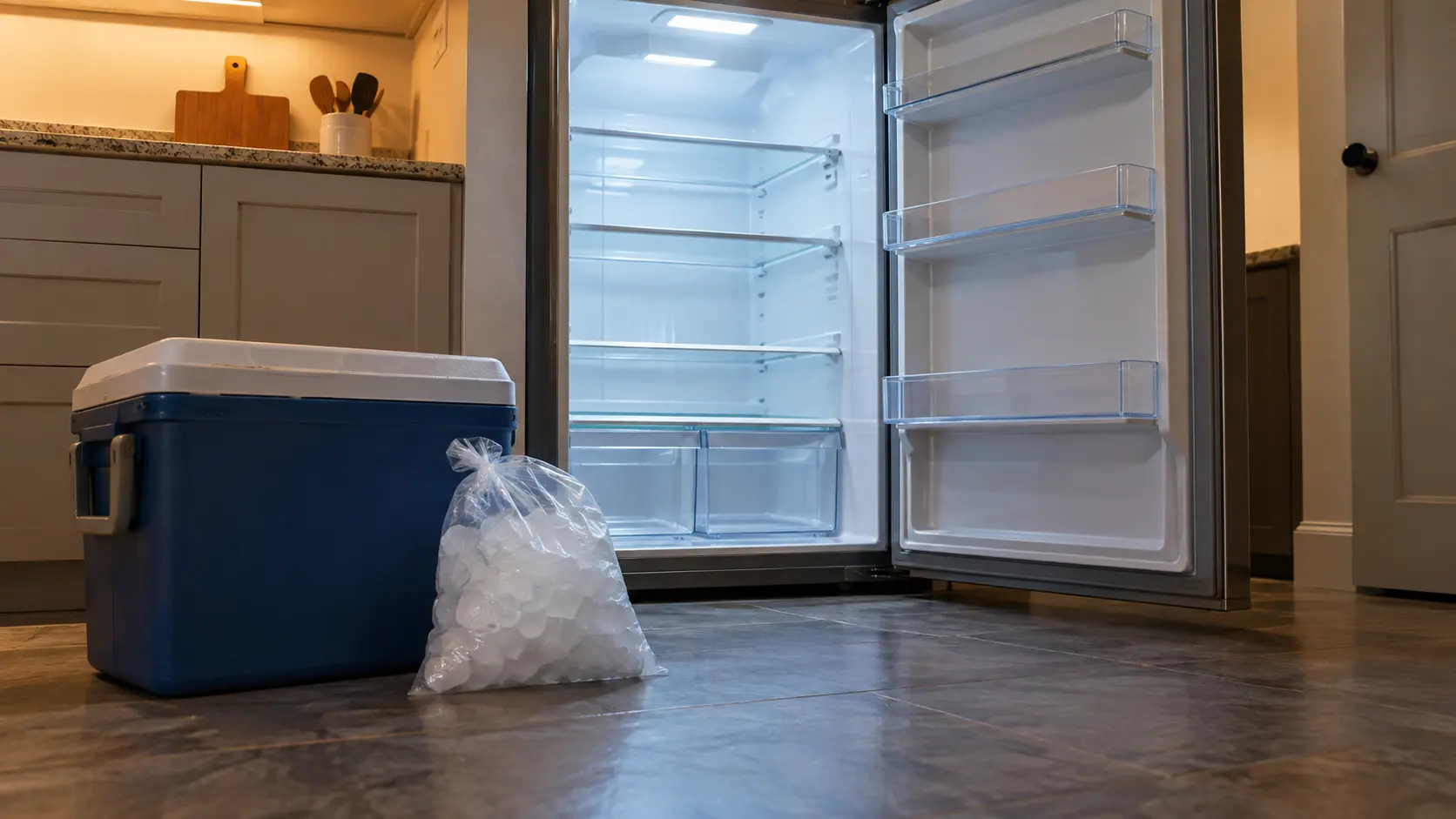
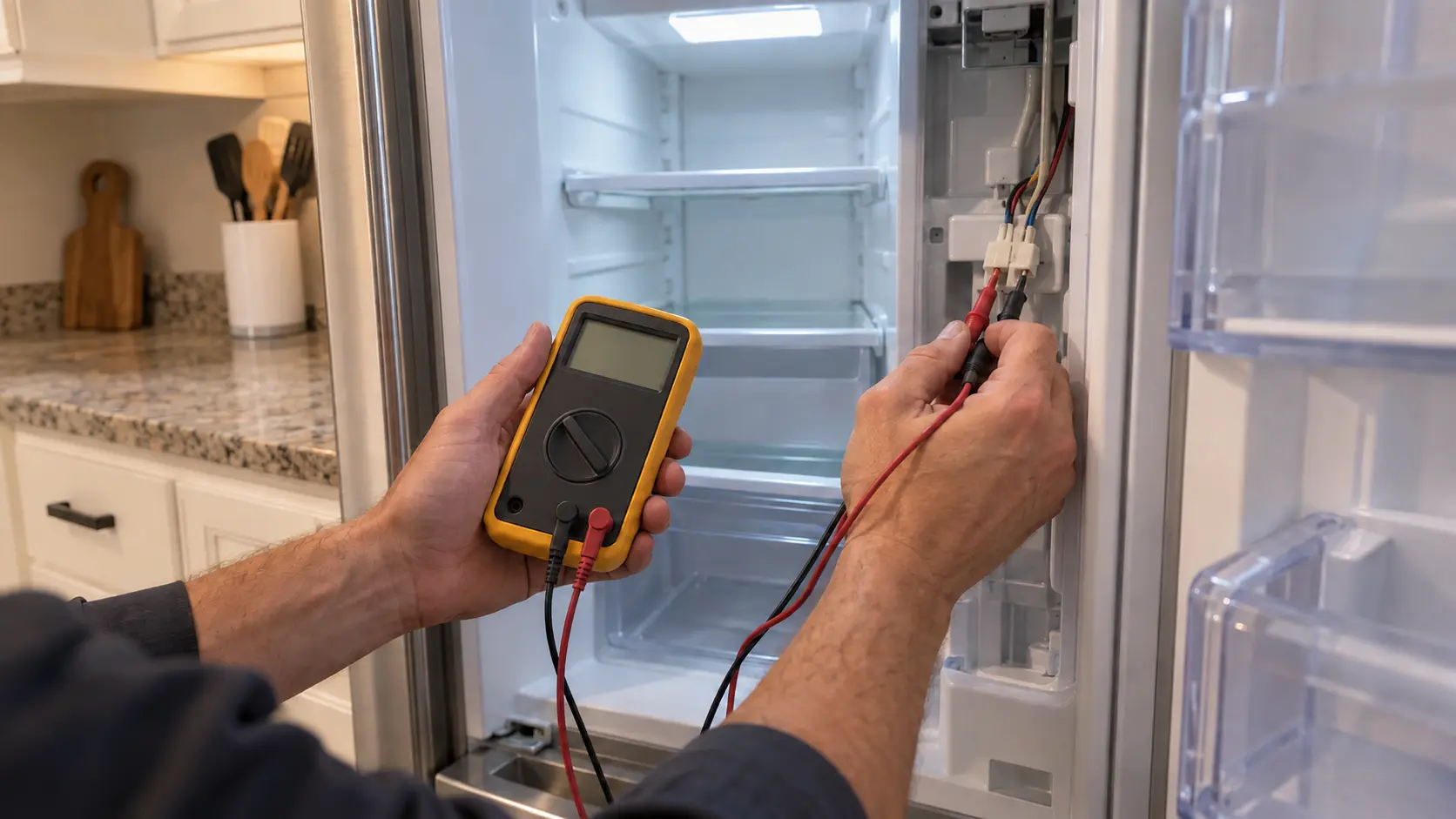
The short list that means stop using it
Refrigerators contain a compressor motor, fan motors, a defrost heater, a control board and, on many models, an ice maker with its own heater. All of it runs unattended, day and night, for years. When one of those electrical parts overheats, the warning usually comes as a refrigerator burning smell before it comes as anything else.
These are the signs that mean power off first and questions later. Each of them has an ordinary explanation more often than a dangerous one, but none of them is something to leave running overnight to see whether it clears up.
- A smell of hot plastic, burning dust or scorched wiring from the base, the back or the top grille
- Visible smoke, or a haze near the machine compartment
- A wall outlet or plug that is warm, discolored or buzzing
- A loud bang or crack from the back followed by silence and a warming cabinet
- A breaker that trips every time the compressor tries to start
How to cut the power on each type
Where the plug sits, and whether there is a plug at all, depends on how the refrigerator is installed.
French door and side-by-side units
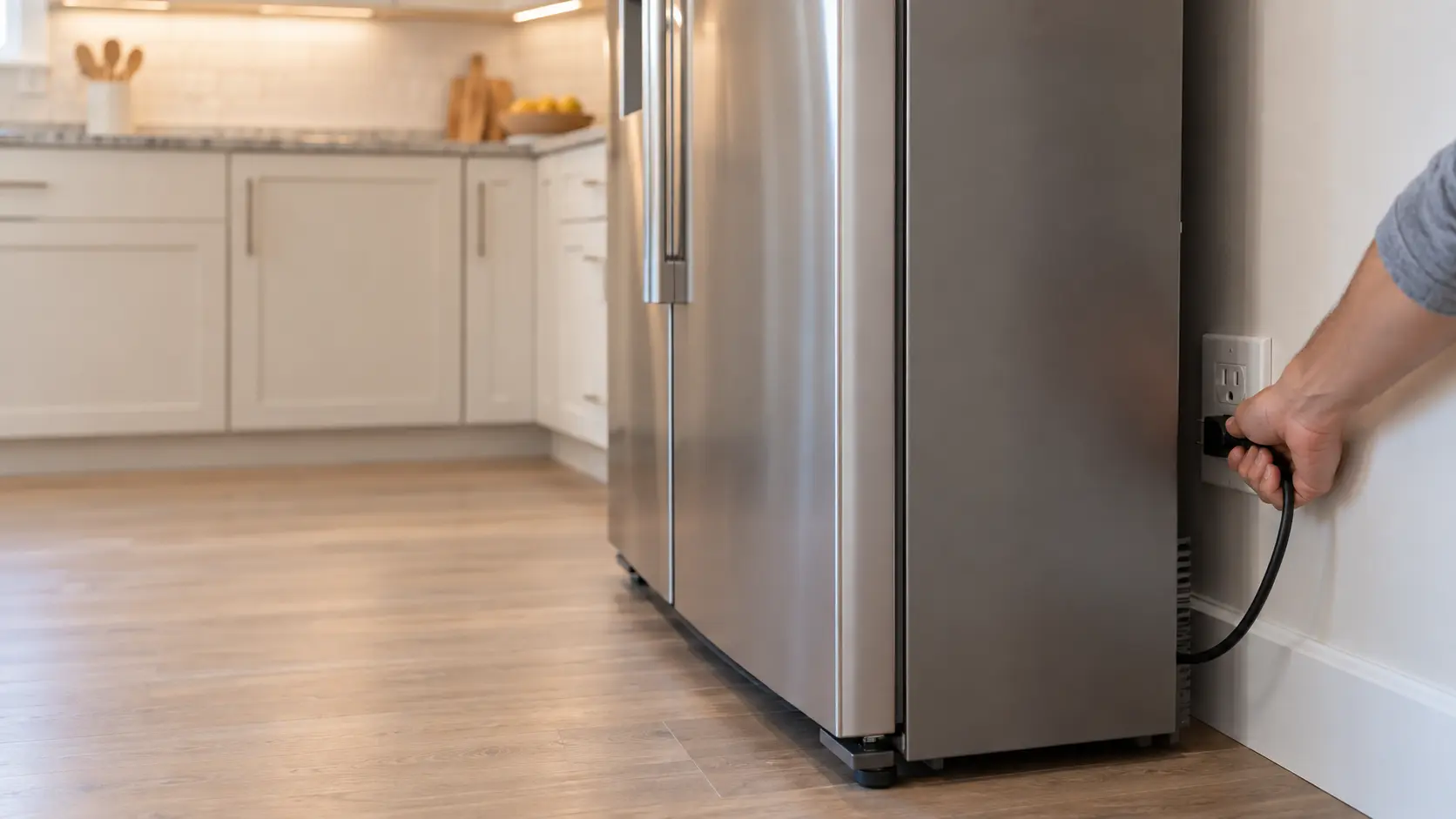
On a freestanding French door or side-by-side unit, the outlet is normally behind the appliance, and reaching it means rolling the unit forward. If the smell is strong or the outlet itself is the concern, go to the electrical panel instead and switch off the breaker that feeds the kitchen refrigerator circuit.
Built-ins and columns
Built-ins and columns are a different case. The outlet is often recessed in the cabinet above the unit or in an adjacent cabinet, and some installations are connected directly with no plug at all. The breaker is the practical way to isolate those.
Undercounter units
An undercounter unit usually plugs into an outlet in the neighboring base cabinet or behind a removable toe-kick, which is easy to reach if you know where it is before anything goes wrong.
Label the breaker before you need it
It is worth finding that outlet and labeling the breaker now, while nothing smells. In an older house the refrigerator may share a circuit with the kitchen lights or countertop outlets, and that is useful to know before you are standing at the panel in a hurry.
Source: Dacor — 24-inch column refrigeration user manual — Plug the refrigerator into its own individual outlet

Where a burning smell usually comes from
From the most common source to the least common, a burning smell tends to trace back to one of these:
- The machine compartment at the bottom or top of the unit, where the compressor, its start components and the condenser fan sit.
- The defrost heater or its wiring, or an ice maker's harvest heater, inside the cabinet.
- A control board with a failing component.
The machine compartment
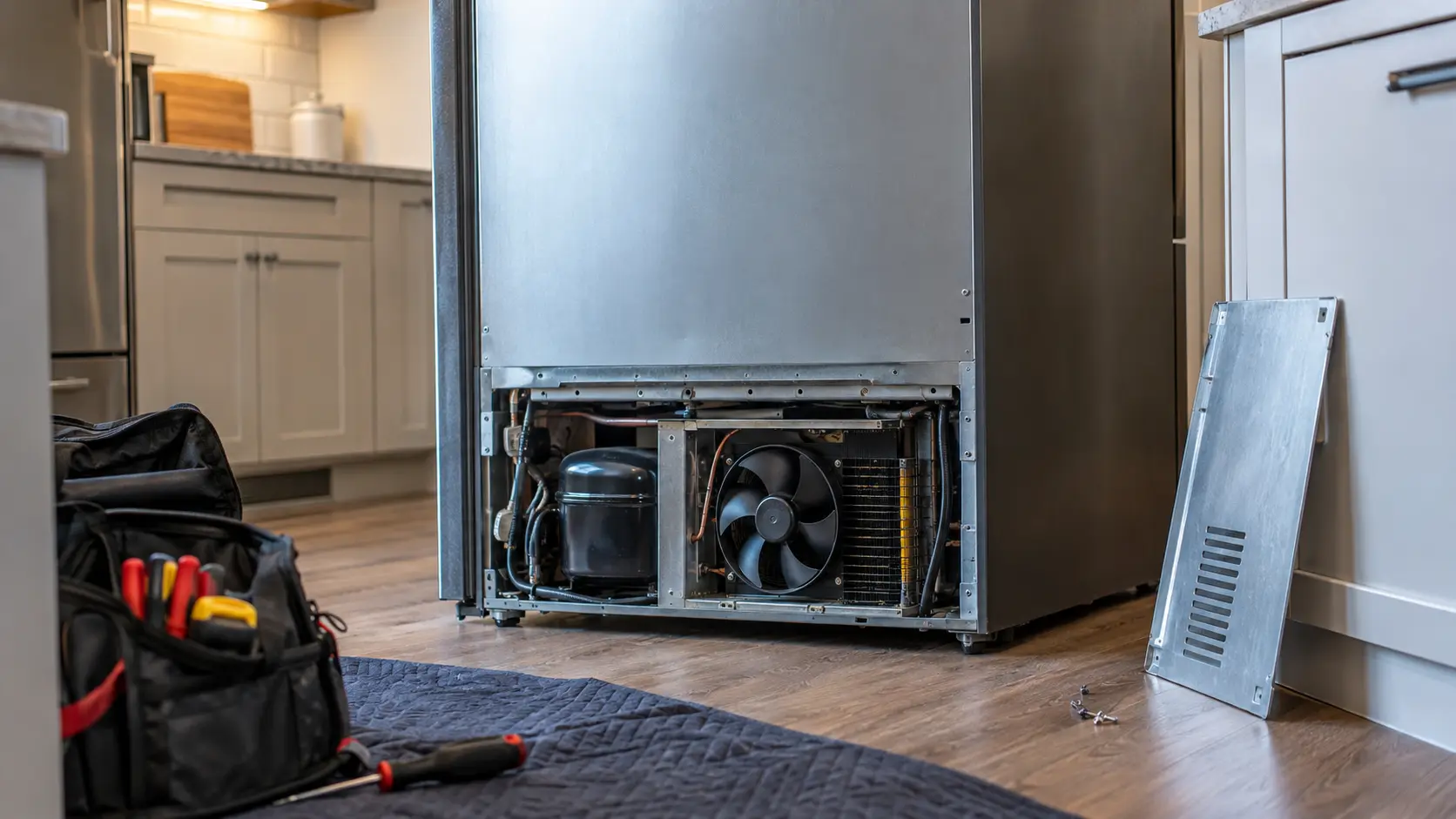
The most common source is the machine compartment, where the compressor and its start components sit. A start relay or overload that is failing can arc and give off a sharp electrical smell, often alongside a clicking sound as the compressor tries and fails to start. A condenser fan motor with a seized bearing overheats in the same area.
Heaters inside the cabinet
Inside the cabinet, a defrost heater or its wiring can scorch the plastic around it, and an ice maker's harvest heater occasionally does the same. Those smells are strongest with the freezer door open.
The control board
A control board with a failing component is the least common source, and on built-ins it sits up in the top compartment behind the grille, so the smell seems to come from above the doors.
Hissing and the question of refrigerant
Many newer refrigerators use isobutane, listed as R-600a on the serial or rating label, in a small sealed charge. It is flammable, which is why the steps below matter. The warning is a steady hiss from the back or the freezer wall, often after something has struck the tubing, followed by both compartments slowly warming.
If you suspect that, work through these in order and leave the leak itself to a technician:
- Unplug the unit or switch off the breaker.
- Open a window.
- Keep flames and anything that sparks away from it until a technician has checked it.
- Do not pull the unit out to hunt for the leak yourself; moving it can bend the same tubing further, and the repair is sealed-system work in any case.
Source: True Residential — undercounter installation manual (R-600a warning) — R-600a is flammable; do not puncture refrigerant tubing; ENERGY STAR — Refrigerators (R-600a refrigerant) — R-600a is a low-GWP refrigerant listed on many new models
Sounds that can wait for an ordinary appointment
Most noises fall into one of two groups, and neither calls for pulling the plug.
Sounds of the appliance working
Plenty of noises are simply the appliance working:
- Refrigerant moving through the tubing gurgles.
- Plastic liners tick as they expand and contract.
- Water dripping onto the defrost heater sizzles for a few minutes during each defrost.
- Ice falling into the bin makes a clatter.
- The water valve for the ice maker gives a brief buzz as it opens.
Sounds of wear
Other sounds indicate wear rather than danger. They are worth booking, and they can be booked for a day that suits you.
- A fan blade scraping on ice
- A rattle from the drain pan beneath a freestanding unit
- A louder compressor hum on an older machine
Source: GE Appliances — side-by-side refrigerator owner's manual 49-60198 — Gurgling, defrost sizzle, clicks and a buzzing valve are normal
Smells that are not electrical
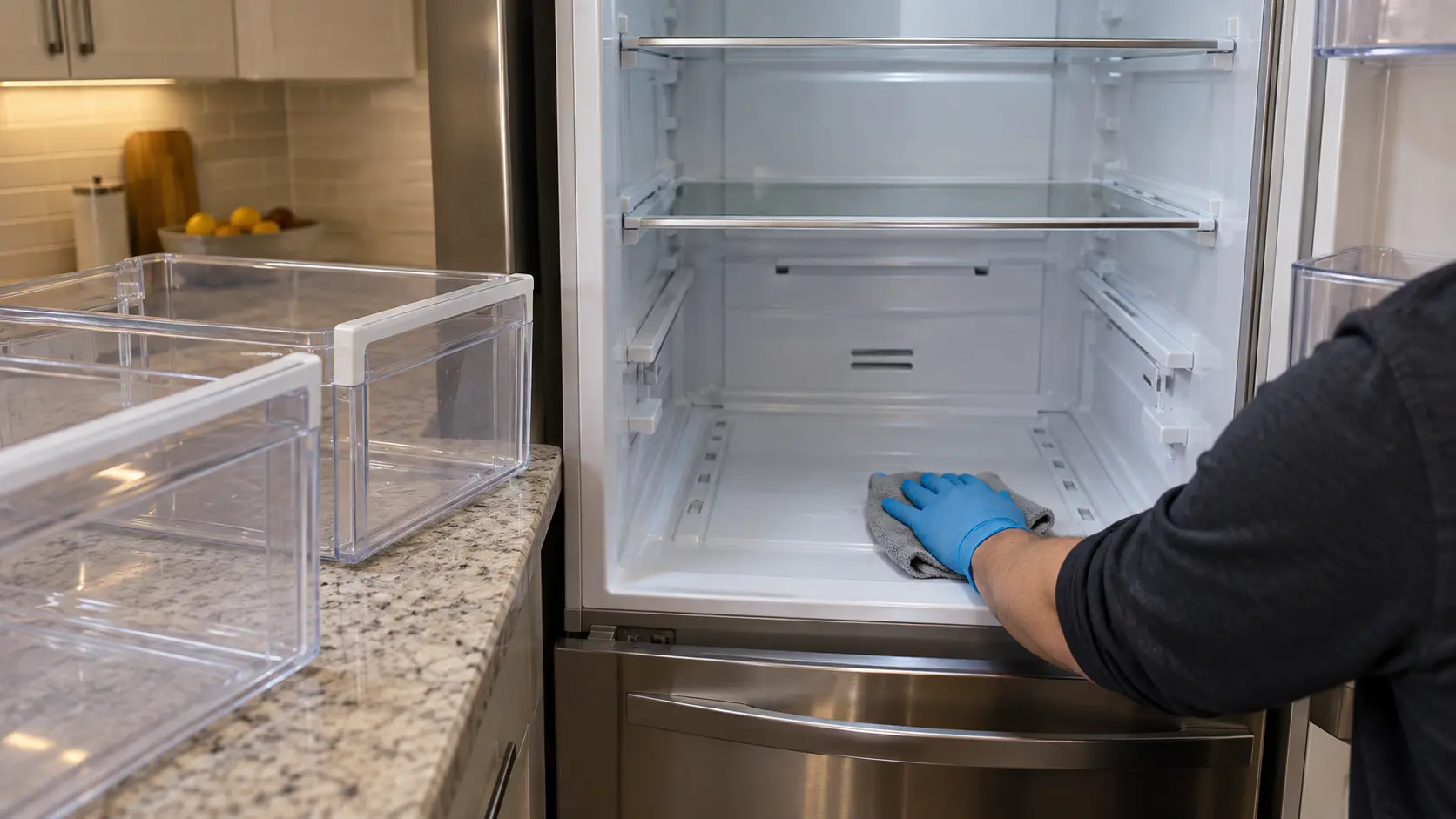
A sour or musty smell almost always has an organic source: spilled food under a crisper drawer, a defrost drain that has backed up, or stagnant water in the drain pan under the cabinet. A new refrigerator often smells of plastic for the first week, which fades on its own. None of these is a reason to unplug, though a blocked drain is worth dealing with before it leaks onto the floor.
If you cannot tell which kind of smell it is, treat it as electrical until proven otherwise, and narrow it down like this:
- Open the freezer door and smell the compartment, then close it.
- Open the fresh-food door and do the same.
- Crouch and smell at the base grille.
- Compare: an organic smell is strongest inside the cabinet, while a hot electrical one is strongest at the grille or behind the unit.