What the display may already know
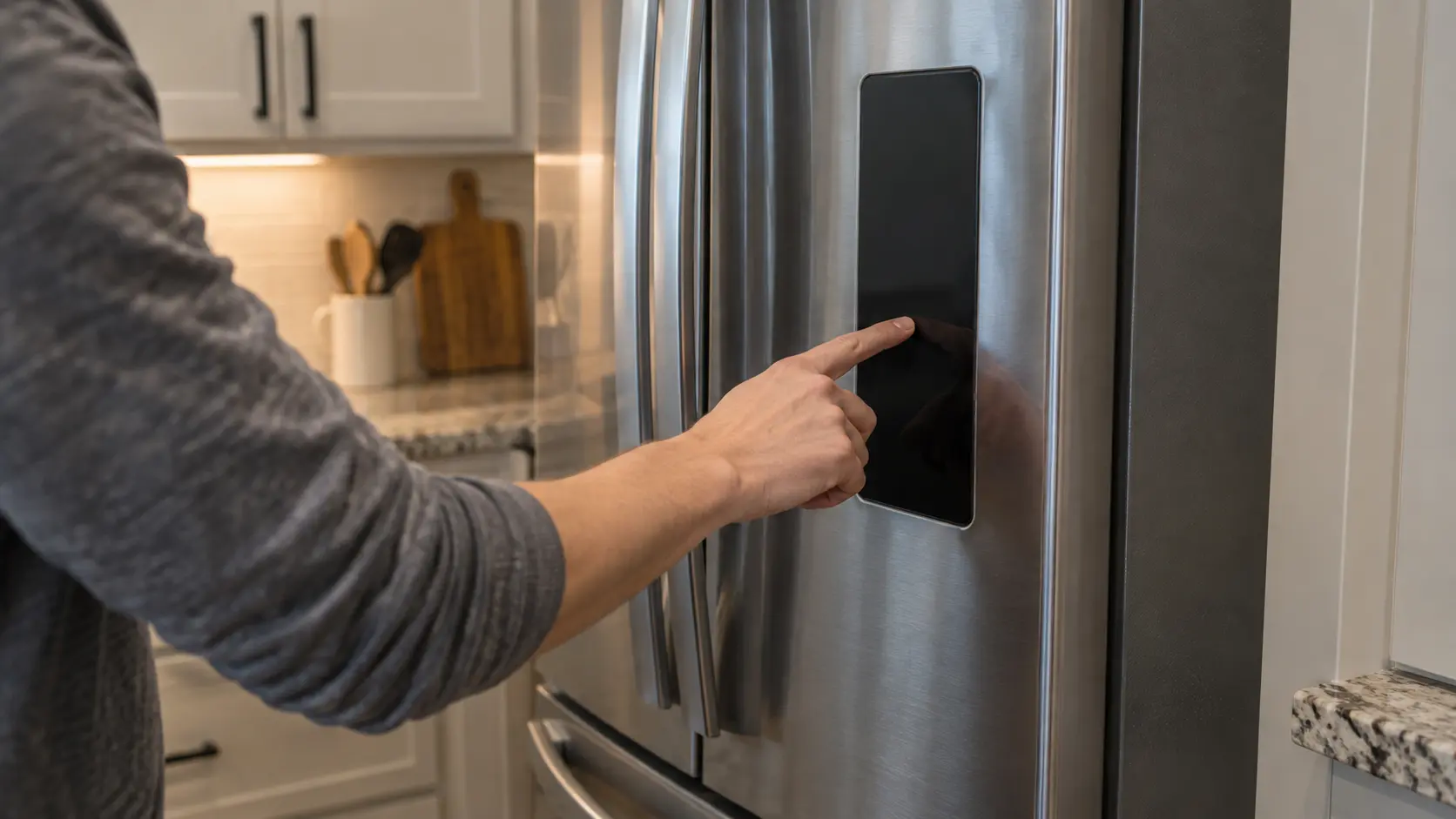
Electronic controls on many built-ins, columns and higher-end French door models react to a power interruption, and the first minutes with a refrigerator after a power outage decide whether you keep that information. The owner's manual explains which of these your model does and what each indicator looks like. When power returns, depending on the model, the control may:
- Show a power or temperature alert.
- Flash the current compartment temperature.
- Display the highest temperature reached during the outage.
The peak temperature reading
That last kind of reading is valuable. It answers the one question the food decision turns on, how warm did it get, without any guesswork about when the power went off.
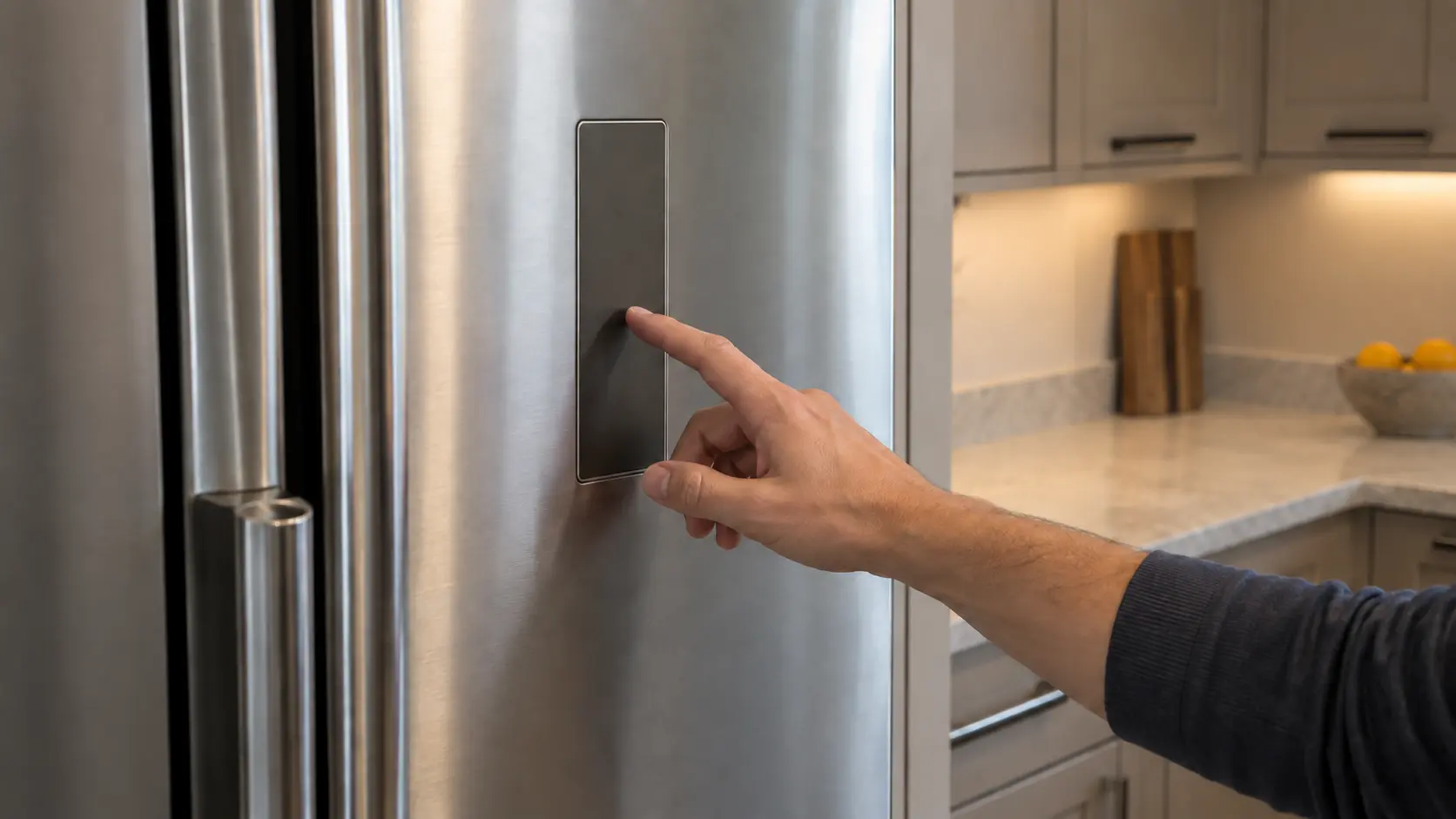
Photograph it before pressing reset
On some models the peak reading stays up for only about a minute and the alarm button turns it off, so photograph the display before touching anything.
Source: Liebherr — Use and Care Manual CS 1640 (power failure display) — Power-failure display shows the highest freezer temperature for about a minute
If there is no record
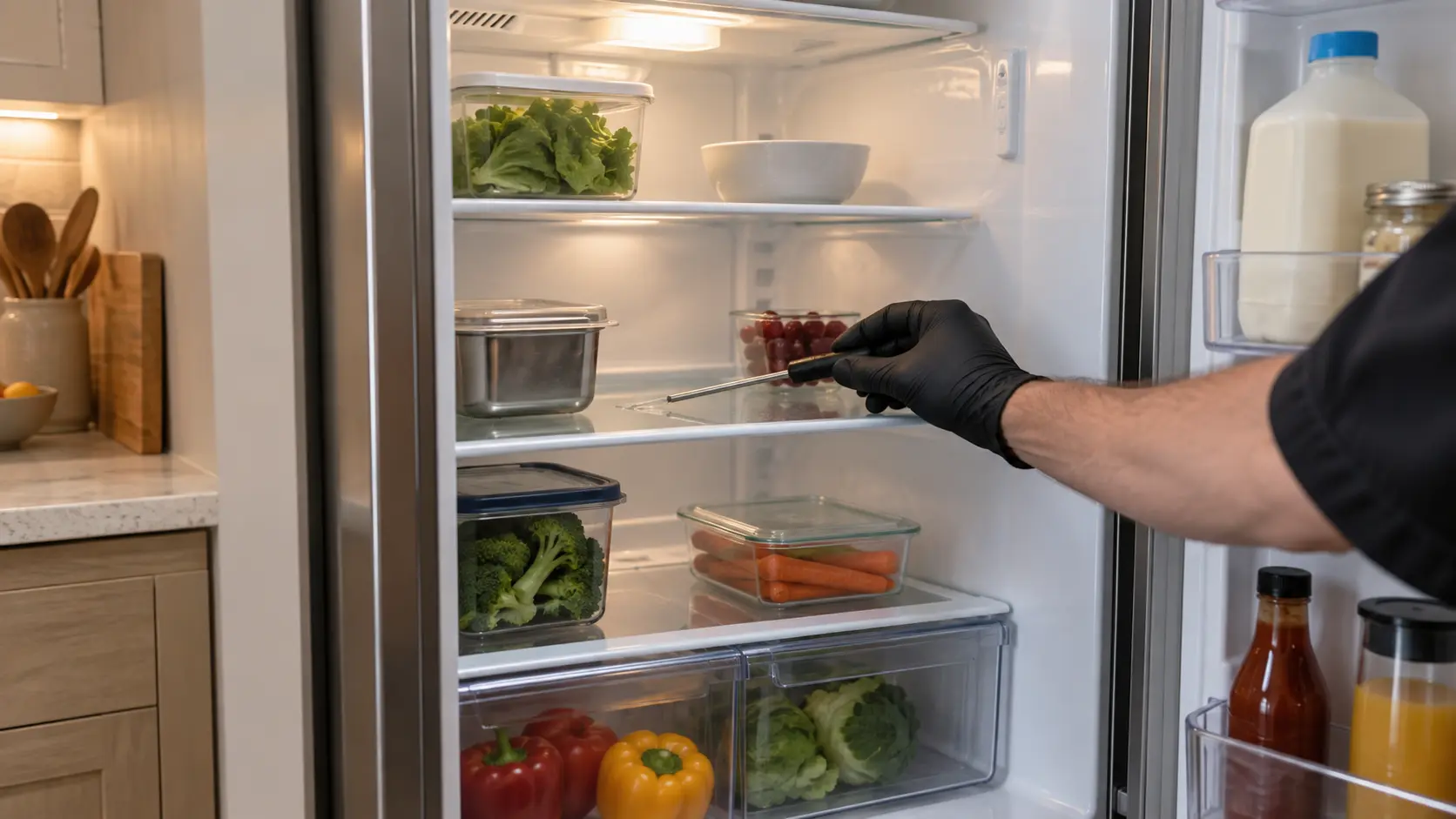
Simpler models, many undercounter units, and older side-by-sides with mechanical dials keep no history at all. For those, an appliance thermometer that was already in the compartment is the next best evidence, and a check of each item in the freezer fills the gap.
The coin-on-ice trick
A useful trick for anyone who loses power often:
- Freeze a cup of water solid.
- Put a coin on top of the ice and keep the cup in the freezer.
- If you come home and the coin has sunk to the bottom, the freezer thawed completely at some point, even if it has since refrozen and looks normal.
How long the power was off
Whatever the model, note the time the power went off if you were home, or check a neighbor's or the utility's outage report if you were not. Clocks on the range or microwave that were reset to midnight or are blinking tell you the power did drop, but not for how long, which is the half of the question they cannot answer.

The food decision in short
The food safety guide on this site covers the sorting in more detail. In short, the FDA's numbers for a closed appliance without power, and for what to do with the food afterward:
- A closed refrigerator keeps food cold for about 4 hours.
- If the power was out no more than 4 hours and the doors stayed shut, refrigerated food should be safe; perishables that have been above 40°F for 2 hours or more should be discarded.
- A closed freezer holds about 48 hours when full and 24 when half full.
- In the freezer, anything that still has ice crystals or reads 40°F or below can be refrozen or cooked.
- If a freezer thermometer reads 40°F or below when power returns, the FDA says the contents are safe and may be refrozen.
Source: FDA — Power Outages: Key Tips for Consumers About Food Safety — Closed refrigerator about 4 hours; discard perishables above 40°F for 2 hours; FDA — Food and Water Safety During Power Outages and Floods — Freezer holds 48 hours full, 24 half full; coolers ready beyond 4 hours
Checking the appliance itself
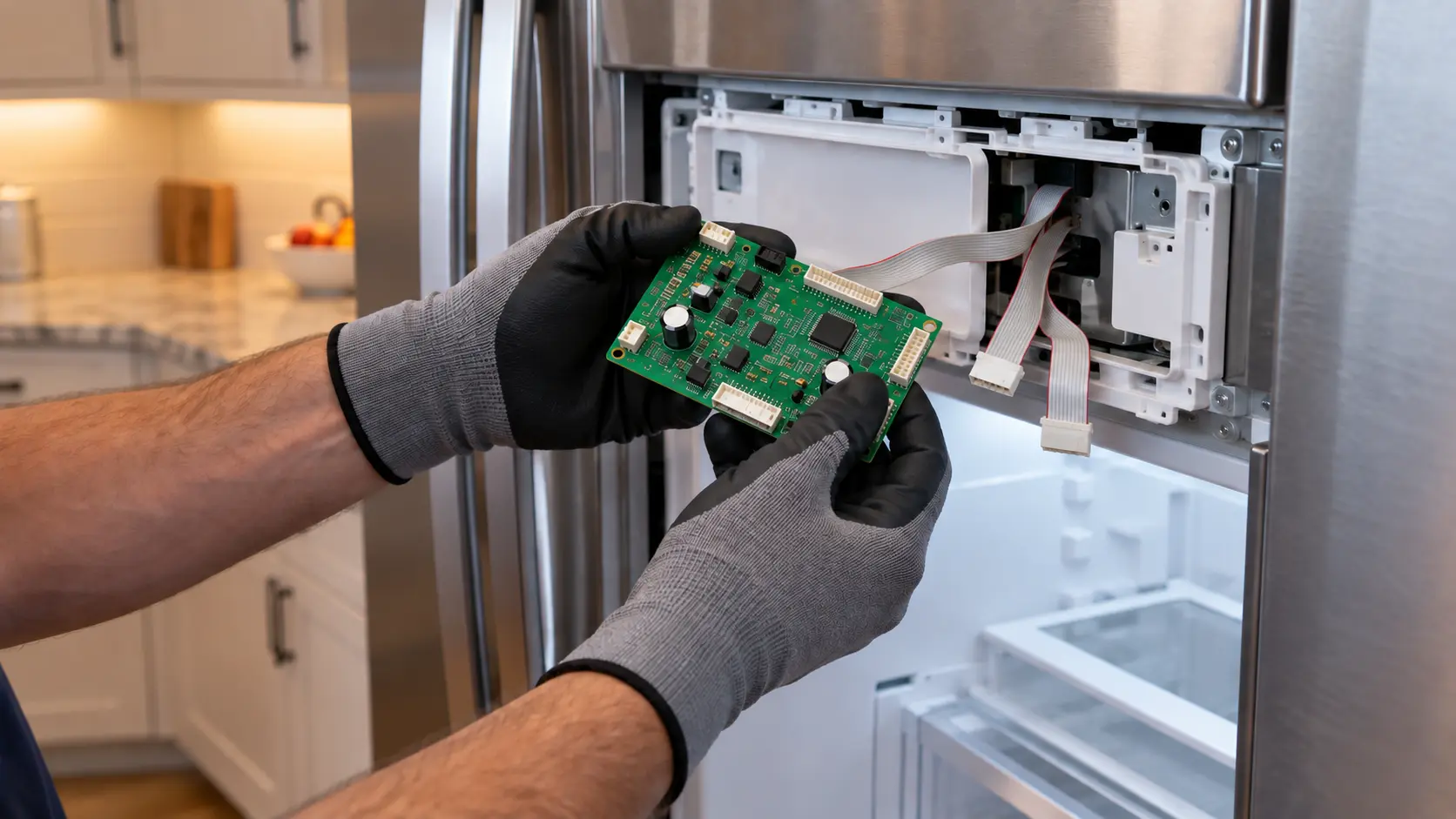
Power often comes back with a surge, and the control board is the part most exposed to it. After an outage, watch for a few specific signs over the first day:
- A blank or garbled display.
- Lights that work while nothing cools.
- A compressor that clicks but never starts.
- A fan that does not come back on.
Give cooling several hours
Allow several hours before judging cooling. A full cabinet that warmed to the mid-40s may need most of a day to return to its settings, and a freezer takes longer than the fresh-food side. On a column pair, check both columns separately: one may have restarted cleanly while its neighbor's control did not.
Ice maker and water line
An ice maker and water dispenser deserve a separate look. If the water line or the filter housing sits in an unheated space, such as a crawl space or a wall against the outside, a long winter outage can freeze it, and the first sign is a dispenser that runs slowly or not at all once the cabinet is cold again. A leak under the unit in the days after an outage points the same way.
Source: GE Appliances — side-by-side refrigerator owner's manual 49-60198 — Compressor restart can take up to 5 minutes; allow 24 hours to cool
Before the next outage
It also helps to know, in calm conditions, where your model's alarm button is and what its display shows when it is healthy. A quick look at the manual now makes the reading after the next outage much easier to interpret, especially on a built-in or column whose controls sit behind a door or inside the top edge of the cabinet.
When an outage is forecast
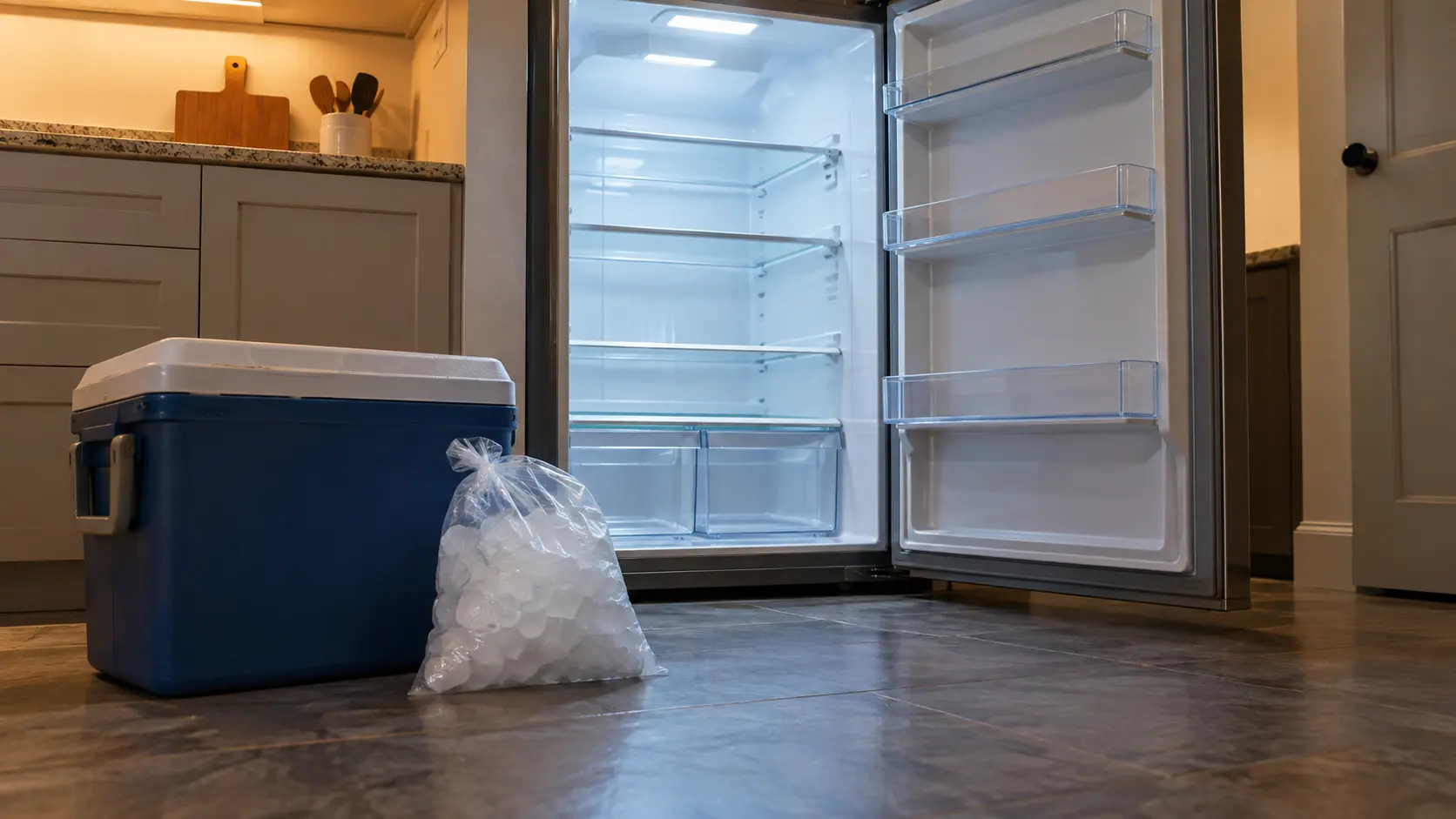
The FDA also recommends having coolers ready if the power may be off for more than 4 hours. A day ahead:
- Turn both compartments a few degrees colder.
- Fill empty freezer space with containers of water, which freeze solid and act as thermal mass.
- Freeze items you will not need right away, as the FDA recommends.
- Group food together in the freezer.
During a long outage
Some owners unplug the refrigerator or switch off its breaker so the control is not exposed to a surge when service returns, then restore power once the lights have been steady for a few minutes. If you run the appliance from a portable generator, CPSC says to use it outside only, at least 20 feet from the house with the exhaust facing away; connecting one to house wiring is work for an electrician.
Source: FDA — Food and Water Safety During Power Outages and Floods — Freezer holds 48 hours full, 24 half full; coolers ready beyond 4 hours; CPSC — Carbon Monoxide Information Center (portable generators) — Run portable generators outside only, at least 20 feet from the home