Why a refrigerator troubleshooting checklist beats a guess
From outside, a warm refrigerator looks the same whatever the cause: the milk is not cold. Behind that one symptom can sit any of these:
- A blocked grille.
- An iced evaporator.
- A stopped fan.
- A control that has lost its setting.
- A sealed-system leak.
What separates the causes
Those range from the cheapest kind of repair to the most expensive. What separates them is a handful of things any owner can notice without opening a panel.
Working through the list in order
This refrigerator troubleshooting checklist is written to be done in order. Each answer rules out a branch, and the later questions only make sense once the earlier ones are settled. Write the answers down as you go, because by the time someone arrives the appliance may be behaving differently, and your notes from the day it happened are better evidence than anything seen on a good afternoon.
One: whether the freezer is still cold
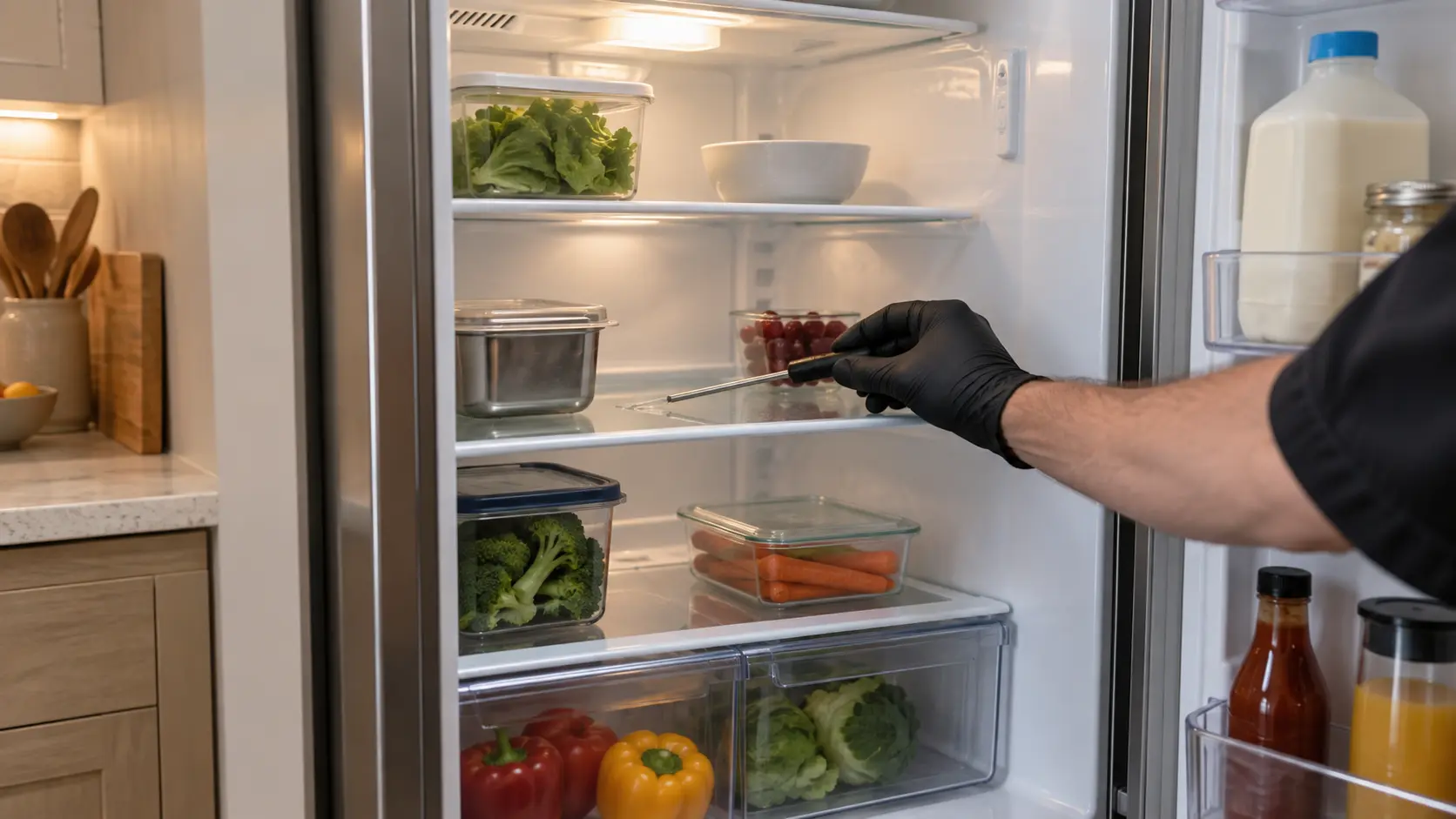
This first observation needs two thermometers and a night's patience.
Taking the two readings
- Stand one thermometer in a glass of water in the center of the fresh-food cabinet.
- Bury a second between frozen packages in the freezer.
- Close both doors.
- Read them after several hours or the next morning, against the FDA safe limits of 40°F for the refrigerator and 0°F for the freezer.
What the two readings say
- A freezer holding near 0°F while the fresh-food side climbs into the 50s: the machine is still producing cold and failing to deliver it, which points at airflow, a damper or frost rather than the compressor.
- Both compartments warm together: a different story, because the cooling itself has weakened or stopped.
Column pairs and undercounter units
On a column pair, where fridge and freezer are two separate appliances, compare the two cabinets instead; the healthy one is your control. An undercounter unit has only one compartment, so the overnight reading against its set point is the whole of this observation.
Source: FDA — Are You Storing Food Safely? — Refrigerator at or below 40°F, freezer at 0°F, checked by thermometer; FDA — Refrigerator Thermometers: Cold Facts about Food Safety — Few refrigerator controls show actual temperatures; use appliance thermometers
Two: frost, and where it forms
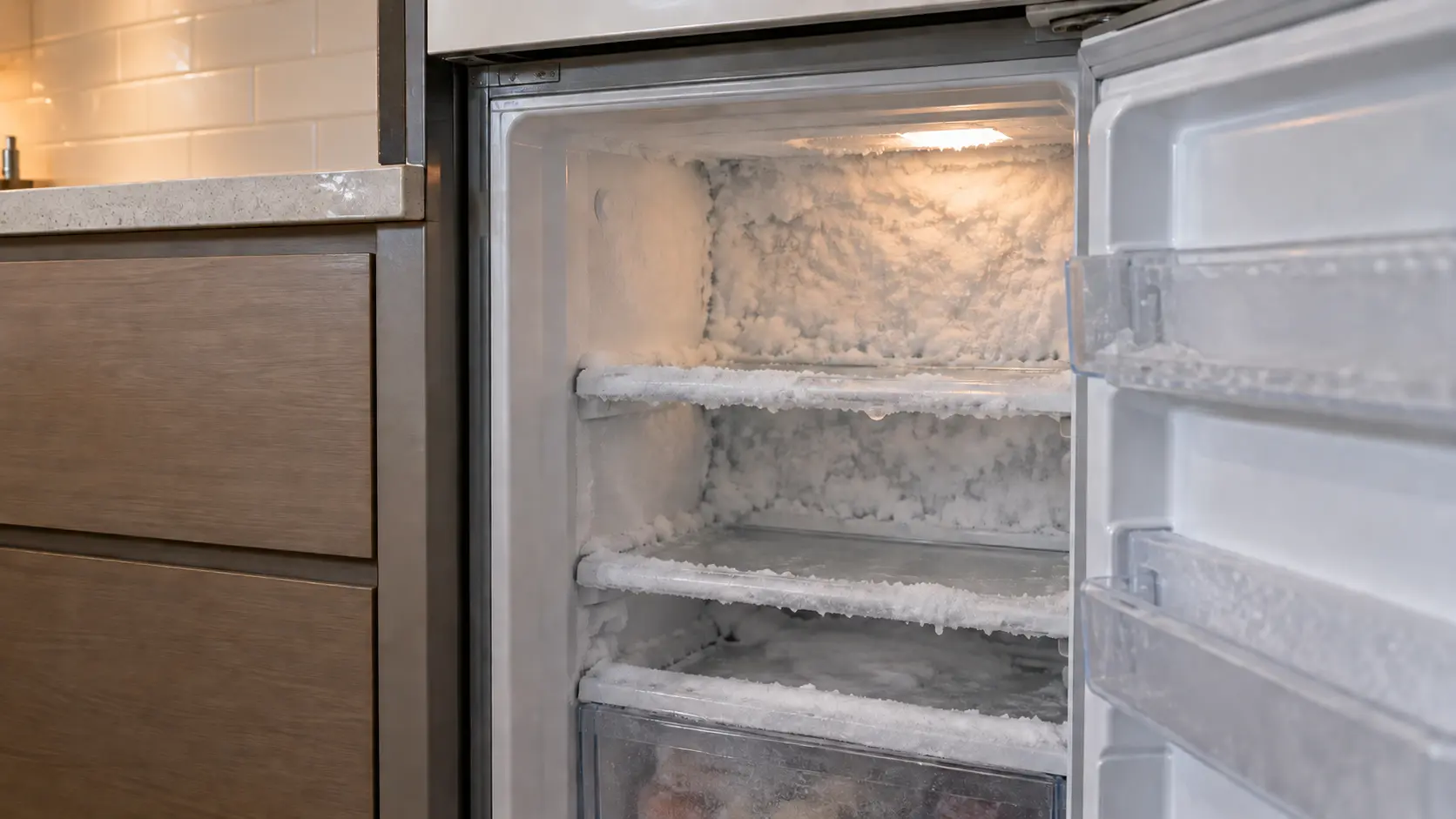
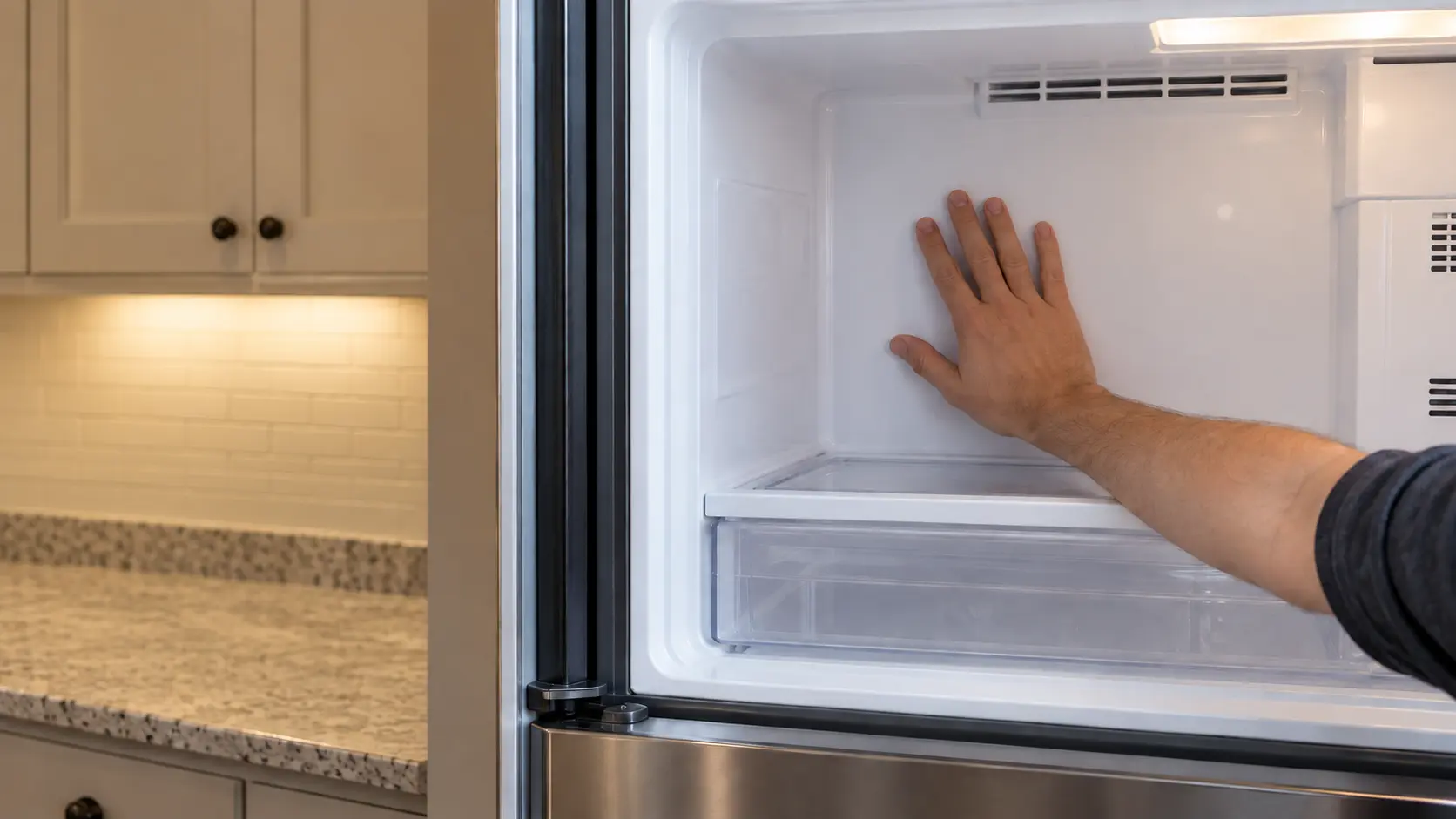
Look at the back wall of the freezer, and on bottom-freezer and French door models pull the drawer right out to see the panel behind it. A thin, even dusting that comes and goes is normal. A thick white crust, or frost growing in a band across the panel, means the evaporator behind it is icing over and air can no longer pass through it.
Where the frost sits, and what it points to
Where the frost sits is informative. Photograph whatever you find before you touch it, because scraping it away removes the evidence.
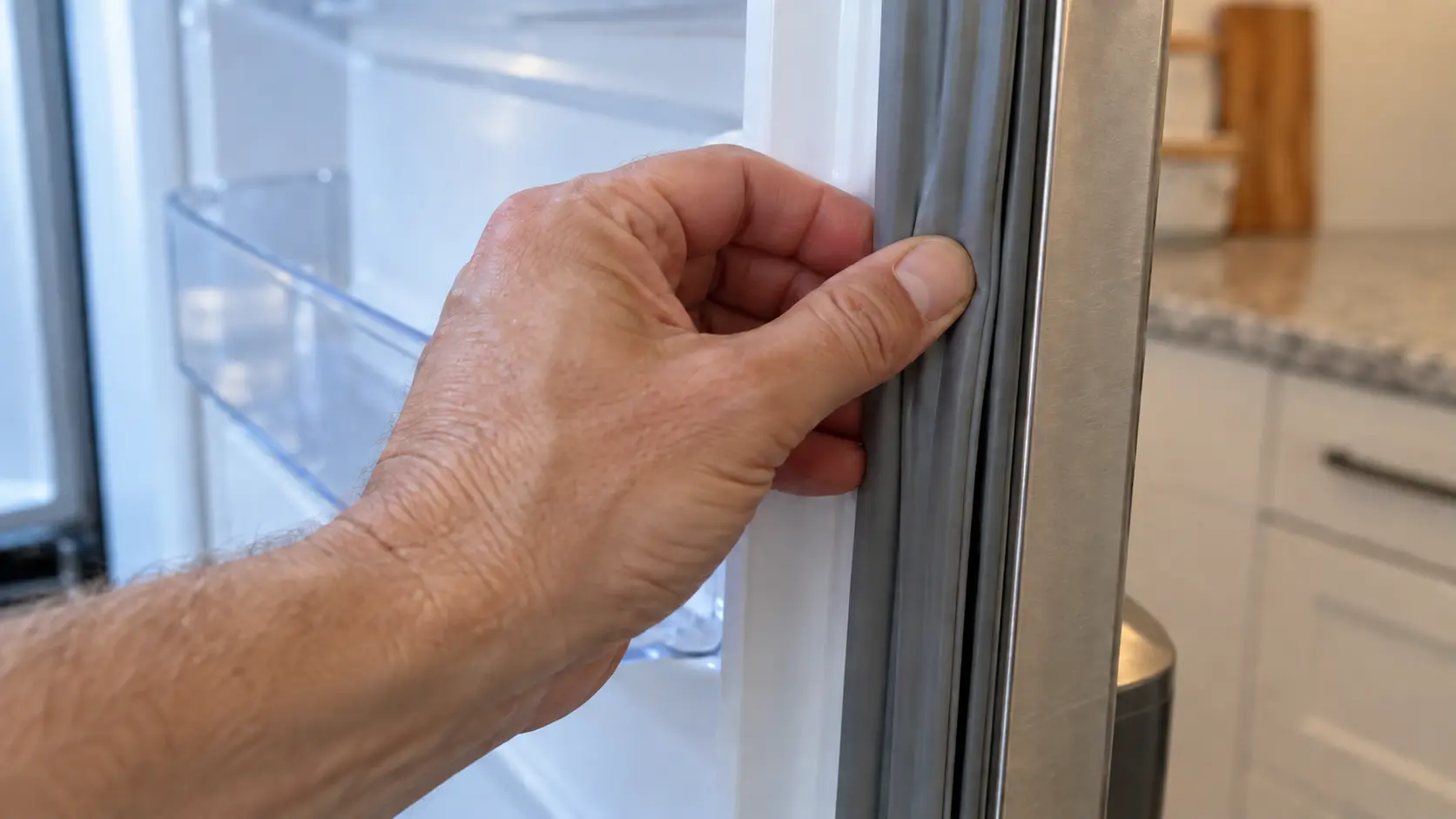
- Heavy frost near a door opening suggests warm air getting in past the gasket.
- Frost spread over the whole evaporator cover points toward the defrost cycle.
- A sheet of clear ice on the compartment floor usually belongs to the drain.
Three: whether it is running at all
Stand beside the unit in a quiet kitchen and listen. Note which of the three sounds of a working system you can hear and which you cannot:
- A steady low hum from the compressor.
- A soft whir from the condenser fan near the floor or behind the top grille.
- Air moving inside the freezer when you hold the door switch in.
Clicks, silence and nonstop running
A unit that clicks every few minutes and then goes silent is telling you something different from one that runs without pause for hours. So is a display that is lit while everything behind it is quiet.
Feeling for warm air
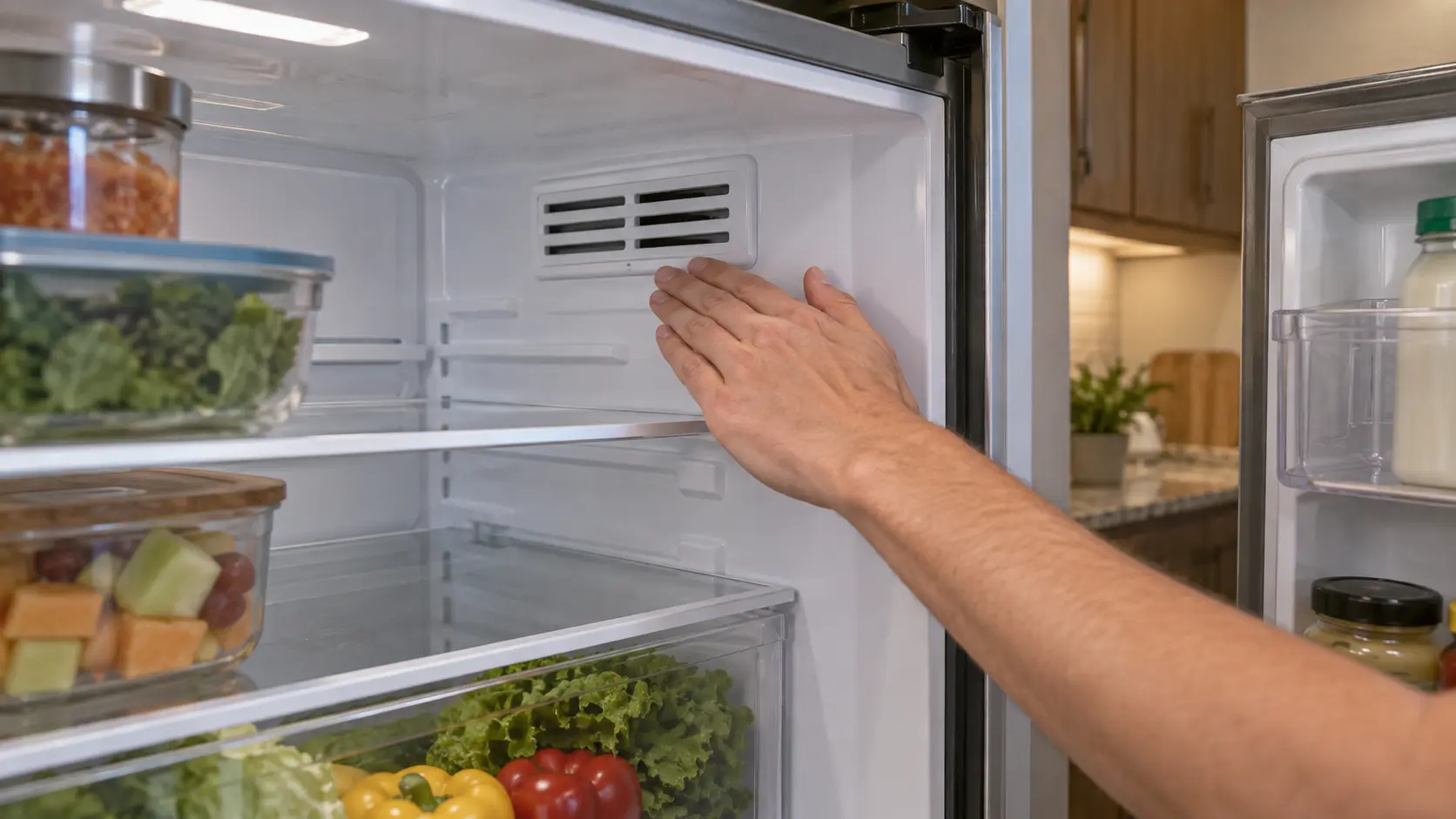
On a built-in, feel for warm air leaving the grille above the doors; on a freestanding unit the warm air comes out at the toe kick. No warm air from a running unit is worth mentioning when you call.
Source: GE Appliances — side-by-side refrigerator owner's manual 49-60198 — Compressor hum, fan sounds and restart clicks are normal operation
Four and five: a drift or a drop, and what changed
The last two observations are about the past week and the room around the appliance rather than the appliance itself.
Four: a slow drift or a sudden drop
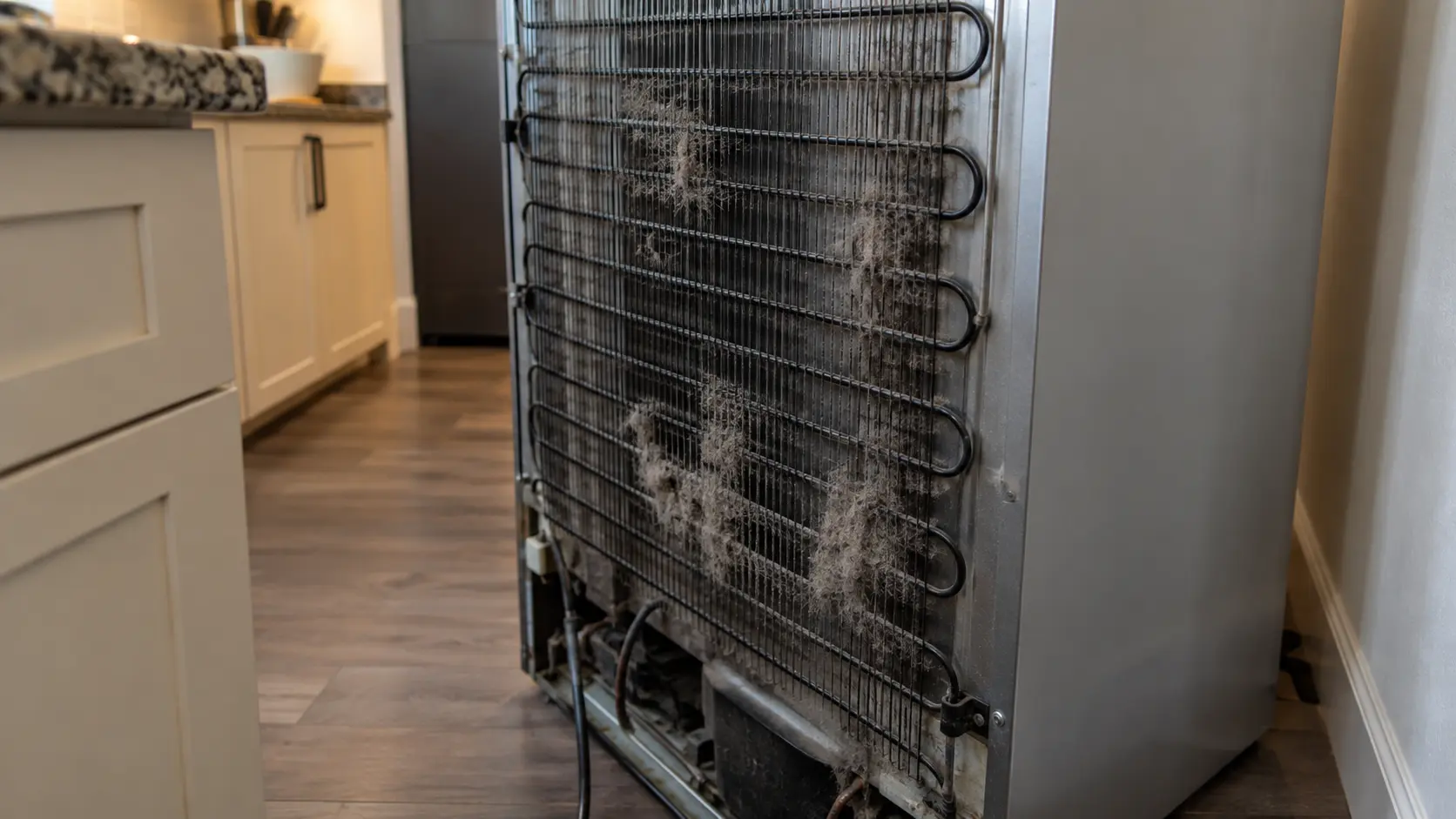
Think back over the last week. A refrigerator that got slowly worse over several days usually has something building up: frost, dust on the condenser, a gasket letting in a little more air each day. One that was fine yesterday and warm this morning more often has something that stopped: a fan motor, a relay, a control. The two stories send a technician to different parts first.
Five: what changed around it
Then ask what is different around it. Changes of this kind account for a surprising number of calls, and several of them are fixed the same day you notice them:
- A recent move.
- A new floor or rug.
- Cabinet work that closed up the opening.
- A heat wave.
- A unit moved into a garage.
- A power cut.
- A new water filter.
- A child who found the control panel.
Passing the answers on
When you book, give the answers in the same order:
- The two thermometer readings and how long the doors had been shut.
- What the frost looked like and where.
- Which sounds you heard.
- Whether it drifted or dropped.
- What changed.
- The model number from the label inside the cabinet, and the photos you took before touching anything.
Why the short report helps
That short report lets whoever comes bring the likely parts on the first trip instead of the second. It also protects you from a diagnosis made in five minutes on a day when the symptom-free afternoon hides the pattern you saw at breakfast.