Why the lean matters
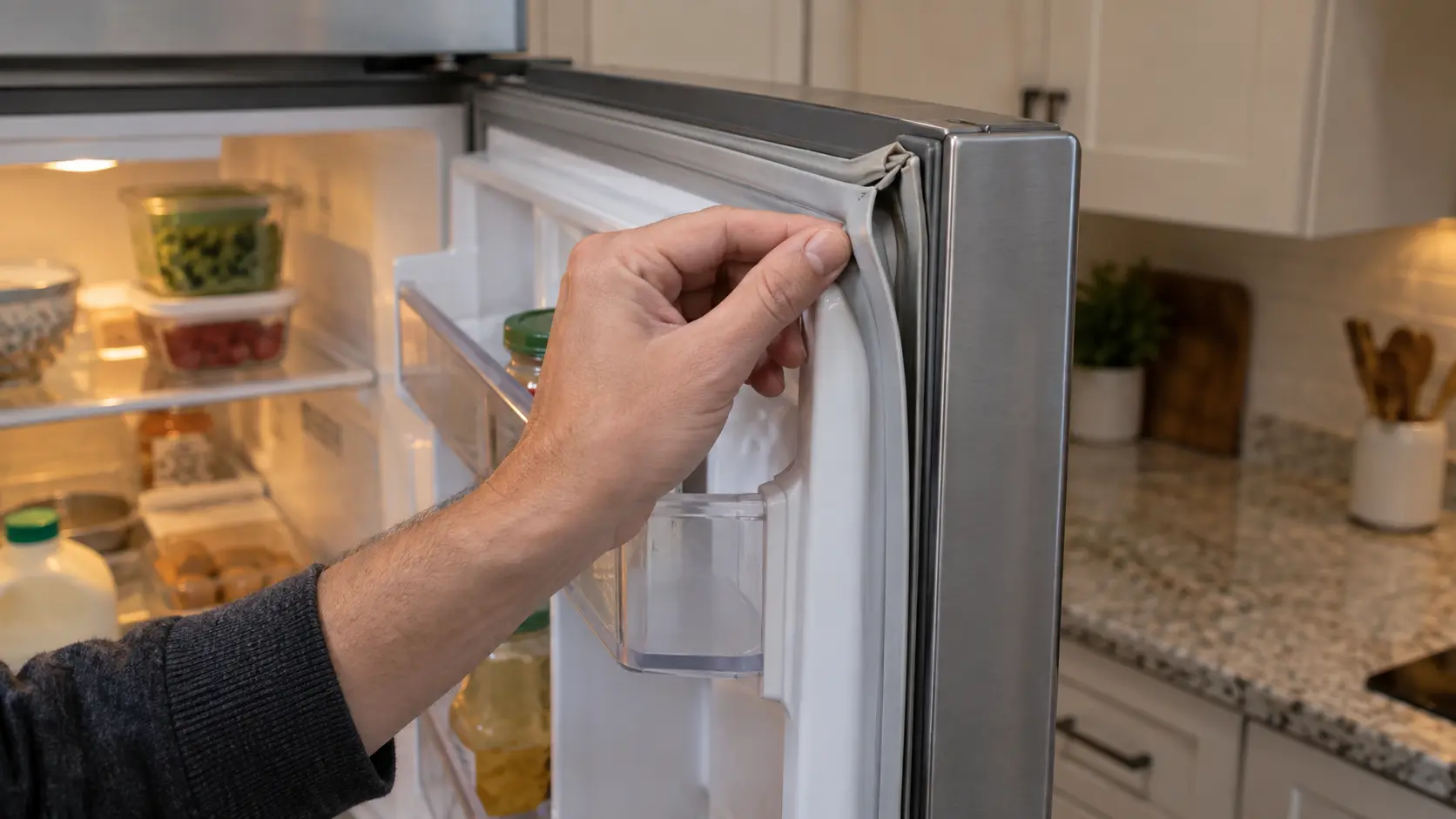
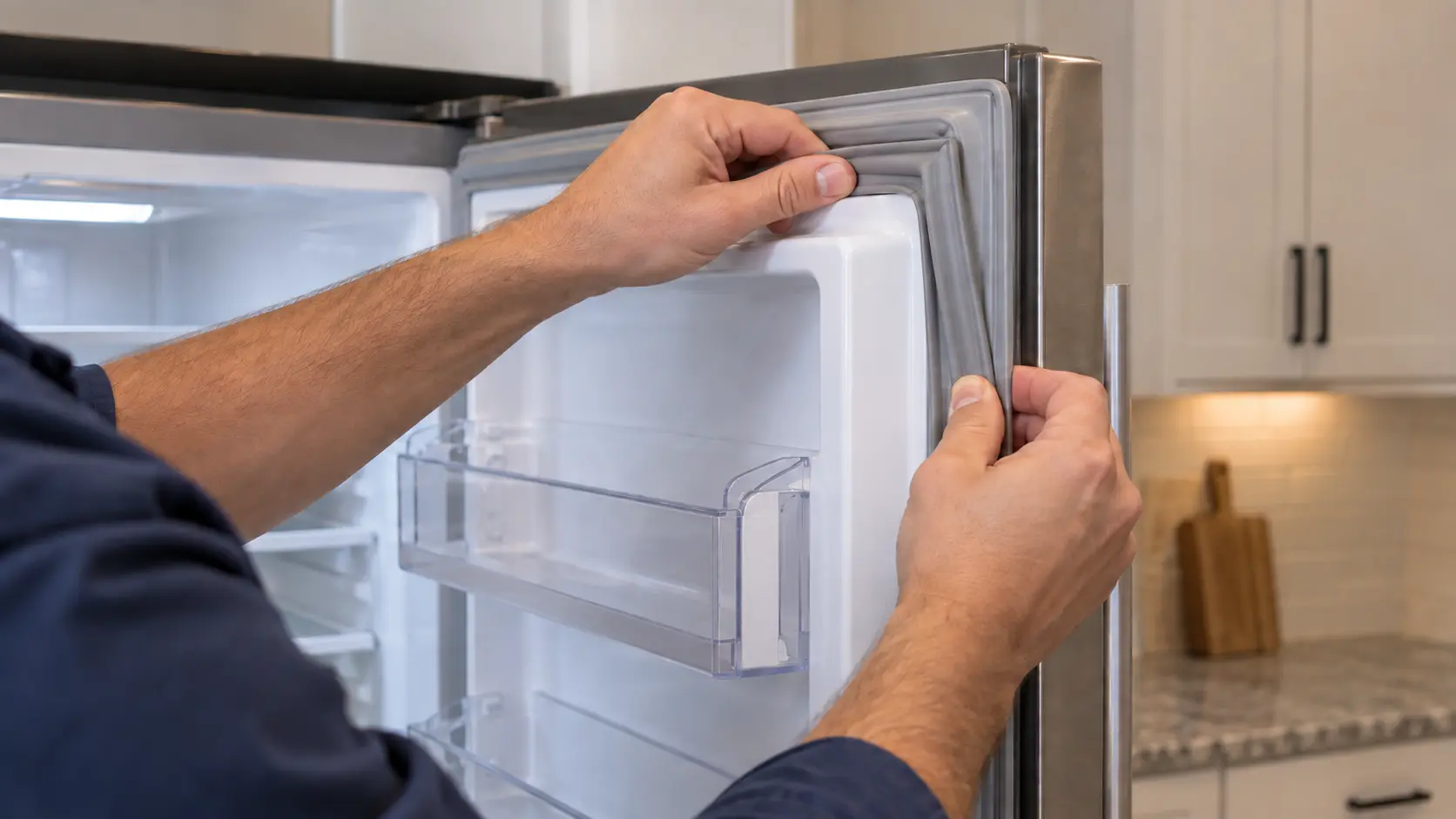
A door left a few inches open should swing shut on its own. That behavior is not an accident: a refrigerator standing a touch higher at the front lets the weight of each door carry it the last inch, where the magnetic gasket takes over.
From a forward tilt to a warm fresh-food side
Tilt the case forward instead, even slightly, and the problem builds in a predictable order:
- Doors drift open and stop short of the seal.
- Humid kitchen air gets in every time.
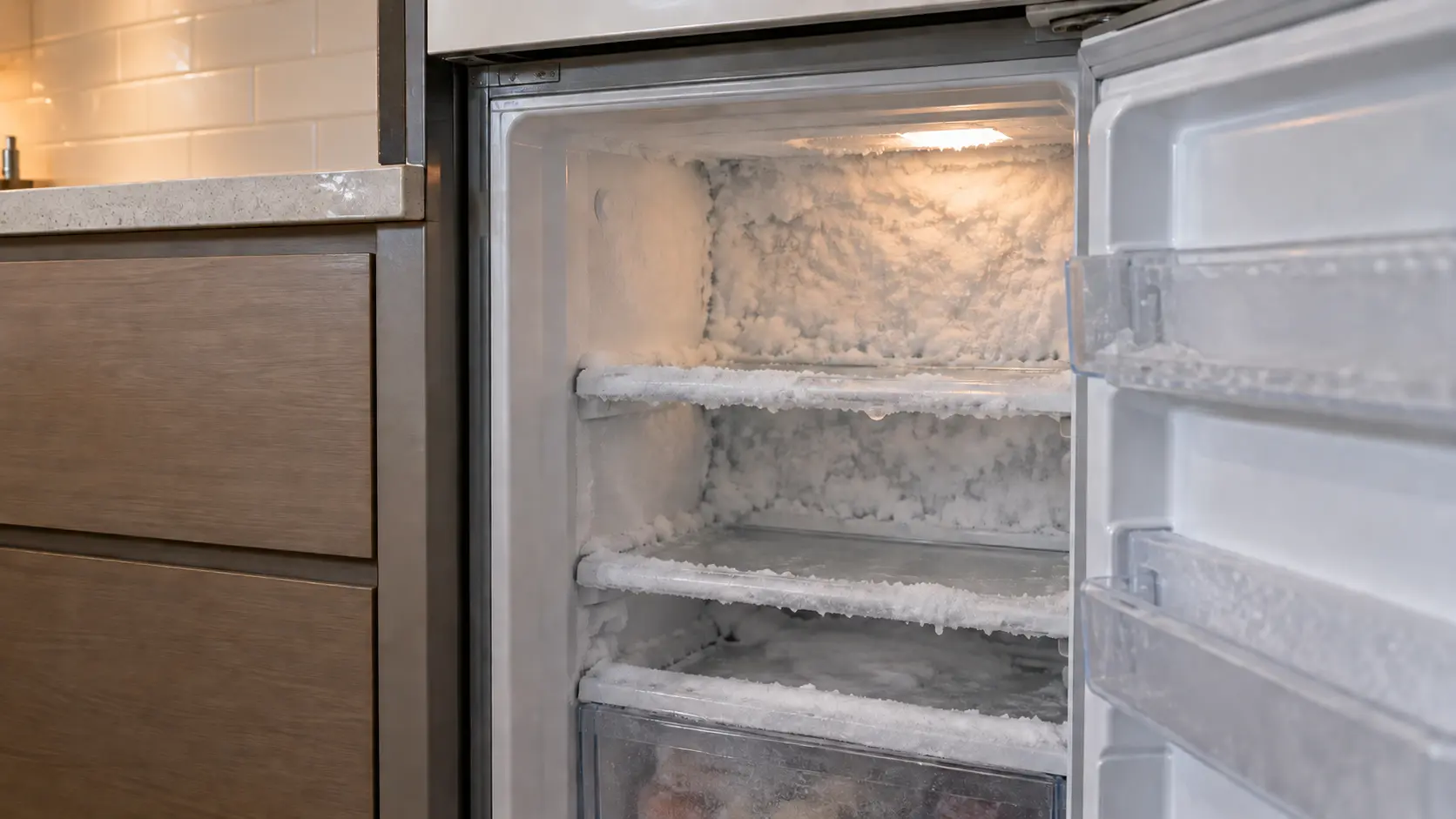
- The moisture in that air freezes on the evaporator, and within days the coil is coated.
- Airflow falls, and the refrigerator side begins to warm while the freezer stays cold.
When the service call turns out to be the stance
What looks like a defrost or fan problem on the service call is sometimes a unit that was pushed back onto a floor transition and never resettled.
Source: GE Appliances — top-mount refrigerator use and care guide 49-6797 — Raise the front just enough that a half-open door closes
What else depends on it
Meltwater runs by gravity
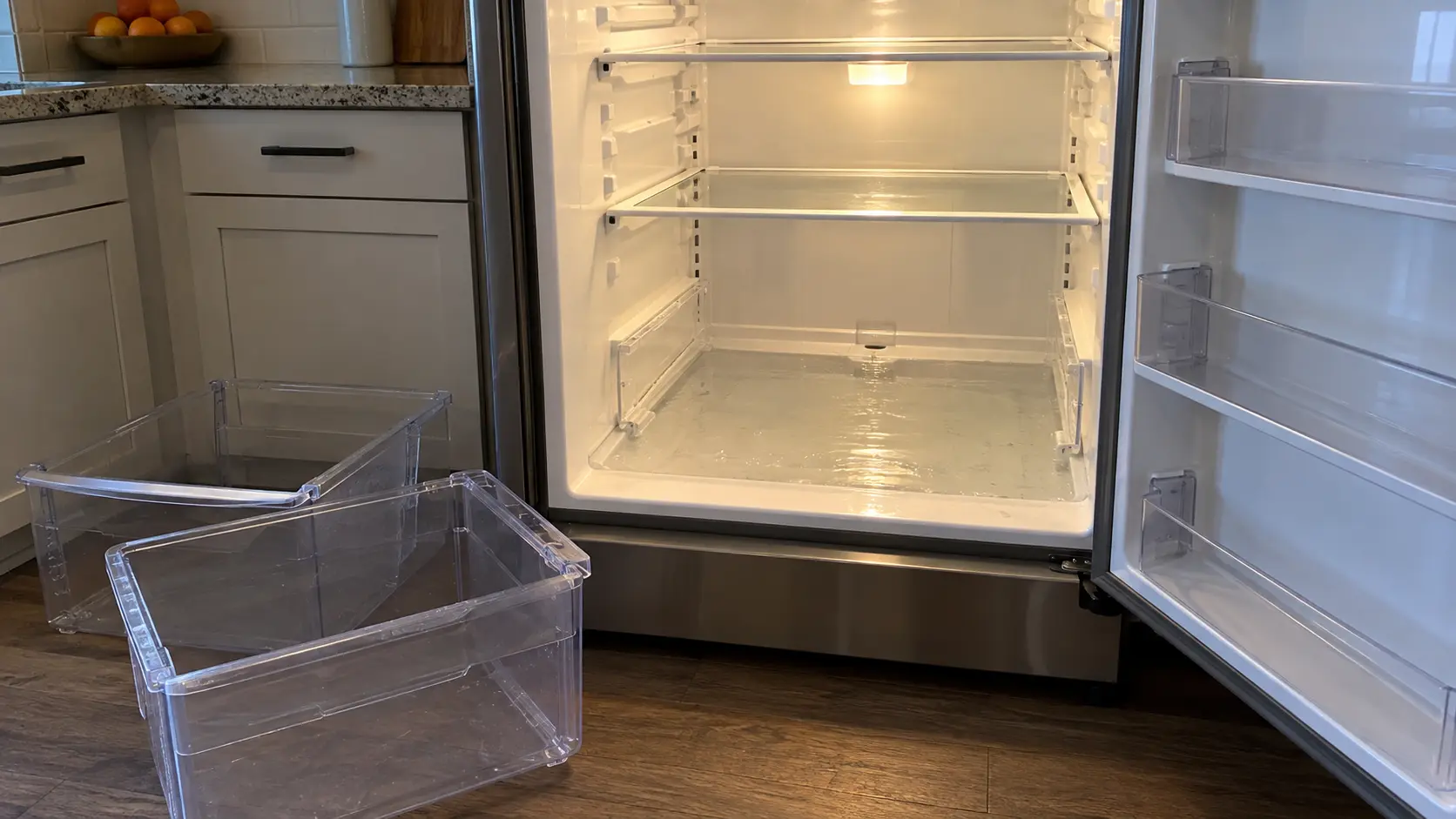
Water inside the appliance also runs by gravity. The defrost trough, the drain tube and the pan underneath are laid out for a cabinet at its intended stance, and a unit leaning the wrong way can send meltwater to the front of the liner or spill the pan onto the floor.
Ice maker molds fill by time
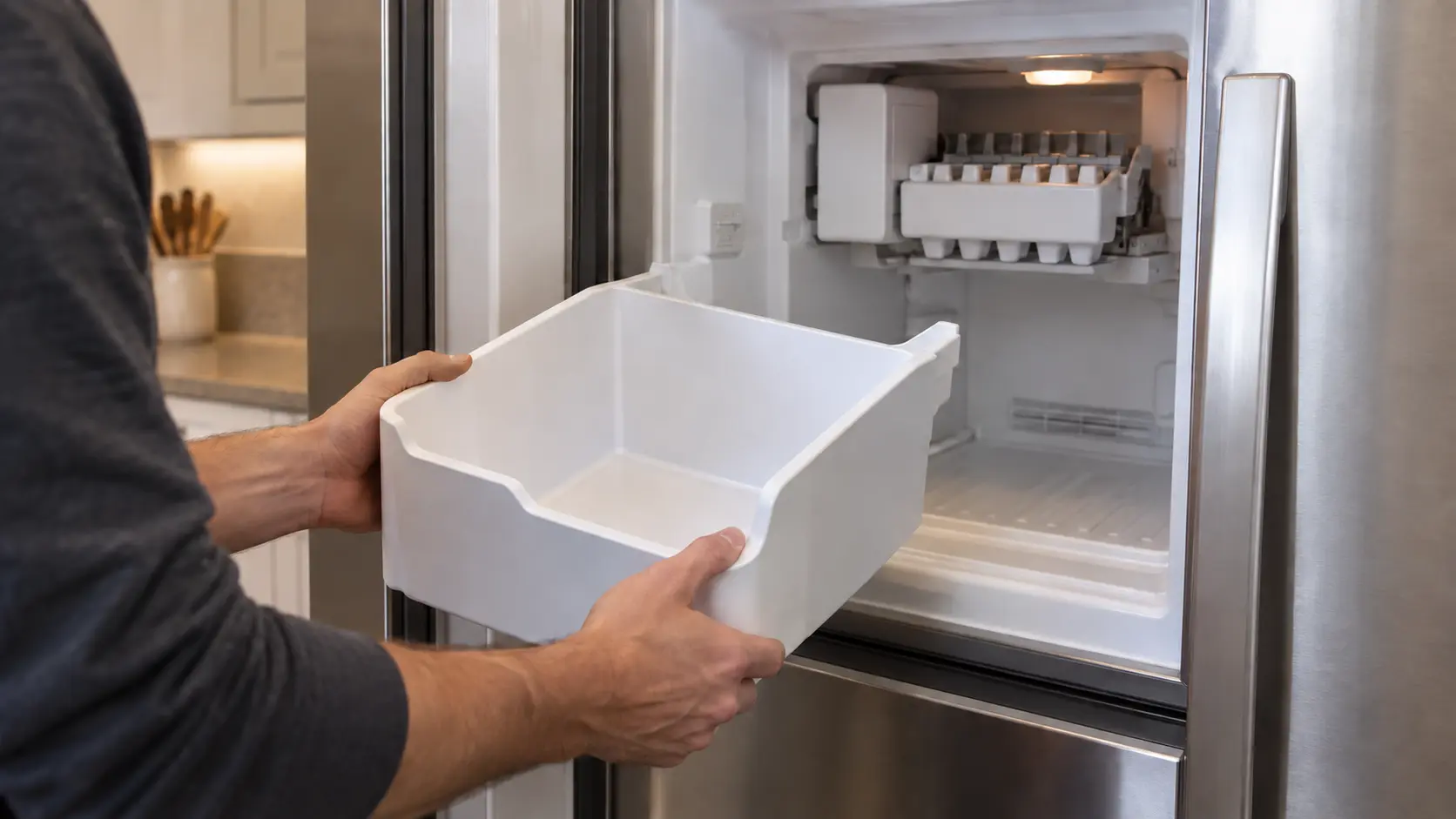
An ice maker mold that sits at an angle fills unevenly and can make wedge-shaped or fused cubes.
The French door center seal
On French door models, side-to-side error shows up as one fresh-food door sitting lower than the other. The center flap then misses its strike, the doors no longer meet squarely, and a seal that looks fine from across the room leaks along the middle.
Source: True Residential — 42/48 built-in installation manual (leveling procedure, anti-tip bracket) — 7/16-inch socket, level on interior floor; stops drain pans spilling

Where the adjusters are on each type
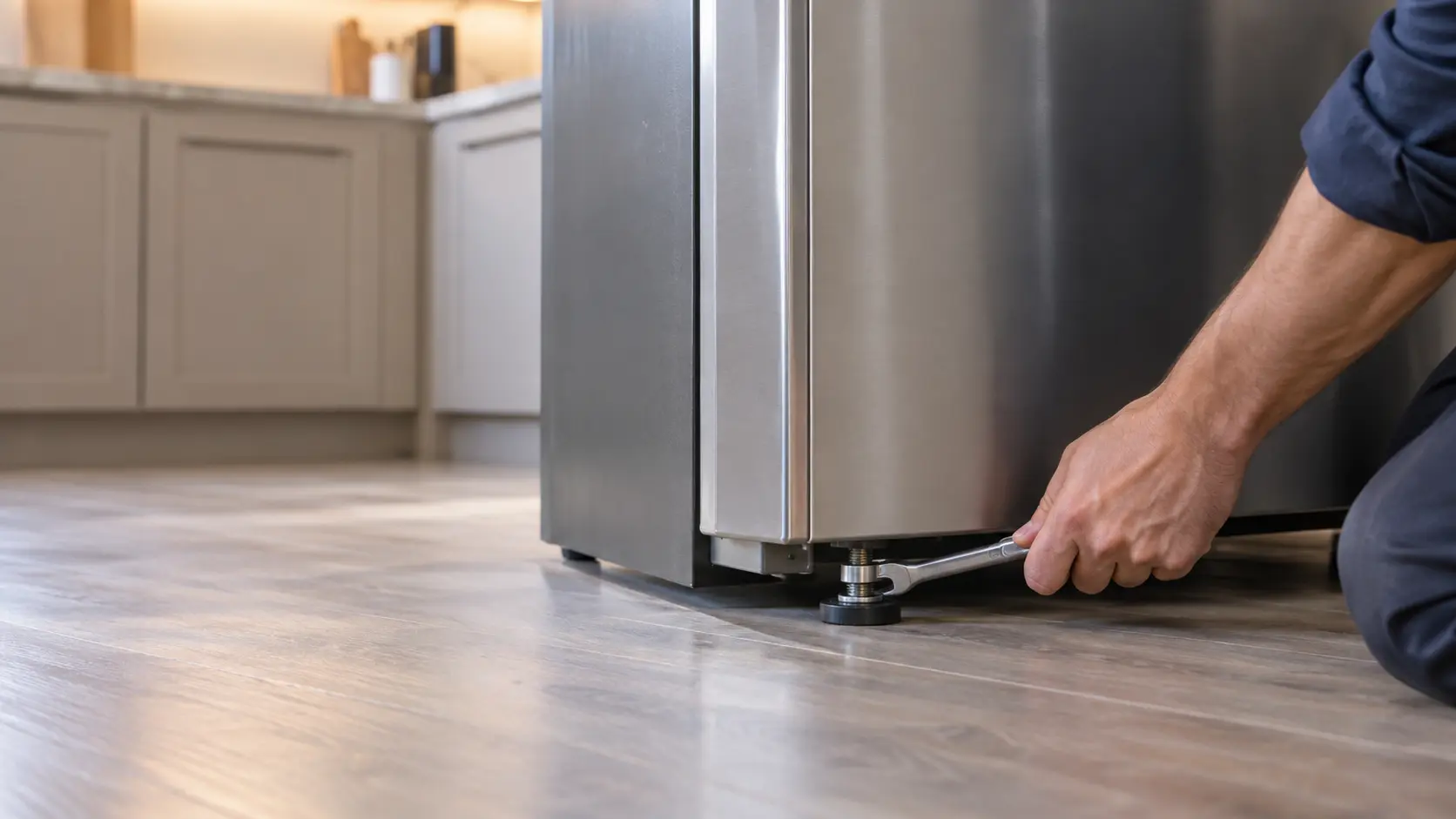
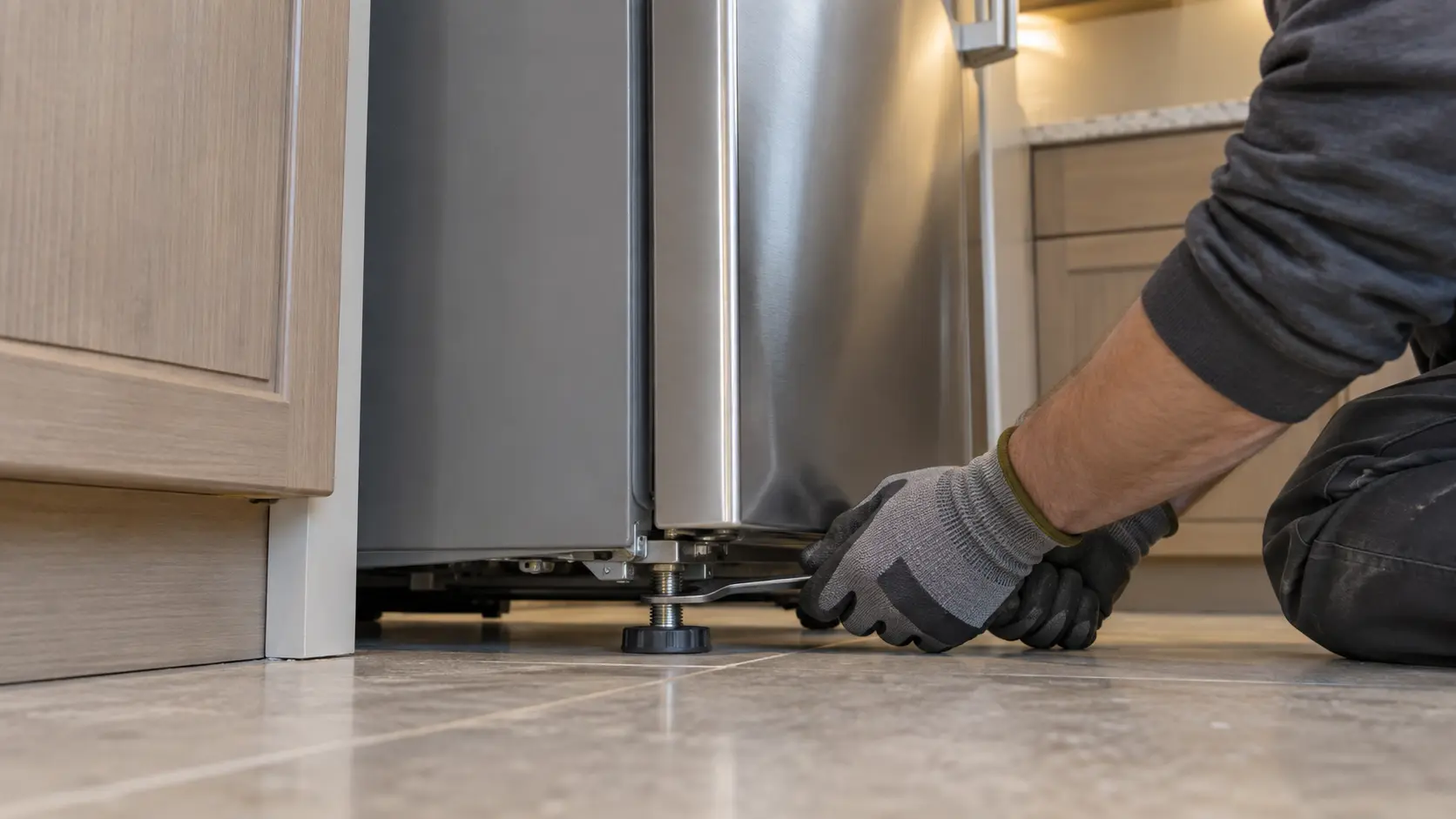
Freestanding French door and side-by-side units stand on front leveling legs or on front rollers with an adjusting bolt, reached behind the kick plate. Rear rollers are usually fixed, so the front is raised or lowered to set the lean. Many French door models also have a height adjustment on one door hinge, a nut or a set of shims, for evening up the doors once the case is right.
Built-ins and columns have adjustable rear rollers as well as front legs, and the rear ones are turned from the front through the base with a long socket; one built-in manual calls for a 7/16-inch deep socket and places a level on the interior floor to check both directions. Undercounter units sit on screw legs set to the toe-kick height, and those legs are the only adjustment there is.
| Type | Front | Rear | Notes |
|---|---|---|---|
| Freestanding French door and side-by-side | Leveling legs or rollers with an adjusting bolt, behind the kick plate | Rollers, usually fixed | Many French door models add a height adjustment on one door hinge, a nut or shims |
| Built-in and column | Leveling legs | Adjustable rollers, turned from the front through the base with a long socket | One manual calls for a 7/16-inch deep socket and a level on the interior floor |
| Undercounter | Screw legs set to the toe-kick height | Screw legs | The legs are the only adjustment there is |
Source: True Residential — 42/48 built-in installation manual (leveling procedure, anti-tip bracket) — 7/16-inch socket, level on interior floor; stops drain pans spilling; GE Appliances — top-mount refrigerator use and care guide 49-6797 — Raise the front just enough that a half-open door closes; GE Appliances — side-by-side refrigerator owner's manual 49-60198 — Adjust front rollers, then even the door tops with the hinge screw
Door alignment on columns and undercounter units
Column pairs: two cases, one line
Learning how to level a refrigerator on a column pair means leveling two appliances to each other as well as to the floor. If one tower sits a sixteenth of an inch higher, the tops of the doors no longer line up and the reveal between them tapers. The order is fixed:
- Set the legs first so the cases match.
- Only then touch the hinges.
Undercounter units: short, light doors
Undercounter units have the opposite difficulty: the doors are short and light, so a slight forward lean barely registers until the gasket stops sealing along the bottom. Because the top of the unit is hidden under the counter, the countertop edge is a handy reference, and an even gap between the door top and the counter usually means the case is square.
Floors that move under the unit
Each kind of floor shifts a refrigerator in its own way:
- Wood subfloors deflect under a full refrigerator, and a unit that was level when empty can lean once it is loaded.
- Floating floors are worse: they compress under the legs over the first few months.
- Tile and stone are stable but uneven, and a leg that lands on a grout line can rock.
After new flooring is laid
After new flooring is laid, recheck the stance. The appliance has usually gained a fraction of an inch at the front or lost one at the back, and installers do not always reset the legs before sliding it home.