Why a cold room is the trap
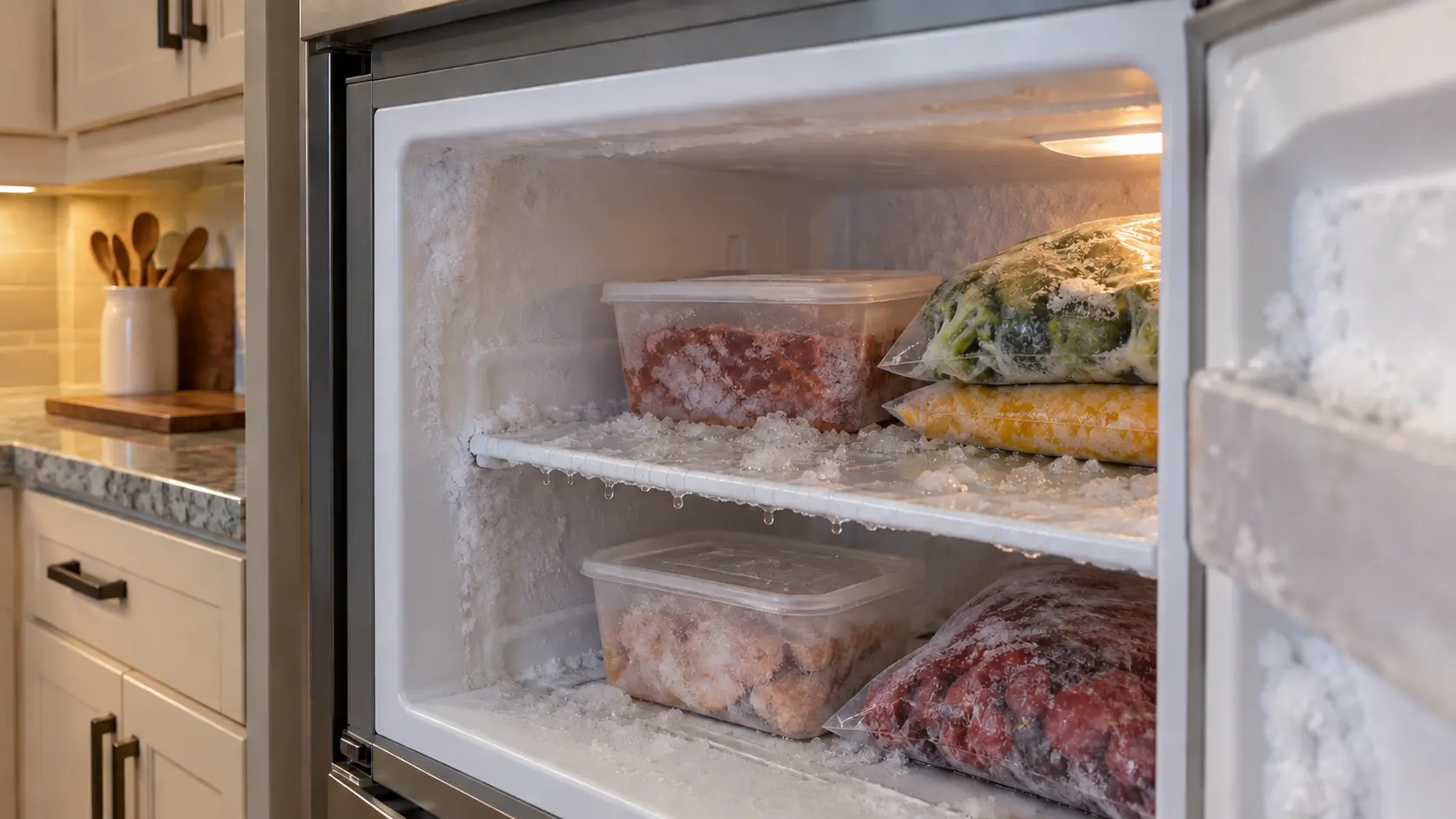
Many combination refrigerators decide when to run by measuring the fresh-food compartment. That works in a kitchen and fails in a cold garage, through a chain of events that is easy to miss:
- In a garage at 38°F the fresh-food compartment barely warms.
- Because that compartment is what the control measures, the compressor seldom starts.
- The freezer depends on those same run cycles for its cold, so it slowly climbs toward the temperature of the room.
- Everything in the freezer can soften while the appliance behaves exactly as it was designed to.
Catching it with a freezer thermometer
That is the scenario the 0°F freezer target FDA gives is meant to catch. A thermometer in the freezer will show it long before the food smells wrong, and it is the only reliable way to know, because the refrigerator's own display may read the fresh-food side perfectly.
Source: FDA — Refrigerator Thermometers: Cold Facts about Food Safety — Freezer should be at 0°F, refrigerator at 40°F or below; GE Appliances — side-by-side refrigerator owner's manual 49-60198 — Below 60°F the unit will not run often enough to hold temperature
Why heat is the other trap
Summer afternoons above 100°F
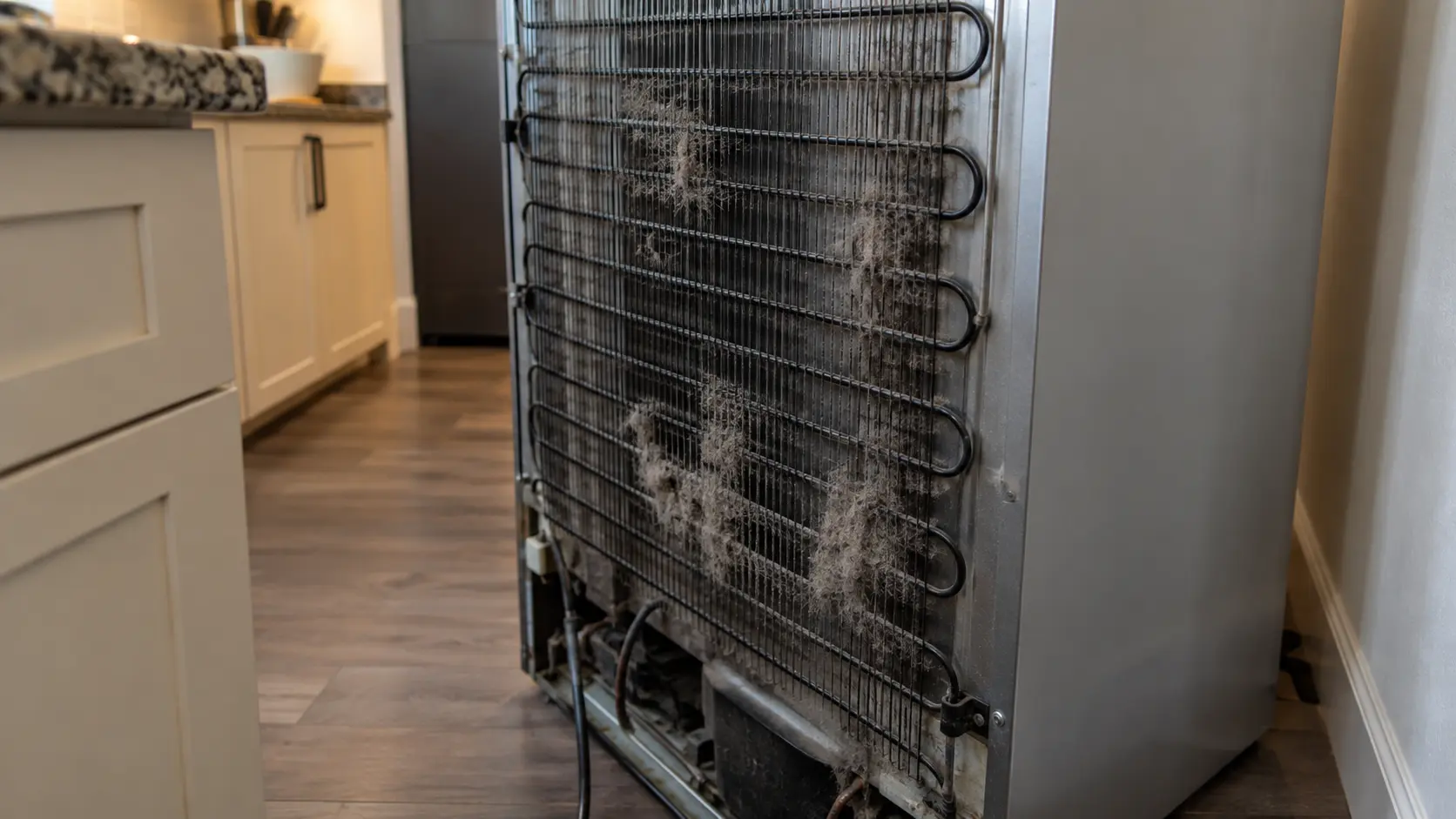
In a southern summer an attached garage can stay above 100°F for hours. The condenser has to reject heat into air that is already hot, so run times stretch, the compressor runs hotter and the fresh-food side can drift above 40°F in the late afternoon. A unit rated only to 90°F is being asked for more than its rating promises.
What the condenser breathes in a garage
Garages also collect exactly what a condenser should not breathe:
- sawdust;
- lint from a dryer;
- leaves;
- pet hair.
Cleaning and clearance for a garage unit
A garage unit's coil needs cleaning more often than the kitchen one, and an extra few inches of clearance at the back helps it more than it would indoors.
Source: Liebherr — Use and Care Manual CS 1640 (climate rating and ambient temperature table) — Climate classes: SN from 50°F, N/ST/T from 61°F; rating on plate; ENERGY STAR — Refrigerators (older units and second refrigerators) — Leave inches behind the unit and keep condenser coils clean

What garage-ready models do differently
Units marketed as garage-ready are built to keep the freezer cold when the room is cold. Designs differ, but the usual approaches are these:
- Controls that keep the compressor cycling even when the fresh-food side is already cold.
- A separate sensor for the freezer.
- Separate cooling for each compartment.
- On standalone chest and upright freezers, often a simpler design still, controlling from the freezer temperature alone.
The rated ambient range matters more than the label
The label is marketing language rather than a standard. What counts is the ambient range printed in the manual or on the rating plate, and whether that range covers the coldest night and hottest afternoon your garage actually sees.
Source: Liebherr — Use and Care Manual CS 1640 (climate rating and ambient temperature table) — Climate classes: SN from 50°F, N/ST/T from 61°F; rating on plate
Which types suit a garage at all
Side-by-side and top-freezer models are the ones most often moved into a garage when the kitchen gets a new refrigerator, and they are the ones most exposed to the cold-room problem because a single sensor usually runs both compartments. French door units with separate cooling for the freezer drawer cope better, but still only within their rated range.
Built-ins and columns belong in conditioned space; their manuals are unusually strict about room temperature and they are too heavy to move out when the weather turns. Undercounter units split into two groups: indoor models, which share the same limits as any kitchen appliance, and outdoor-rated ones, which are the only kind designed for a porch or an outdoor bar.
| Type | What limits it | In a garage |
|---|---|---|
| Side-by-side and top-freezer | A single sensor usually runs both compartments | Most exposed to the cold-room problem |
| French door with separate freezer-drawer cooling | Its rated ambient range | Copes better, within that range |
| Built-in and column | Strict room-temperature limits; too heavy to move out when the weather turns | Belongs in conditioned space |
| Indoor undercounter | The same limits as any kitchen appliance | Not designed for it |
| Outdoor-rated undercounter | Rated for outdoor use | The only kind designed for a porch or an outdoor bar |
Source: Viking — FBI7360W built-in refrigeration manual (minimum room temperature, no outdoor exposure) — Built-in must not sit below 60°F or be exposed to weather; True Residential — undercounter installation manual (outdoor rating, winterizing below 32°F) — Undercounter units rated outdoors; winterize once temperatures stay at 32°F
Basements, porches and patios
Finished and unfinished basements
A finished basement is usually fine; an unfinished one can be cool and damp, and that shows up in three ways:
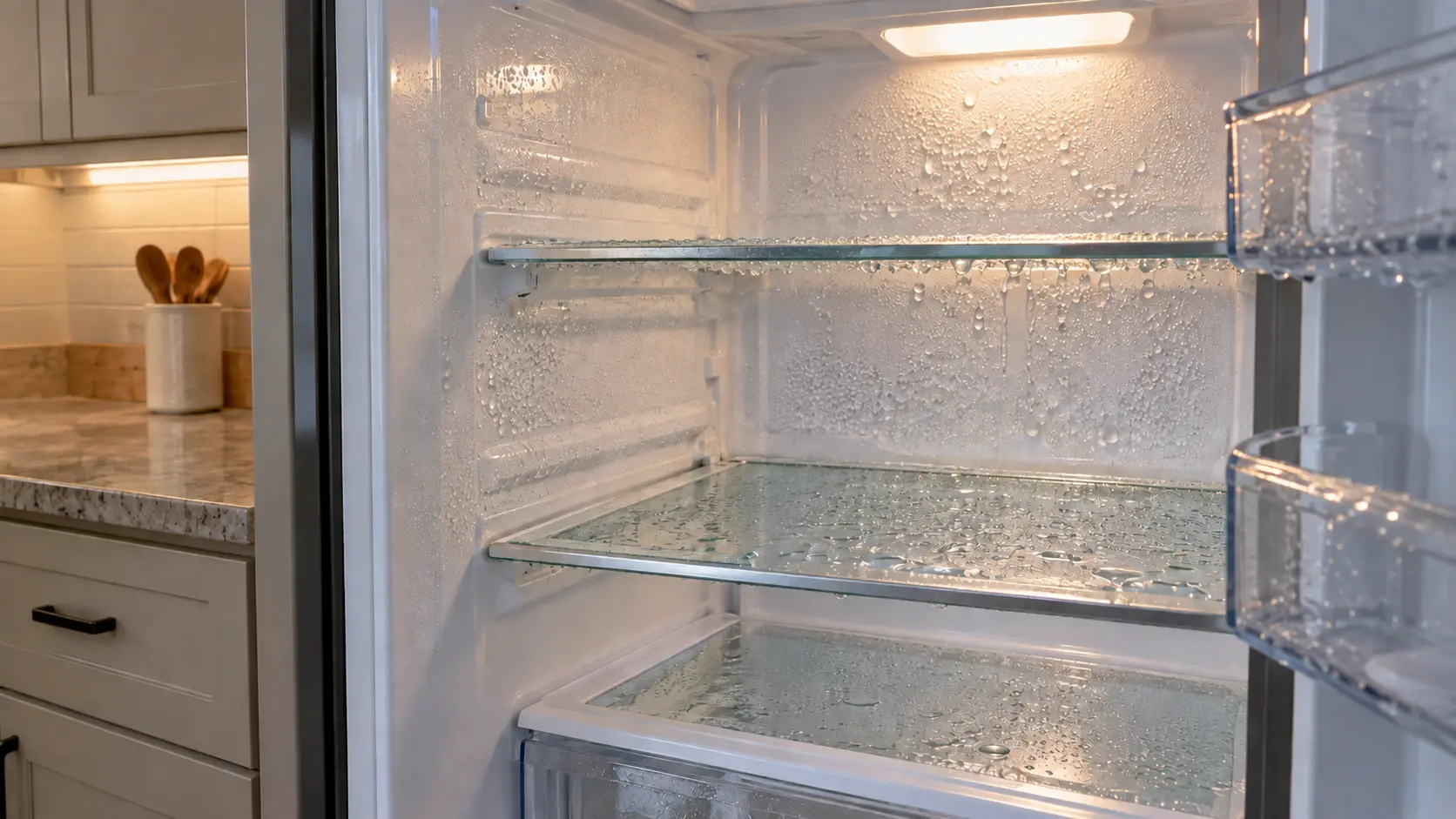
- Humidity makes the case sweat along the door edges.
- The gaskets pick up mildew.
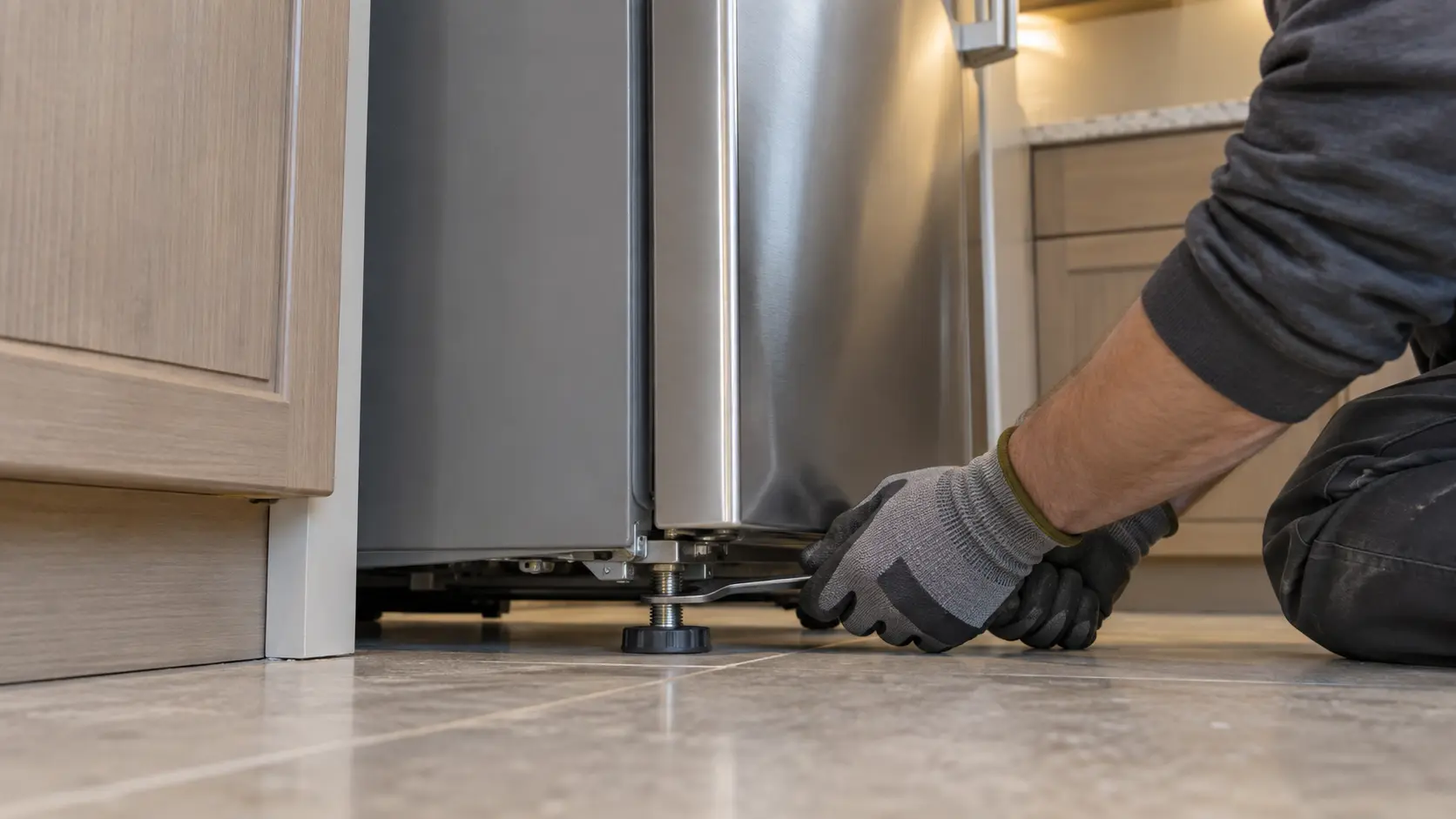
- A concrete floor that slopes toward a drain can leave the unit tilted forward.
Covered porches and patio bars
A covered porch or an outdoor kitchen is a different class of installation. Rain, direct sun and freezing nights all apply, and an indoor-rated appliance there is outside every figure in its manual. One undercounter manufacturer rates its units for outdoor use and still recommends emptying and switching them off once temperatures stay below 32°F.
Source: True Residential — undercounter installation manual (outdoor rating, winterizing below 32°F) — Undercounter units rated outdoors; winterize once temperatures stay at 32°F
Power in a garage
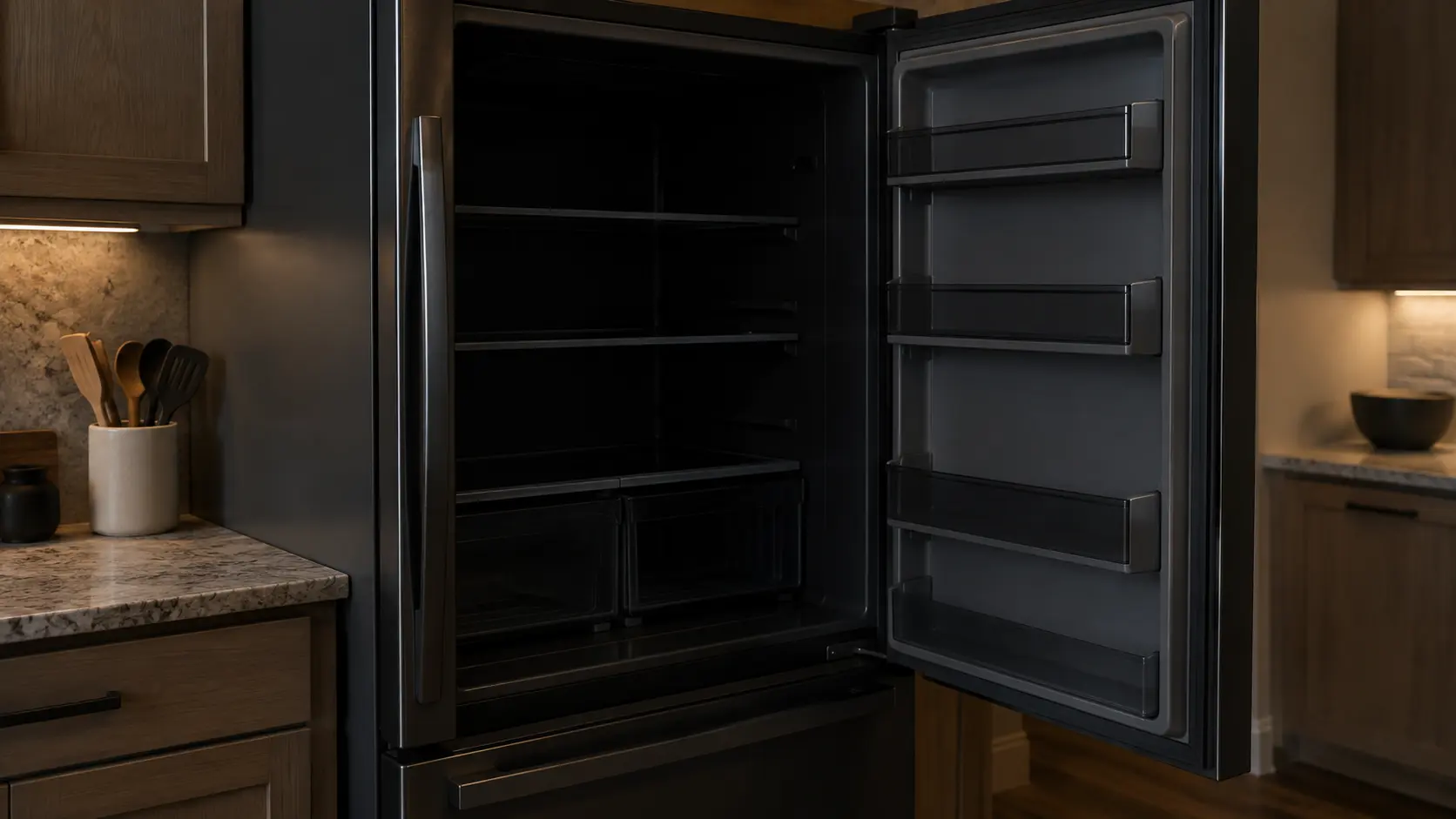
Garage outlets are commonly GFCI-protected, and some installation manuals warn that a GFCI can interrupt a refrigerator's operation. A tripped outlet shows no warning in the kitchen, so a spare refrigerator can sit dead for days. The answer is not to bypass protection that code requires but to check the outlet regularly and ask an electrician how that circuit should be arranged.
Source: True Residential — 42/48 installation manual (GFCI note, dedicated circuit) — GFCI not recommended as it may interrupt operation; dedicated circuit